

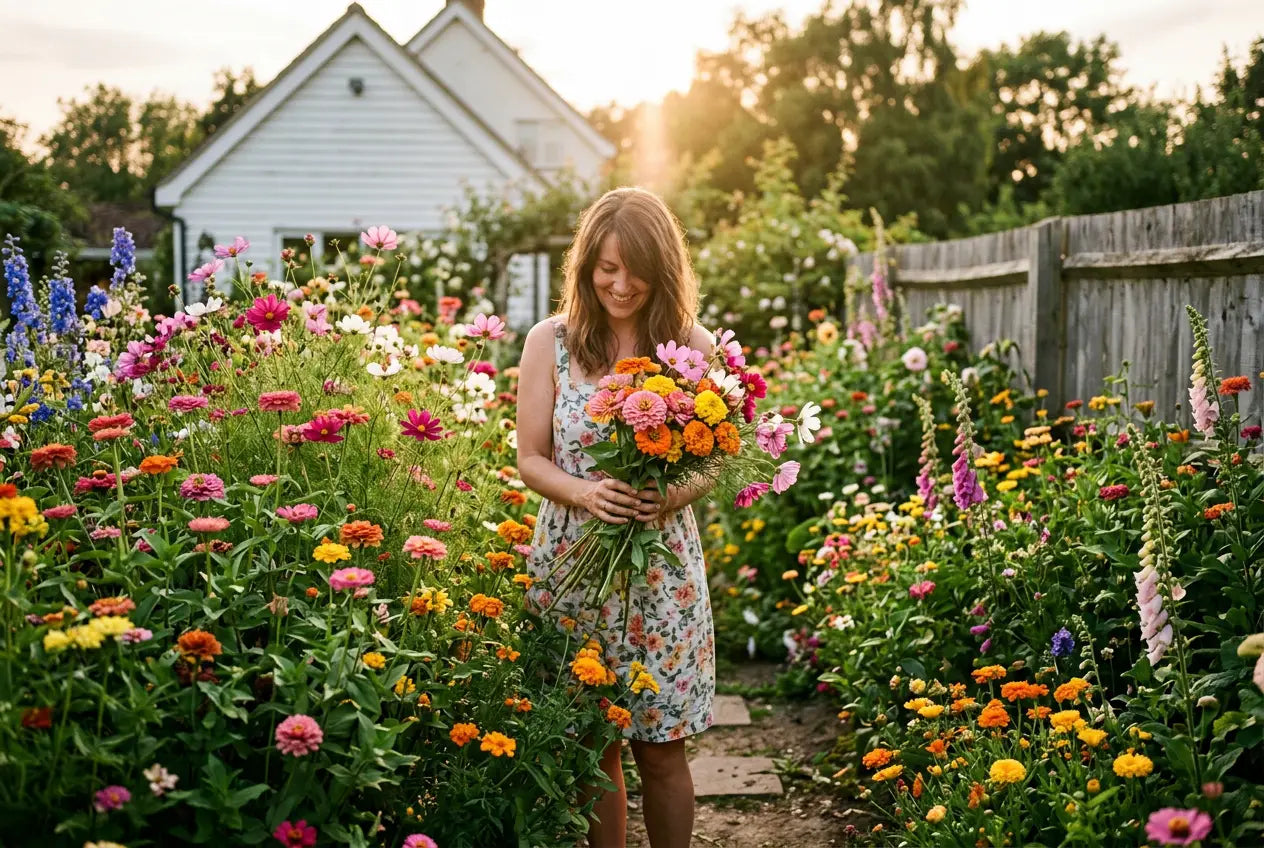
…and now my garden looks like this.

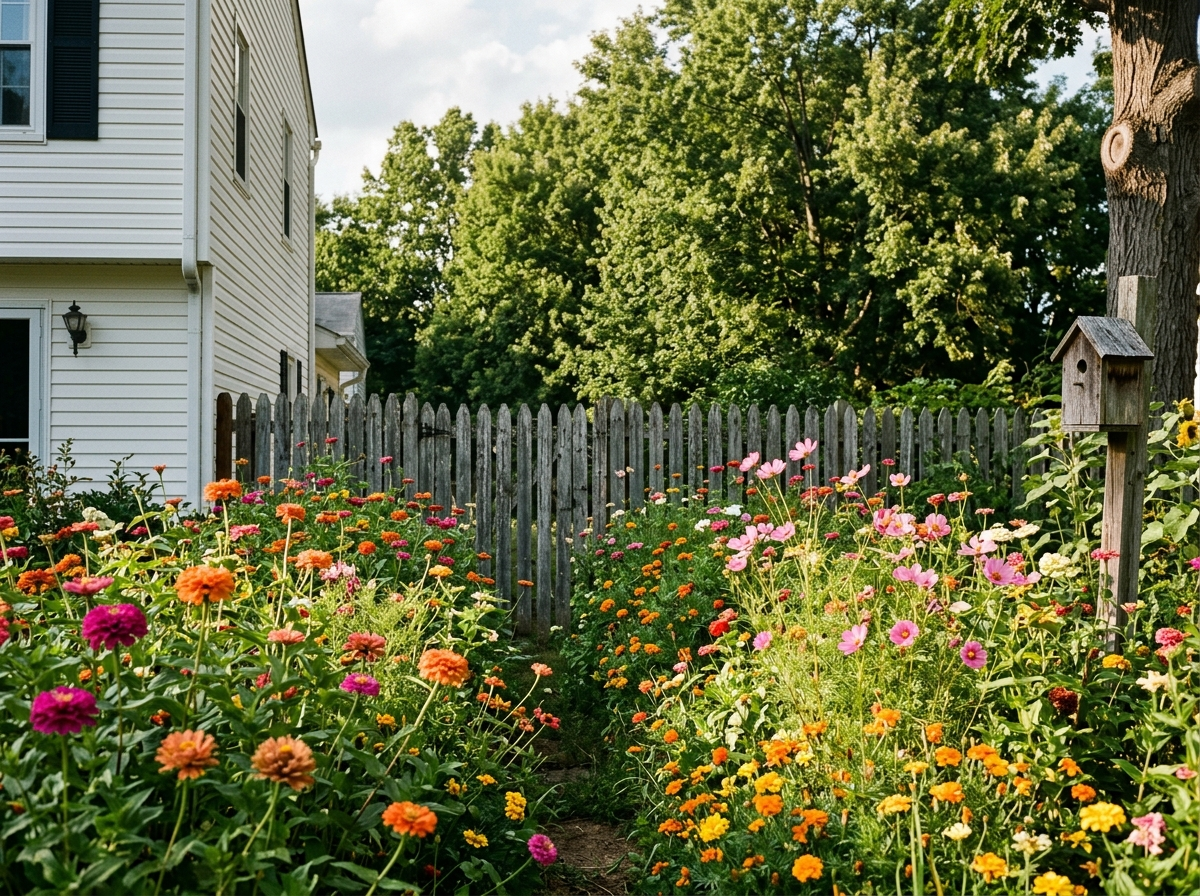
Same bed. One bag of seed instead of four trips to the garden center.
I used to spend somewhere between $100 and $150 every year filling my beds with flowers from the garden center. Four to six dollars a plant, fifteen or twenty plants, plus whatever I bought again mid-season to replace what did not make it.
Over five years that is roughly $500. I never added it up, because nobody adds up five identical trips.
Then I switched to growing from seed — one bag, $39.99, and I have not been back since. The garden above is that bag. Here is exactly what changed, and what I would tell anyone still doing it the expensive way.
One bag replaced five years of garden center trips. The short version
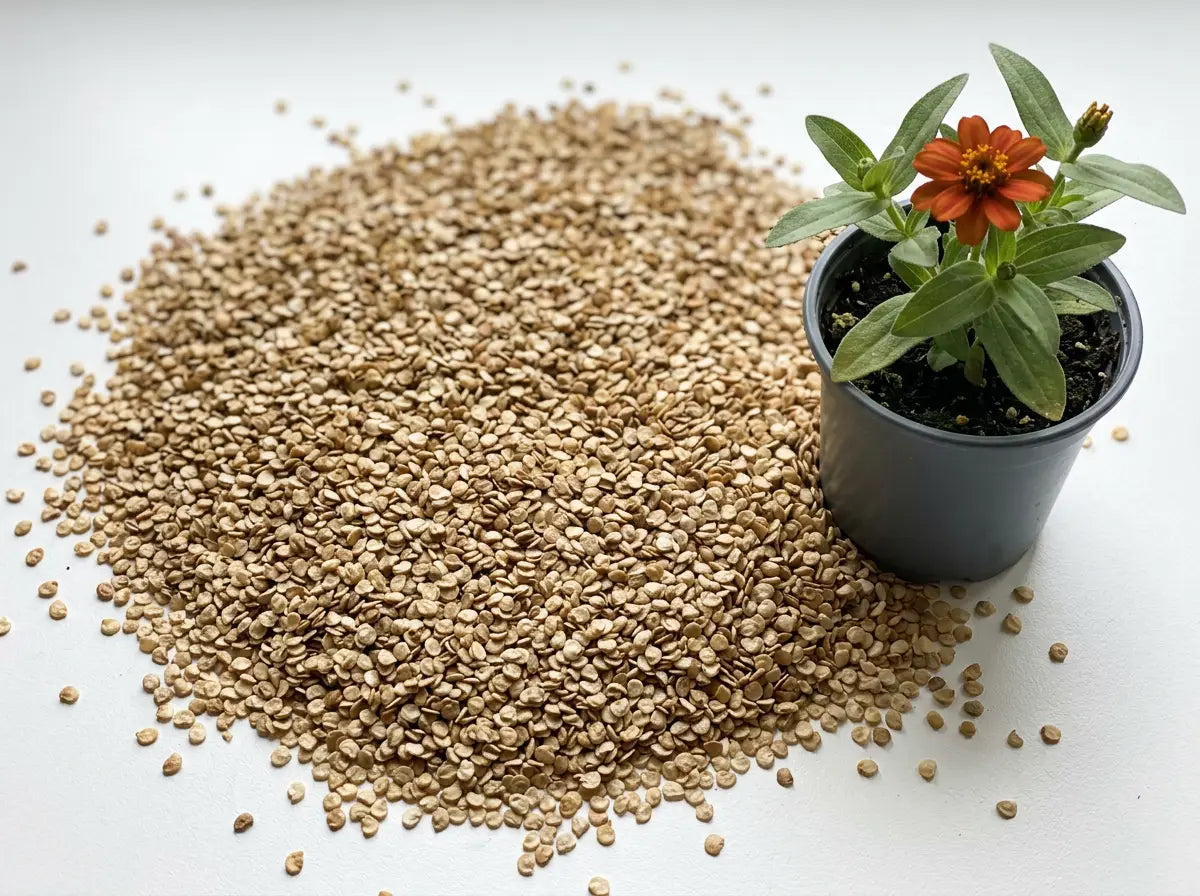
This is the number that made me switch. Garden center plants run four to six dollars each. One bag of seed here holds 44,800+ seeds for $39.99.
Even after thinning, and even accounting for seeds that never come up, it works out to a fraction of a cent per flower. I stopped rationing where things went and just planted the whole bed.
The feelingPlanting the whole border instead of the strip I had budgeted for.
This is the part I did not expect and now would not give up.
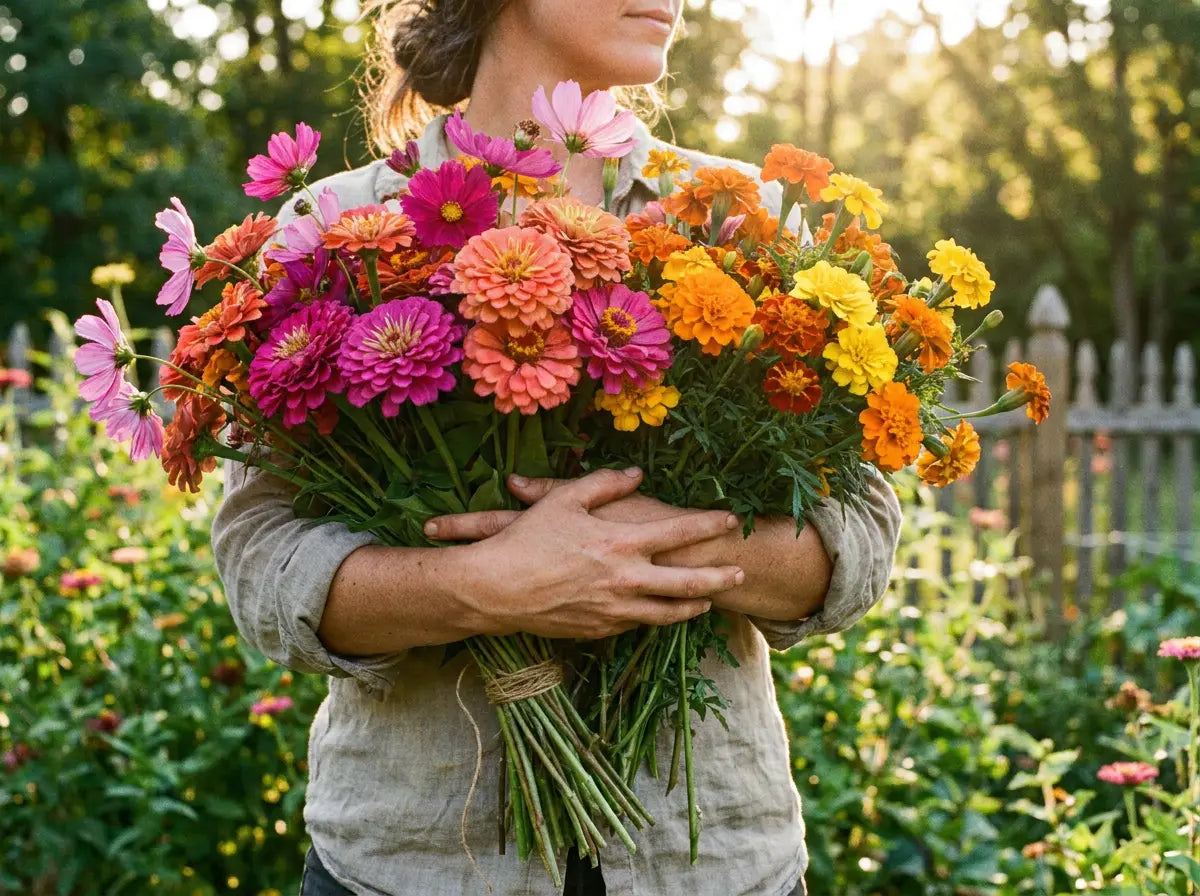
These flowers bloom more the more you cut them — taking a stem tells the plant to produce another. So from midsummer on, I was cutting armfuls every week: jars on the counter, bunches for neighbours, a bucket in the car for whoever I was visiting.
A florist bouquet like the ones I was making runs thirty to sixty dollars. I was making one or two a week, out of a bag of seed that cost less than a single one of them.
The feelingHanding someone flowers you grew yourself.
After the switch I got picky, because cheap seed that does not come up is not cheap.
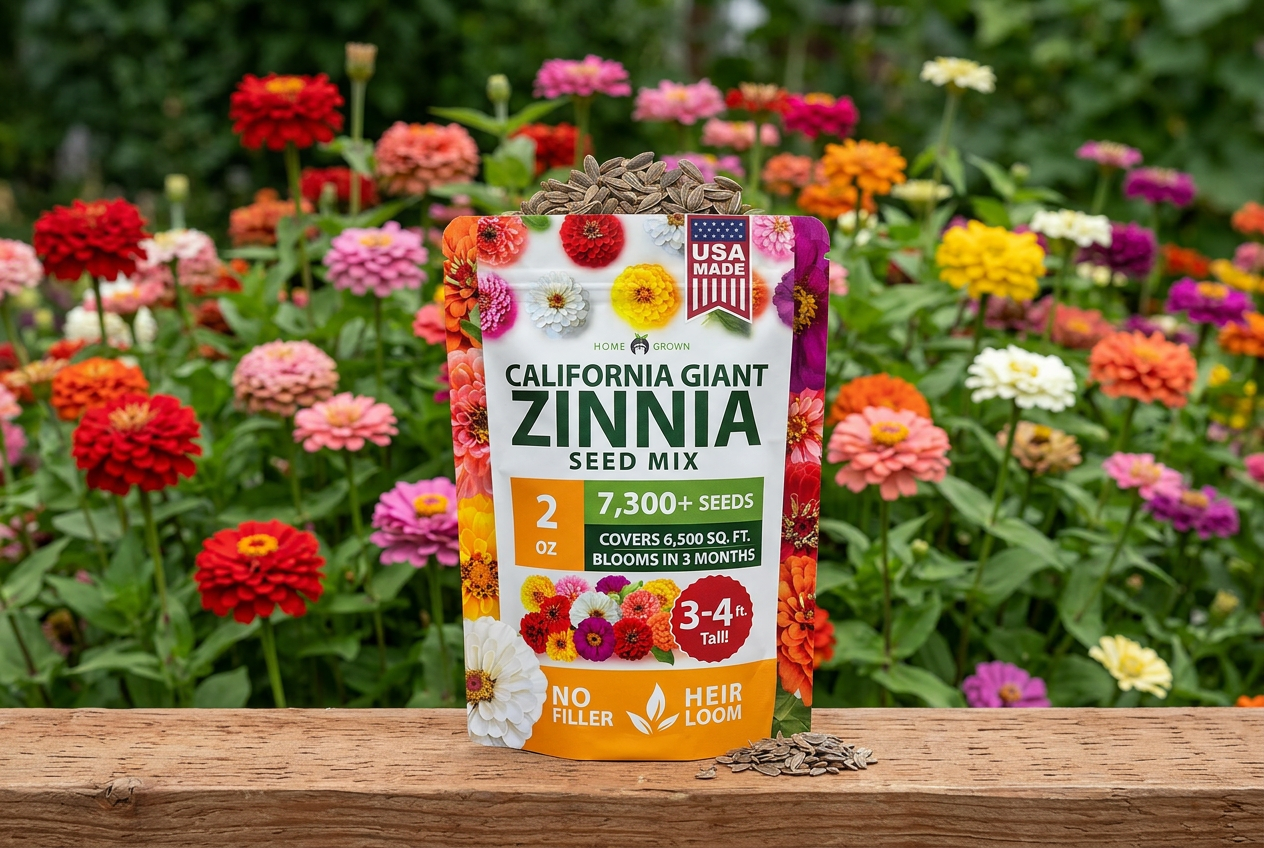
Three things I check every time: the seed count is printed on the bag, so I know what I am buying rather than guessing. It is heirloom and non-GMO, so I can collect seed at the end of the season instead of rebuying. And there is an actual guarantee — 60 days, full refund if it does not bloom.
A garden center flat comes with none of those. That is really the difference.
The feelingKnowing exactly what is in the bag before you plant it.
This is what turns a cheap year into a free one.
These are heirloom, which in plain terms means the seed they drop grows into the same flower next year. Garden center plants are usually hybrids, and their seed does not do that reliably — which is exactly why you keep going back.
At the end of the season I let a few flower heads dry on the stem, shook them out over the bed, and that was it. The next spring came up on its own, thicker than the year before.
The feelingA garden that stops costing you anything.
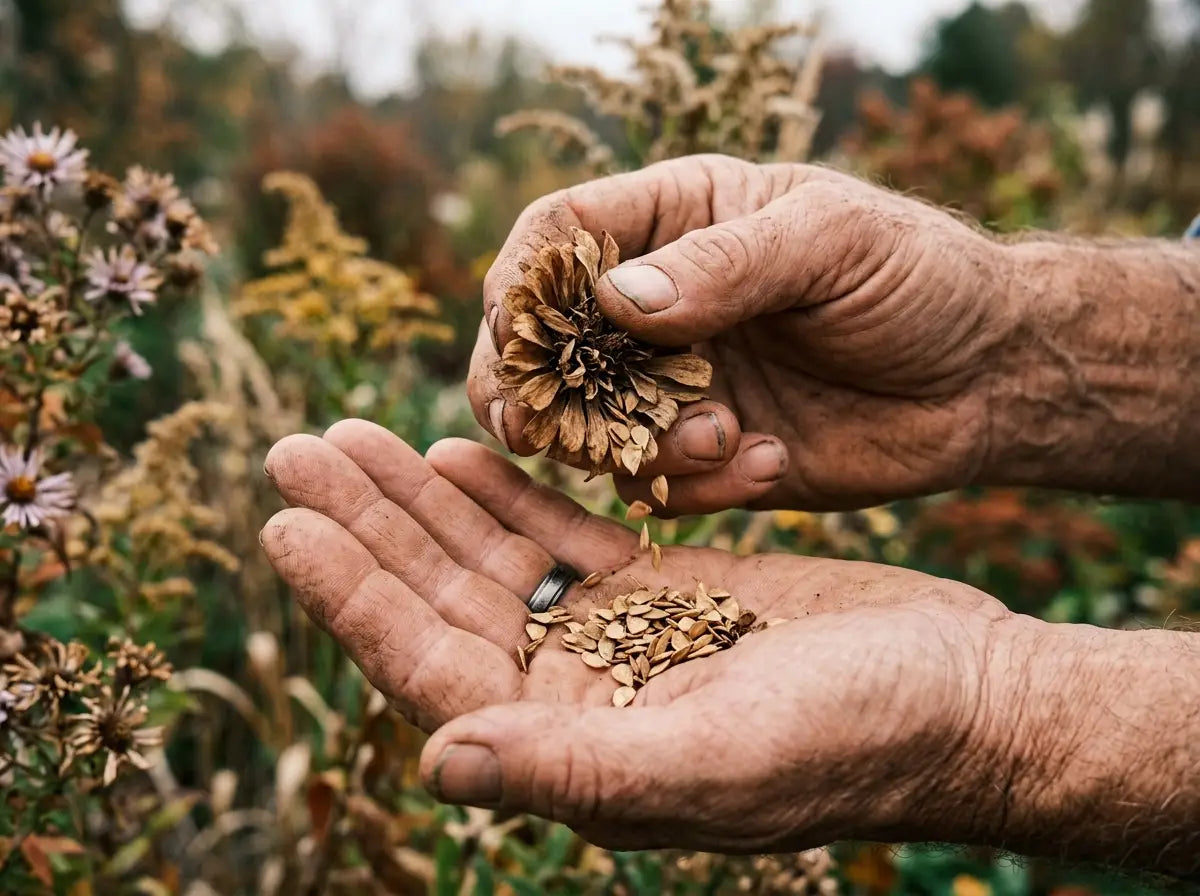
I want to be honest about the effort, because I expected it to be harder.
I raked the bed, scattered the seed, covered it lightly, and watered. Sprouts came up in seven to ten days. After the first few weeks of watering I mostly left it alone — these are drought tolerant once they are established.
No seed trays, no grow lights, no transplanting, no feeding schedule.
The feelingRealising the part you were intimidated by took an afternoon.
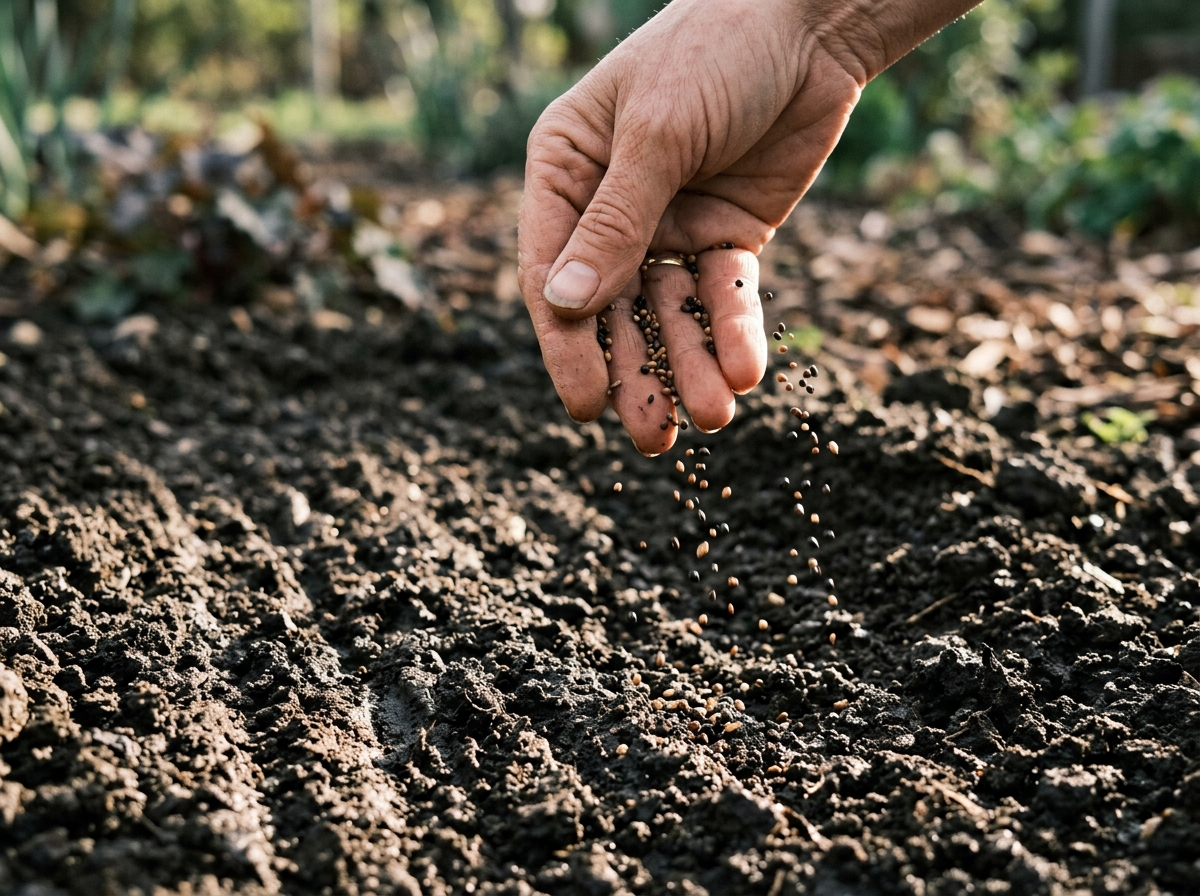
The garden center plants I used to buy peaked the week I bought them and were finished by August — right when I actually wanted to be outside.
These run the other way. They start slower, then bloom continuously from midsummer through the first frost. My beds looked better in September than they did in June.
The feelingYour yard looking best in the month everyone else’s gives up.
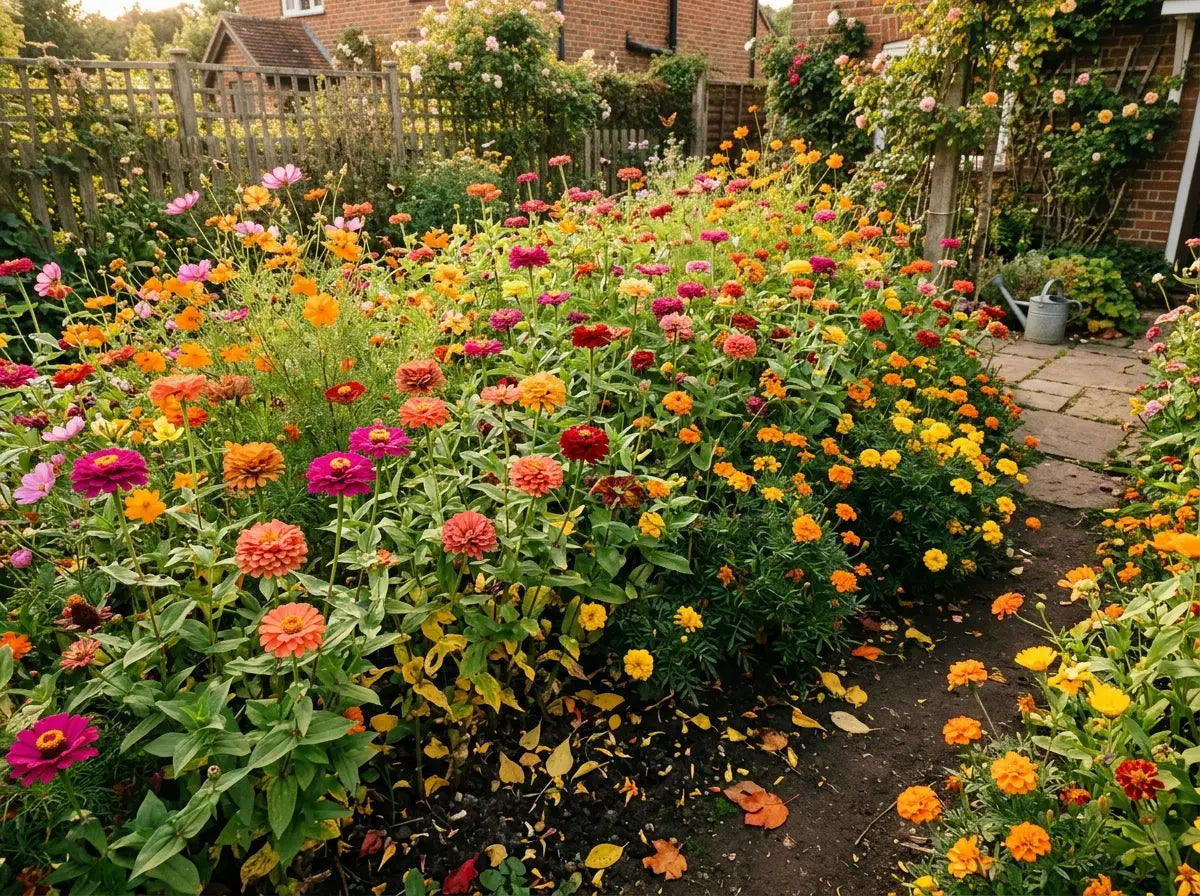
I would not have tried it without this part, having already wasted money on flowers more than once.
Every bundle is covered by the 60-Day Bloom Guarantee — if the seed does not germinate and flower, you get a full refund. No receipts, no argument.
The feelingBeing willing to try it once.
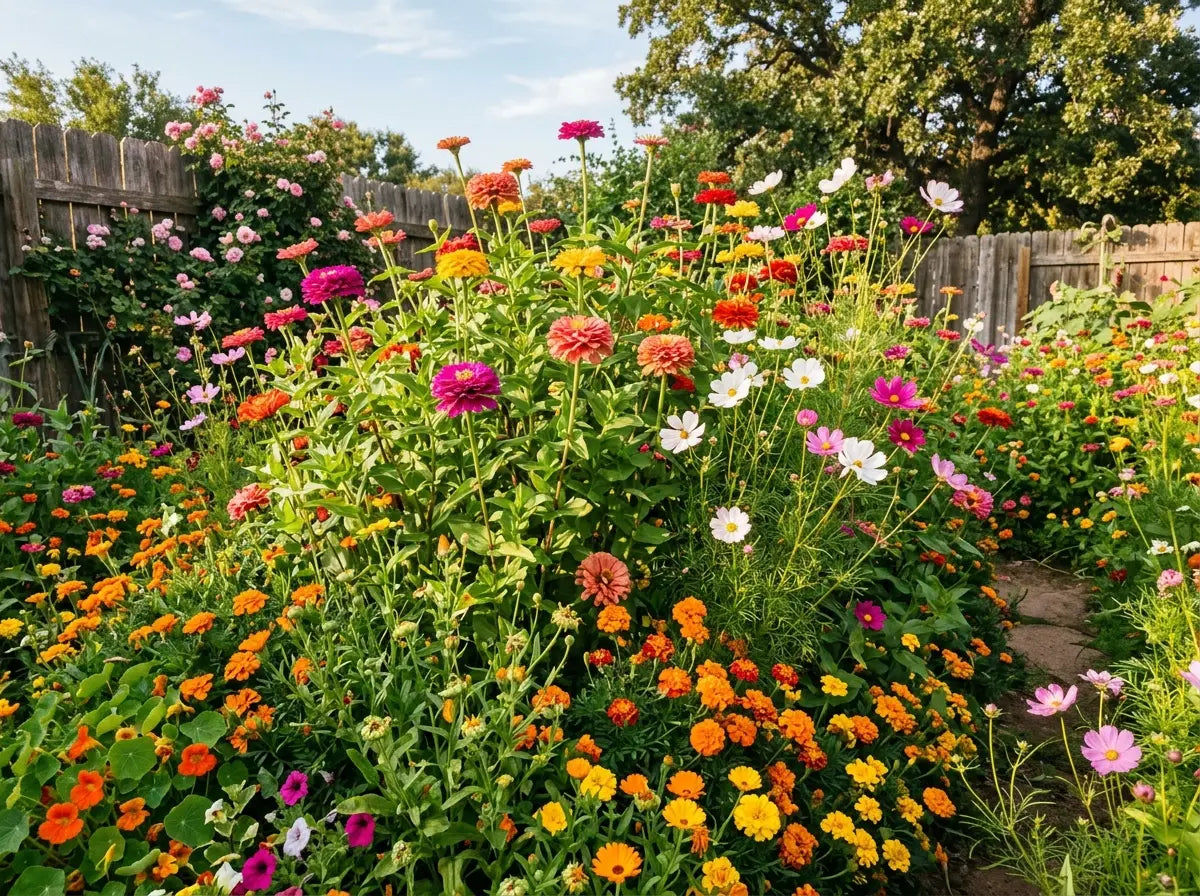
I added up five years of garden center receipts and nearly fell over. Switched to seed and never looked back.
I cut a fresh bouquet every week all summer and still had more flowers than I knew what to do with.
Collected seed the first fall and haven't paid for flowers since. Third year now and the bed is twice the size.
Heirloom Non-GMO · USA Sourced · Seed Count Printed on Every Bag · Free Shipping Over $49.99
$39.99 $74.85
| Garden Center Plants | The Late Bloomer Bundle | |
|---|---|---|
| Cost per flower | $4–6 per plant | Under $0.01 per seed |
| Year 1 | $100–150 | $39.99 |
| Year 2 | $100–150 again | $0 — collect your own |
| 5-year total | ≈$500 | $39.99 |
| Comes back next year | No | Yes — reseeds itself |
| Seed count disclosed | N/A | Printed on the bag |
| Guarantee | None | 60-Day Bloom Guarantee |
Run your own numbers rather than taking mine. Count what you spend filling your beds in a normal year, including whatever you buy again mid-season to replace what died, and multiply by the years you have been doing it. Most people are surprised, because it never feels like much at the register — it only shows up when you add the trips together.
True, and worth saying plainly: you wait a few weeks longer at the start. What you get back is a bed that is still going strong in October, when the plants I used to buy were already finished, plus seed you can collect and replant for free.
That is usually old stock, poor storage, or filler bulking out a cheap packet. It is the reason I check for a printed seed count and a real guarantee now. If these do not come up, the 60-Day Bloom Guarantee refunds you — you are not betting on your own gardening.
For these varieties, usually not — they go from seed to bloom in roughly 60 to 75 days, so there is still real colour to be had before frost across most of the country. Check your own average first frost date and count backwards; if it fits, you are fine.
No. The first year alone already costs far less than a comparable run of garden center plants. Collecting seed is what makes the following years free, and it takes about ten minutes in autumn if you want it.
California Giant Zinnia (7,300+ seeds), Bright Lights Cosmos (2,500+), African Cracker Jack Marigold (35,000+) — 44,800+ total.
No. All are direct sow — scatter, cover lightly, water.
Sprouts in 7–10 days, blooms in roughly 60–75 days.
Regularly for the first few weeks, then they are drought tolerant.
The seed these drop grows into the same flower next year, so you can collect and replant instead of rebuying.
Let a few flower heads dry brown on the stem, then shake them over the bed or store them in a paper envelope somewhere cool and dry.
Yes — 12 inches or wider, full sun, good drainage.
Full sun, six hours or more.
Yes. Cutting a stem prompts the plant to produce more, so regular cutting keeps the bed fuller.
60-Day Bloom Guarantee — contact us for a full refund.
Ships within 48 hours; 3-5 business days delivery.
I am not a better gardener than I was five years ago. I just stopped buying flowers by the plant.
The bed above came from one bag of seed and an afternoon of work — and everything since has come from the seed it dropped.