

Not because it is too late. Because almost nobody selling you seed right now is telling you the truth about whether it can actually bloom before frost.
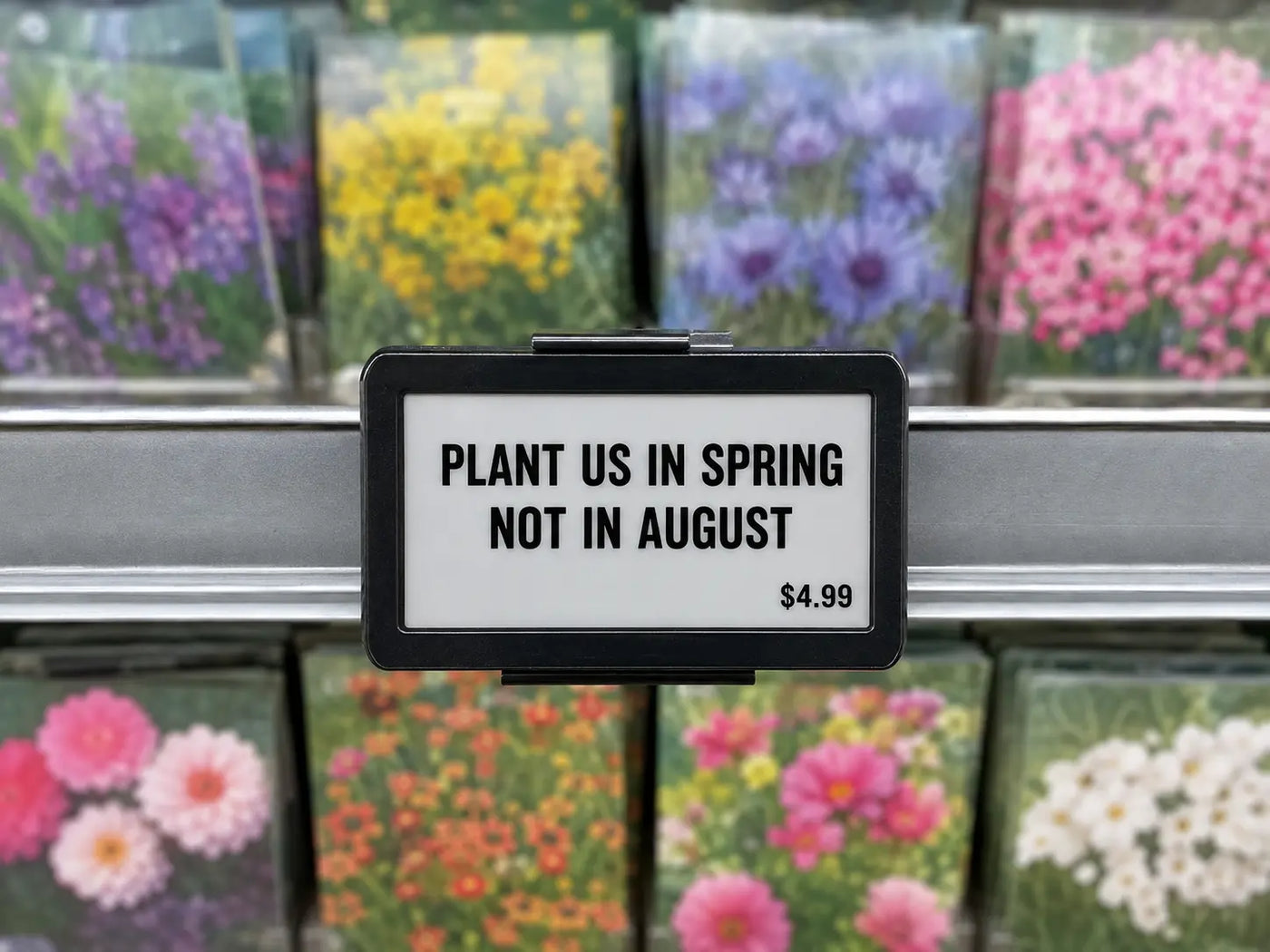
Walk into any garden center or scroll any seed shop in August and you will find the exact same wall of packets that was there in April.
Same varieties, same price, same generic instructions on the back — "sow spring through fall" — printed once, at the factory, with no idea what month you are actually standing there reading it in. Nobody adjusts the shelf for the calendar, and nobody tells you that a meaningful share of what is sitting on it does not have enough warm days left to become a flower before your first frost.
That is not a coincidence. It is a business model that does not lose money when your seed fails — you already paid for it. So the industry has very little incentive to tell you, in August specifically, which five things are working against you right now.
Here they are.
A packet that never had a real chance fails, and you get blamed for it instead of the timing. The part the industry never corrects
None of these are secret. All of them are left off the packet.
Here is the part almost nobody selling seed in August will actually tell you: some flowers are built for exactly this window.
Not all of them. Not most of them. But a specific, heat-loving few that go from seed to bloom fast enough to still flower before frost — and get more prolific the hotter it gets, instead of less.
Heat-loving annuals, not the frost-tender kind. Sown now, all three still reach bloom before your first frost across most of the country.
This is the entire mechanism, so it is worth stating plainly. Zinnias, cosmos and nasturtium reach bloom in roughly 45 to 75 days — not the 90-plus some slower annuals need.
Count backward from your first frost date. For most of the country, that window is still open in August. It is not open for everything. It is open for these.
The feelingActually doing the math instead of guessing.
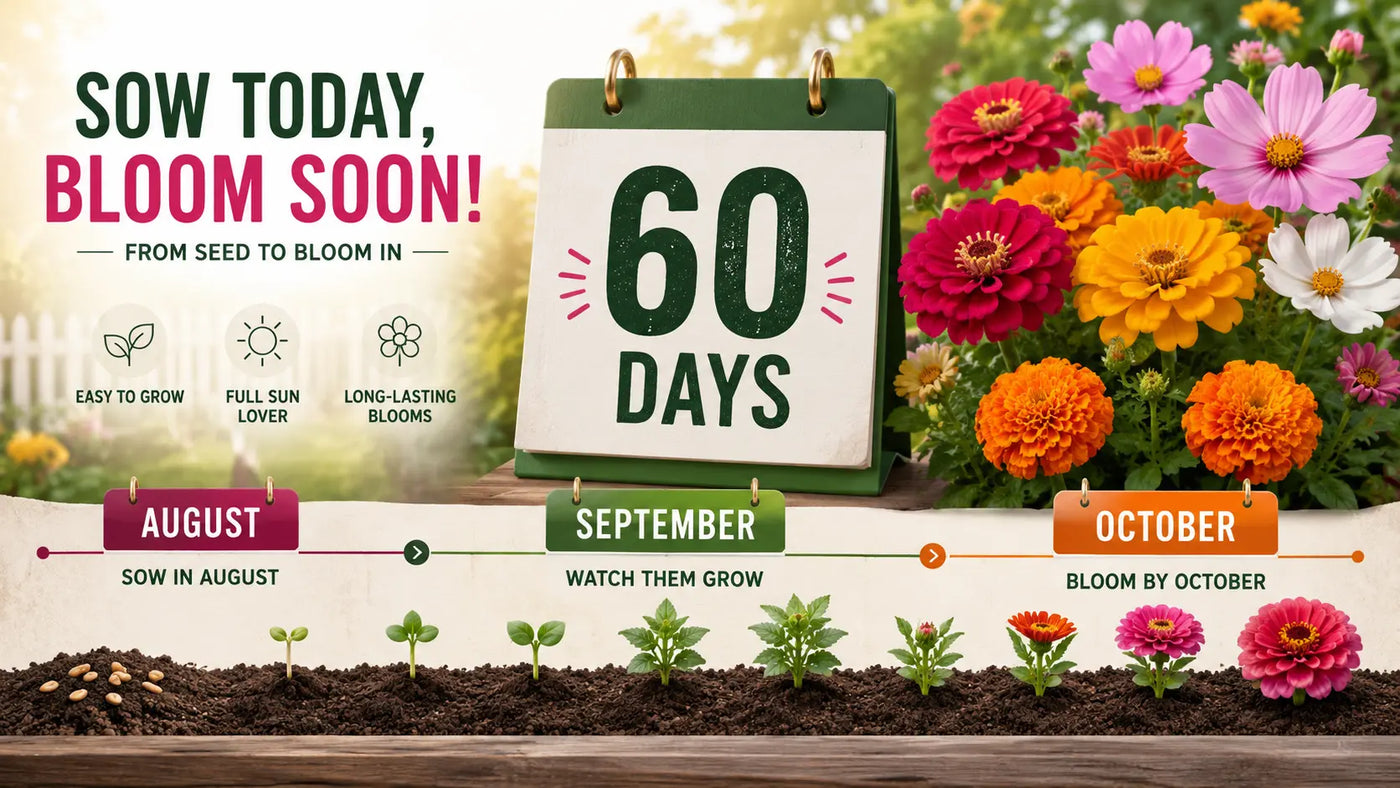
Most of what struggles in August is struggling because it was never built for August — cool-season stock stressed by heat it cannot handle.
These run the opposite way. Warm soil accelerates germination, and once established, heat pushes more bloom, not less. The exact conditions working against a spring-bred annual are the conditions these are built around.
The feelingPlanting with the weather instead of against it.
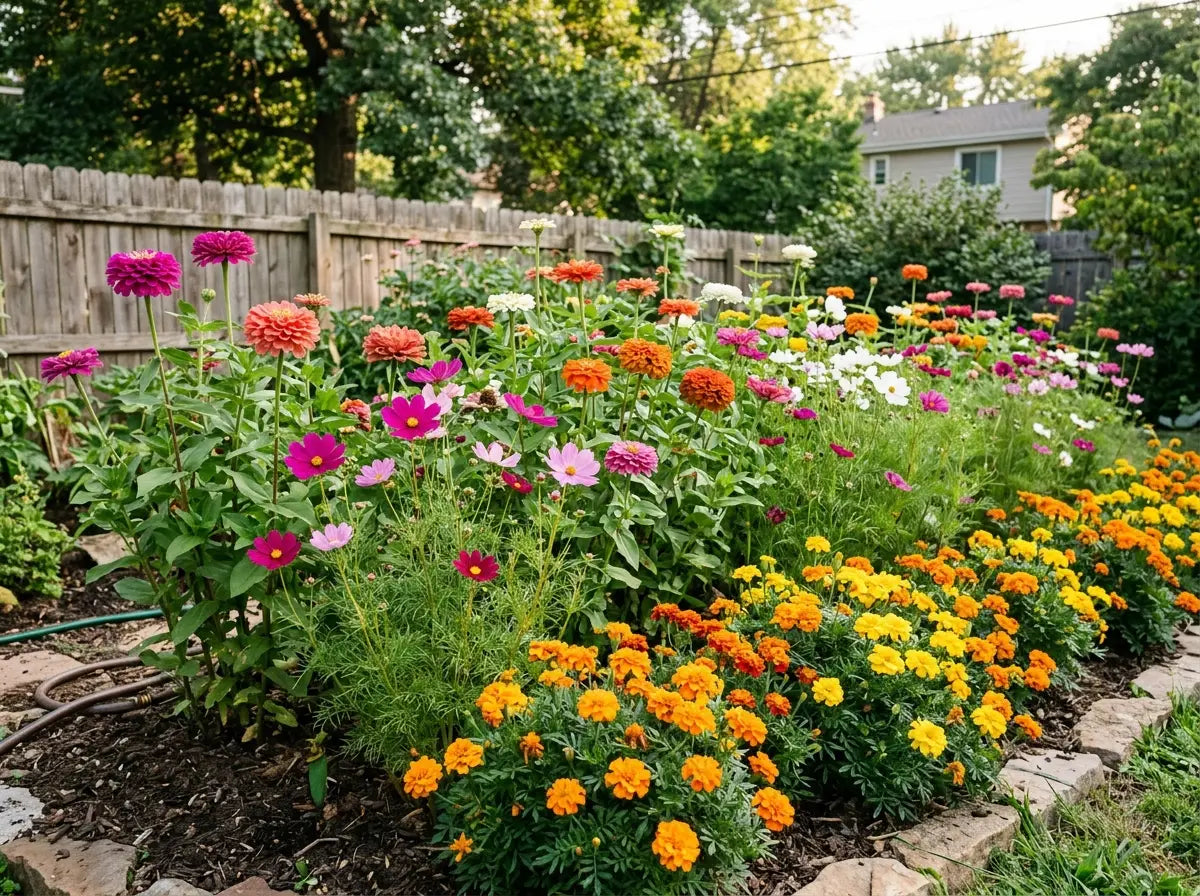
Because this is a narrower window than spring, some of what you sow will lag or underperform — that is normal, not a failure. The fix is quantity, not perfection.
A single order runs to 44,800+ seeds, which is enough to sow thick, thin later, and still fill the bed even if a portion comes in slower than the rest.
The feelingNot needing every single seed to perform perfectly.
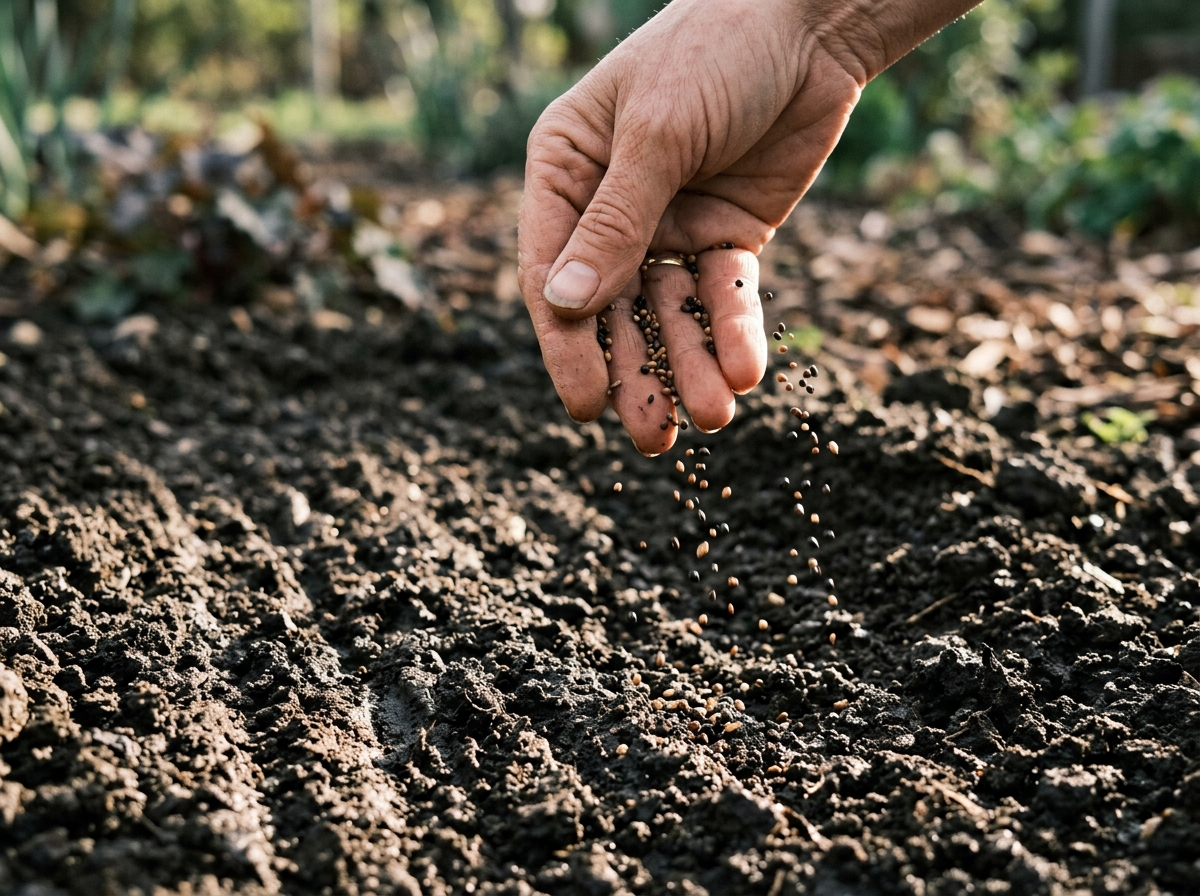
Sowing three varieties instead of one is not just quantity — it is structure. California Giant Zinnia carries the height, Bright Lights Cosmos fills the space between, and Dwarf Nasturtium holds the bed edge.
Planted together, the bed reads as finished rather than as three separate patches of the same colour block, and each variety is covering a job the others cannot.
The feelingA bed with actual structure, not just three colours in a row.
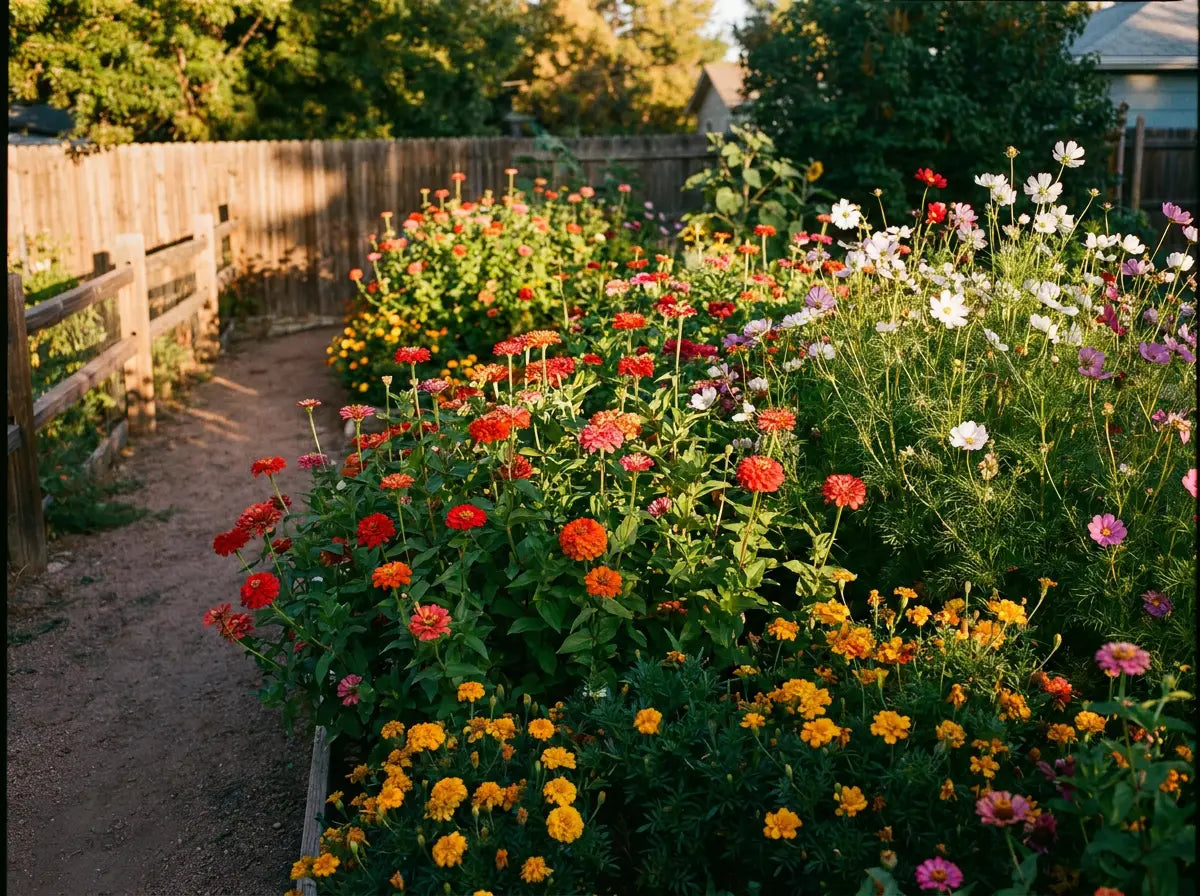
Every variety here is open-pollinated heirloom. Let a few heads dry at the end of the season, collect the seed, and next year’s bed is already paid for.
That matters more in a page about industry incentives than it might elsewhere: hybrid seed not breeding true is exactly what keeps the same broken cycle running every year. This breaks it after one purchase.
The feelingNot needing to have this same conversation again next August.
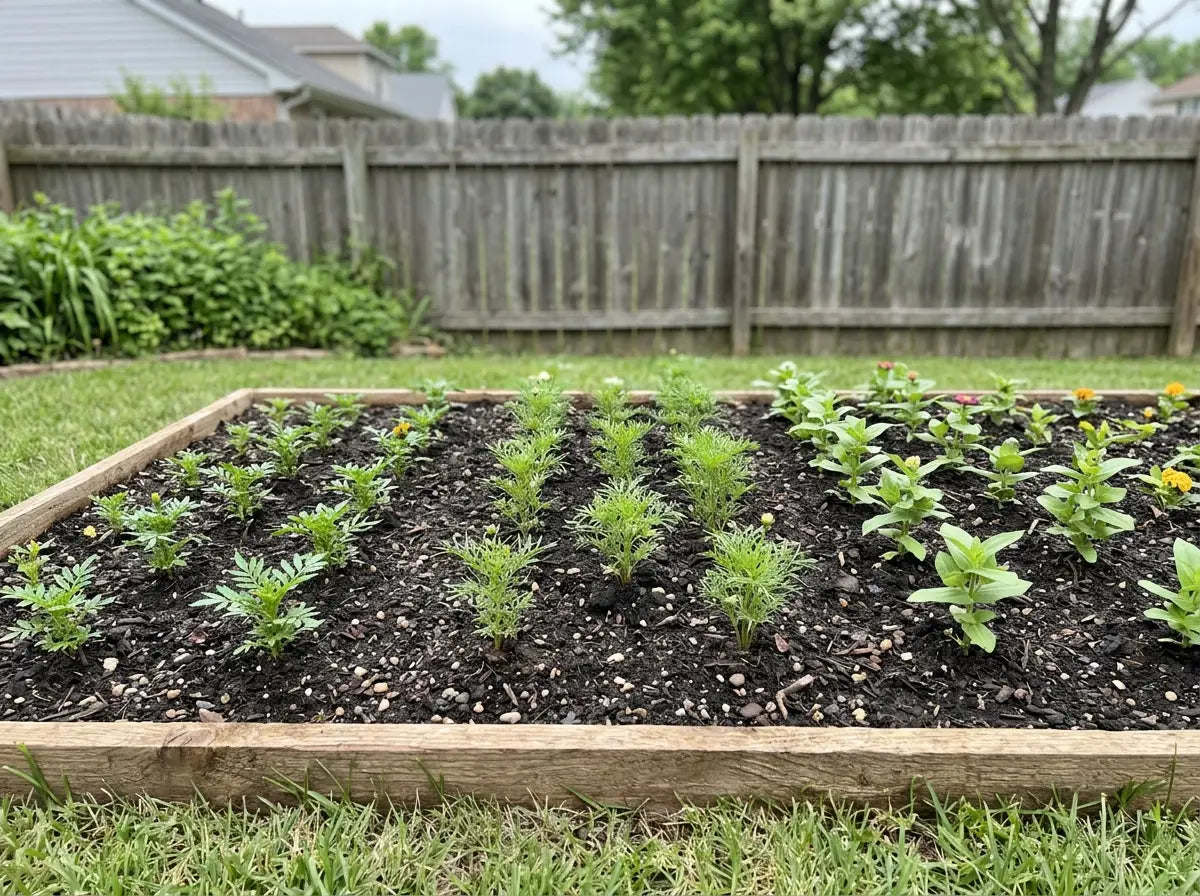
None of this works if the payoff requires daily attention. All three varieties are notably drought tolerant once established, and zinnias in particular are among the more reliably deer-resistant annuals available.
Water regularly through germination, then largely leave it alone. The whole point of choosing a fast, heat-loving window is that it should not also demand a fussy maintenance routine.
The feelingA bed that does not become a second job.
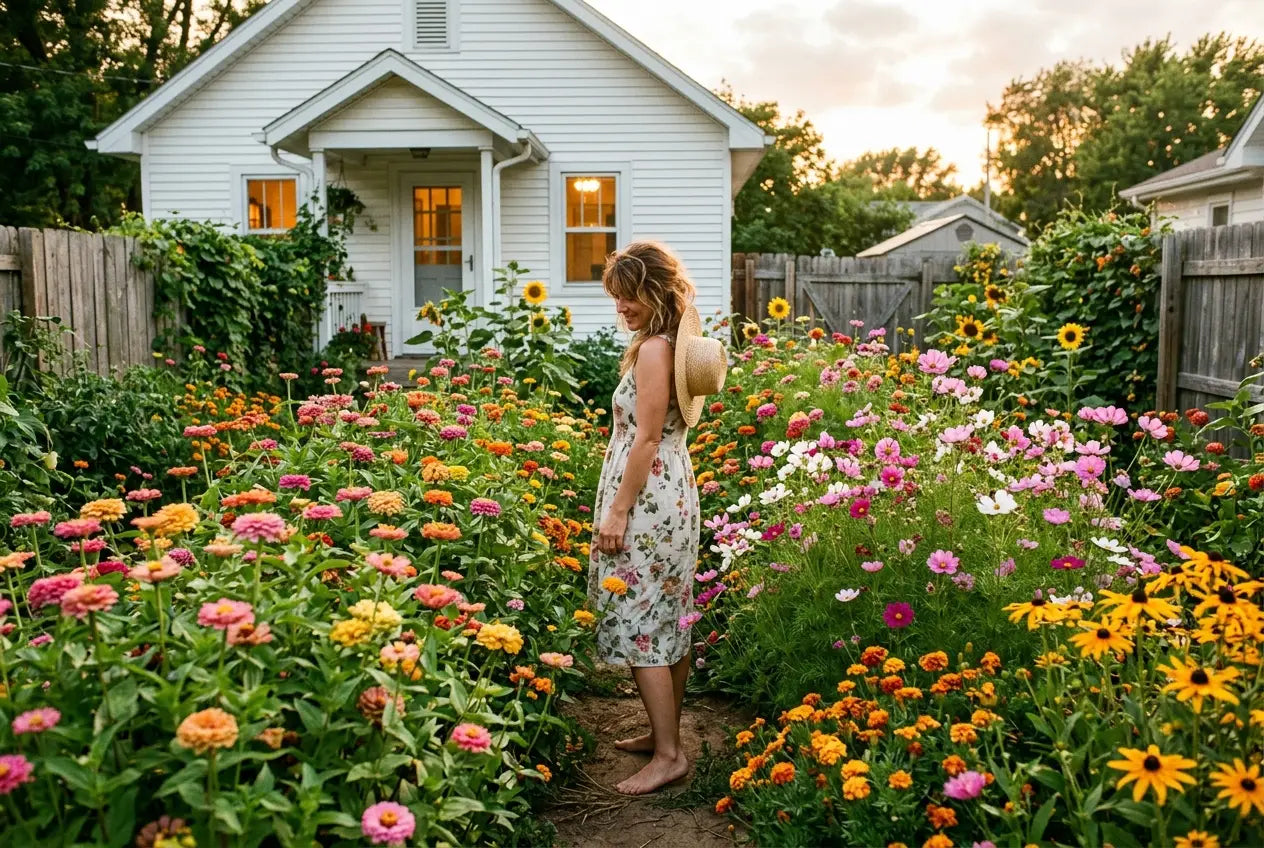
Everything in this page is a claim about probability, not a guarantee against every possible outcome — soil, sun and rainfall still matter. So the risk is covered separately.
The 60-Day Bloom Guarantee means that if these do not germinate and produce flowers, you get a full refund. You are being asked to test a narrower, better-informed bet, not to trust blindly.
The feelingBeing willing to try, now that the odds are stated honestly.
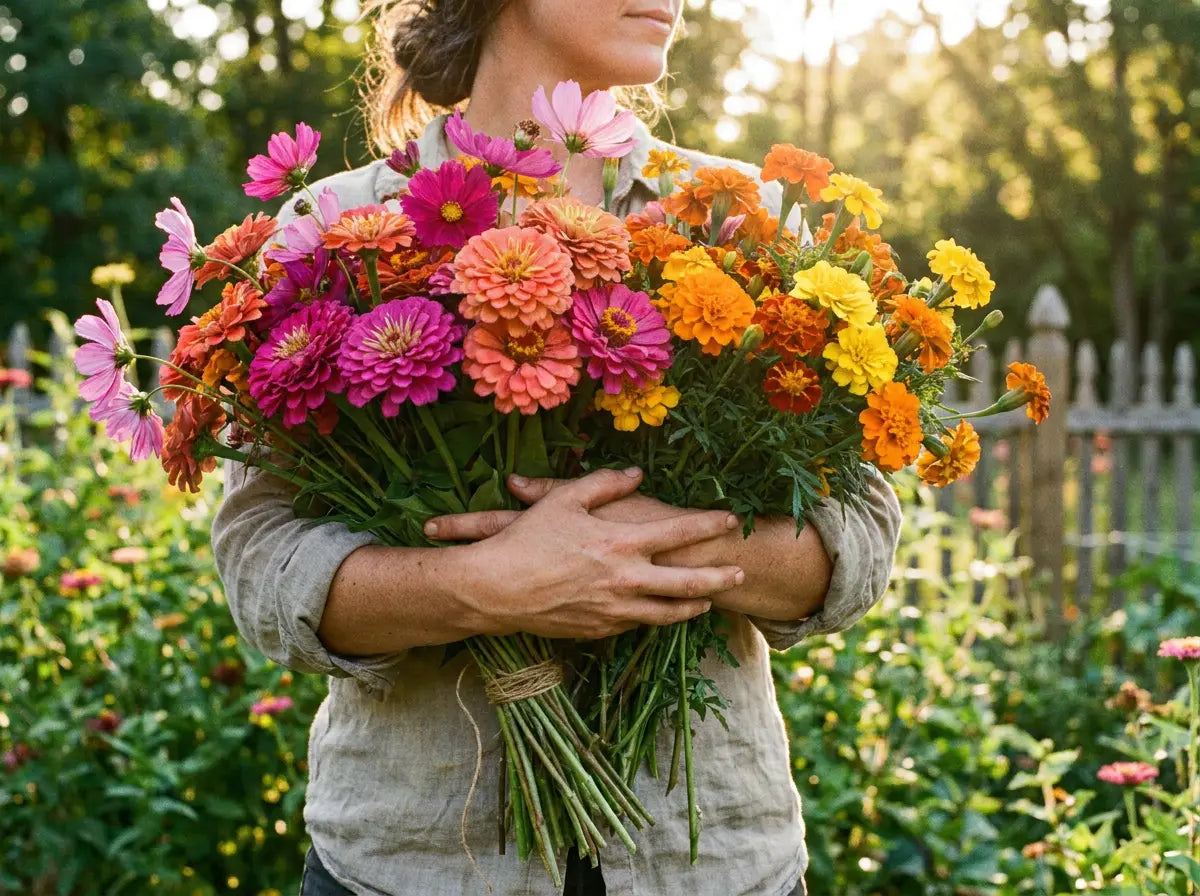
I checked my first frost date, counted back seventy days, and it fit with room to spare. Sowed on the 12th, first blooms in October.— Karen M., Oregon
I bought generic seed in August two years ago and got nothing but leaves. Same month, different varieties, and this time I had flowers.— Tanya B., Missouri
Fast bloomers and slow bloomers are not the same purchase in August. Nobody at the store will tell you which is which.— Bill H., Pennsylvania
Heirloom Non-GMO · USA Sourced · Seed Count Printed on Every Bag · Free Shipping Over $49.99
Get Seeds That Actually Have Time →| Generic Store Seed | Home Grown Heirloom Seed | |
|---|---|---|
| Days-to-bloom disclosed clearly | Rarely, if at all | 45–75 days, stated upfront |
| Still viable sown in August | Depends — undisclosed | Yes, by design |
| Performance in real heat | Varies, often struggles | Built for it — more prolific |
| Seed count | 20–100 | 44,800+ |
| Grows back next year from saved seed | Usually no — hybrid | Yes — heirloom |
| Guarantee if it fails | None | 60-Day Bloom Guarantee |
Fair question, and the honest answer is: check the actual math yourself rather than trusting either packet. Count the days-to-bloom against your local first frost date. If it fits, the seed works regardless of what is printed on either bag. What is different here is that the number is stated clearly enough to do that check in the first place.
In most of the continental US, yes — first frost typically lands well past that window if you sow in August. In the far north with an unusually early frost, it can be tight. The honest move is to check your own average first frost date before ordering, which takes about thirty seconds and removes the guesswork entirely.
Mechanically: heat-loving genetics with a short bloom window, disclosed plainly, instead of a generic multi-season instruction printed once at the factory. The store rack is not lying to you — it is simply not built to tell you which of its own packets still have time this late in the year.
That experience is almost always explained by exactly what this page describes — the wrong variety, sown at the wrong point in its window, with no indication on the packet that the timing mattered. It is a reasonable prior to carry in. The 60-Day Bloom Guarantee exists so you are not asked to simply trust that this time is different.
Some of both, honestly. Weather is genuinely unpredictable and no seed removes that risk entirely. But the specific pattern — no days-to-bloom disclosure, no seasonal shelf rotation, no distinction between fast and slow varieties — is a structural choice, not bad luck. That part is fixable, and this page is the fix.
It varies by variety and the count is printed on every pack. California Giant Zinnia, for example, holds 7,300+ seeds in a single 2 oz bag.
Look up your average first frost date and count back 45–75 days from today. If today falls before that point, you have real time left.
No. All three are direct sow — scatter, cover lightly, water.
They are heat-loving annuals with a genuinely short bloom window — not slower, frost-tender varieties being sold past their realistic planting date.
Open-pollinated and non-GMO — seed you collect grows back as the same flower next year, unlike most hybrid store seed.
Yes — all three are notably drought tolerant once established and generally perform better in heat than in a mild spring.
Full sun, six hours or more, for the strongest bloom.
Zinnias are among the more reliably deer-resistant annuals; cosmos is moderately so. Nothing is deer-proof in a hard year.
Yes — all three are heirloom and open-pollinated.
Sow as soon as possible and check the count. If your frost date is genuinely closer than 45 days out, store the seed and sow it next spring instead — it holds for years.
60-Day Bloom Guarantee — contact us for a full refund.
Ships within 48 hours. Standard US delivery is 3-7 business days, free over $49.99.
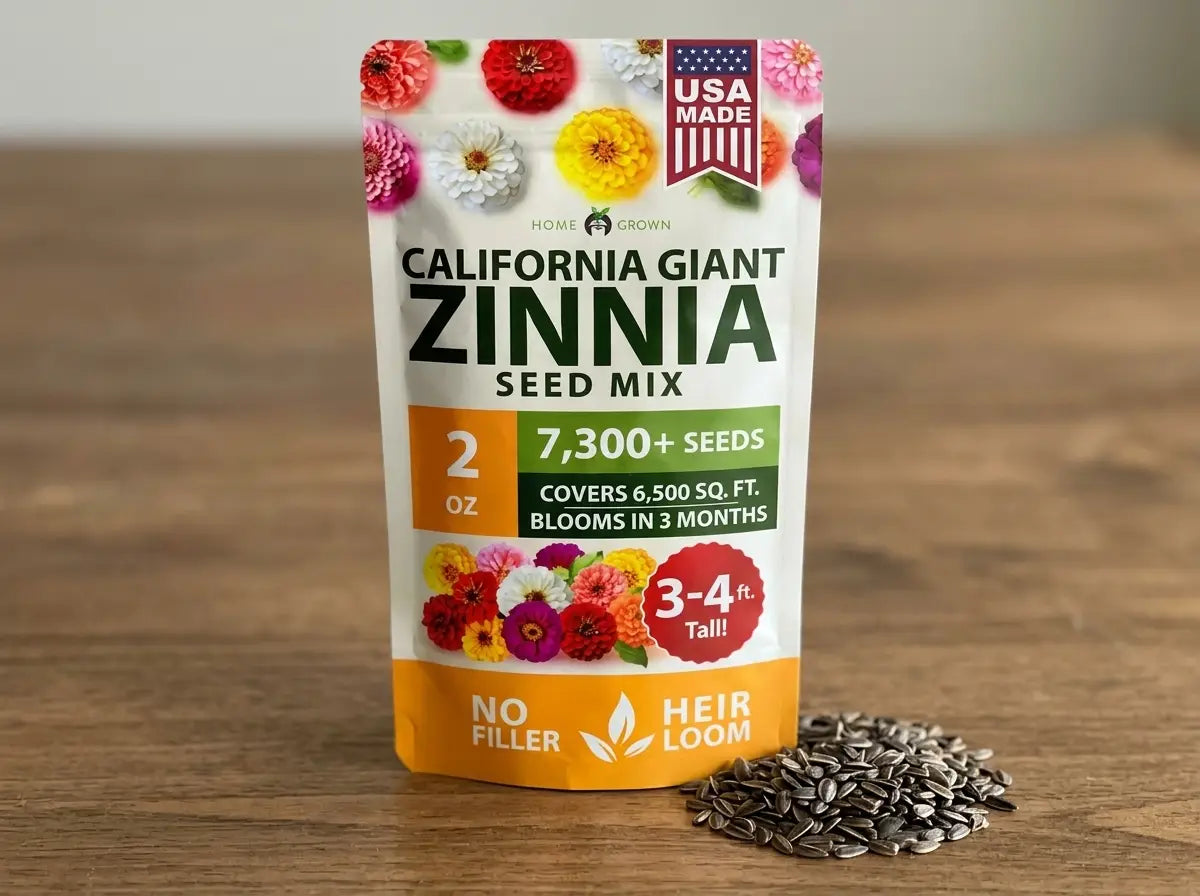
Every other packet on the shelf right now says the same generic thing it said in April, whether or not that is still true.
Count the days. Check your frost date. If it fits — and for these three, right now, it does — there is no real reason to wait until next spring to plant something.
Get Seeds That Actually Have Time →This is a paid advertisement for Homegrown Garden. Bloom timing depends on local climate, soil and first frost date — check yours before sowing.
© Homegrown Garden · Advertisement