

Garden centers are scamming you — selling seed that will not grow true, so you are forced to buy the same flowers again every single year.
Same yard. One bag of seed, scattered and left alone.
For six years my backyard looked like the yard in that clip. Every spring I spent a hundred and something dollars at the garden center, planted everything by the little plastic tags, and by mid-July was looking at the same brown, gappy patch of dirt as the year before.
Here is what nobody told me: those plants were bred to look perfect on a shelf for about eleven days — not to survive a real backyard for a hundred. I was not failing at gardening. I was failing at keeping alive something that was never built to live at my house.
What you just saw is the same yard, from one bag of seed and an afternoon of work. Here is what changed.
All these years I thought I couldn’t grow flowers. Turns out — it was the seeds, not me. The comment that made me try one more time
I need you to understand how little I did.
I raked the dirt a bit. I opened the bag. I threw the seeds around like I was feeding chickens. I covered them with a thin layer of soil, watered, and then — this is the important part — I went inside and forgot about them for a week.
No trays. No grow lights. No hardening off. No transplanting, which is where I had killed most things previously. Seven to ten days later there were sprouts everywhere.
The feelingRealising the thing you were intimidated by took eleven minutes.
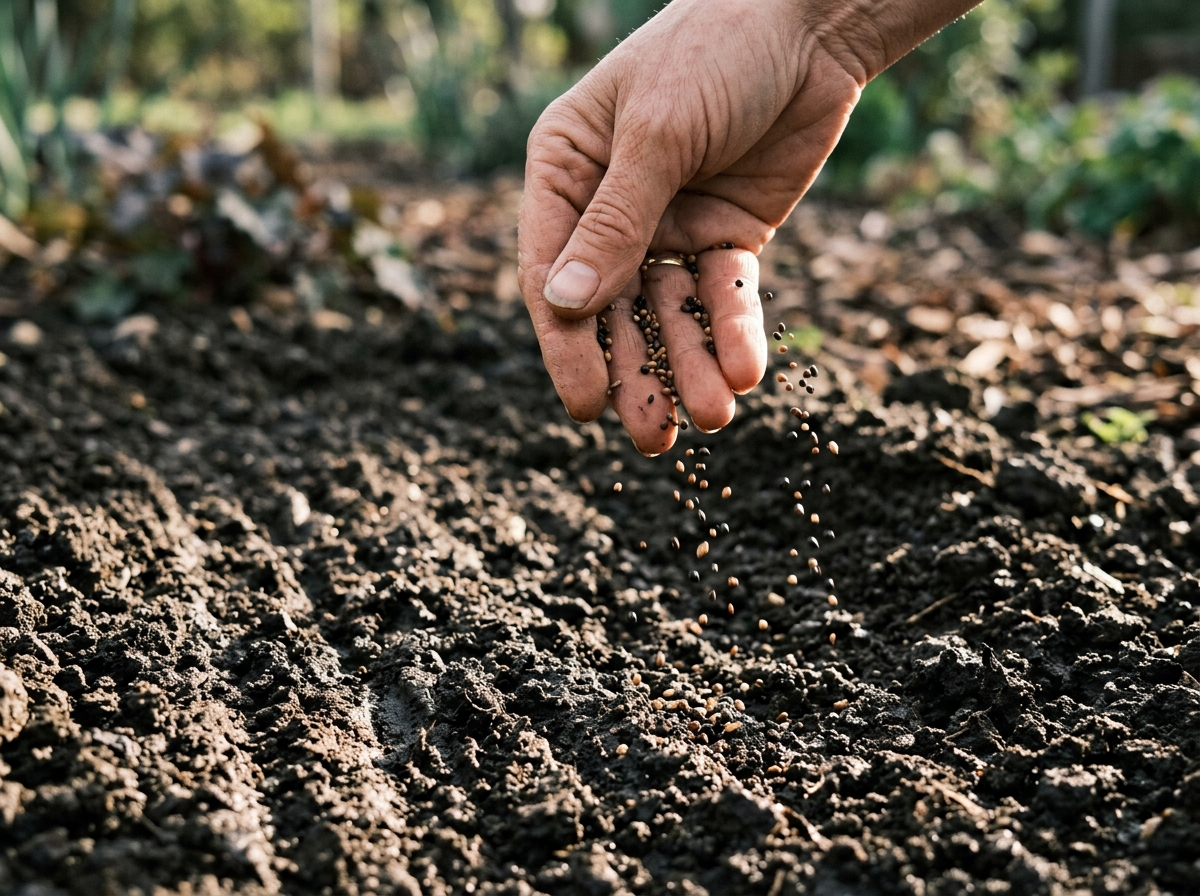
Here is what I finally worked out about garden center plants. They are raised in a controlled greenhouse, in perfect soil, on a watering schedule, then handed to you in a plastic pot and asked to survive a completely different environment. A lot of them do not. That is not your failure — that is the handoff failing.
Direct-sown seed skips it entirely. The plant germinates in your actual dirt, in your actual light, in your actual conditions. It never knows anything else, so there is nothing to adjust to.
The feelingNot watching something wilt three days after you bought it.
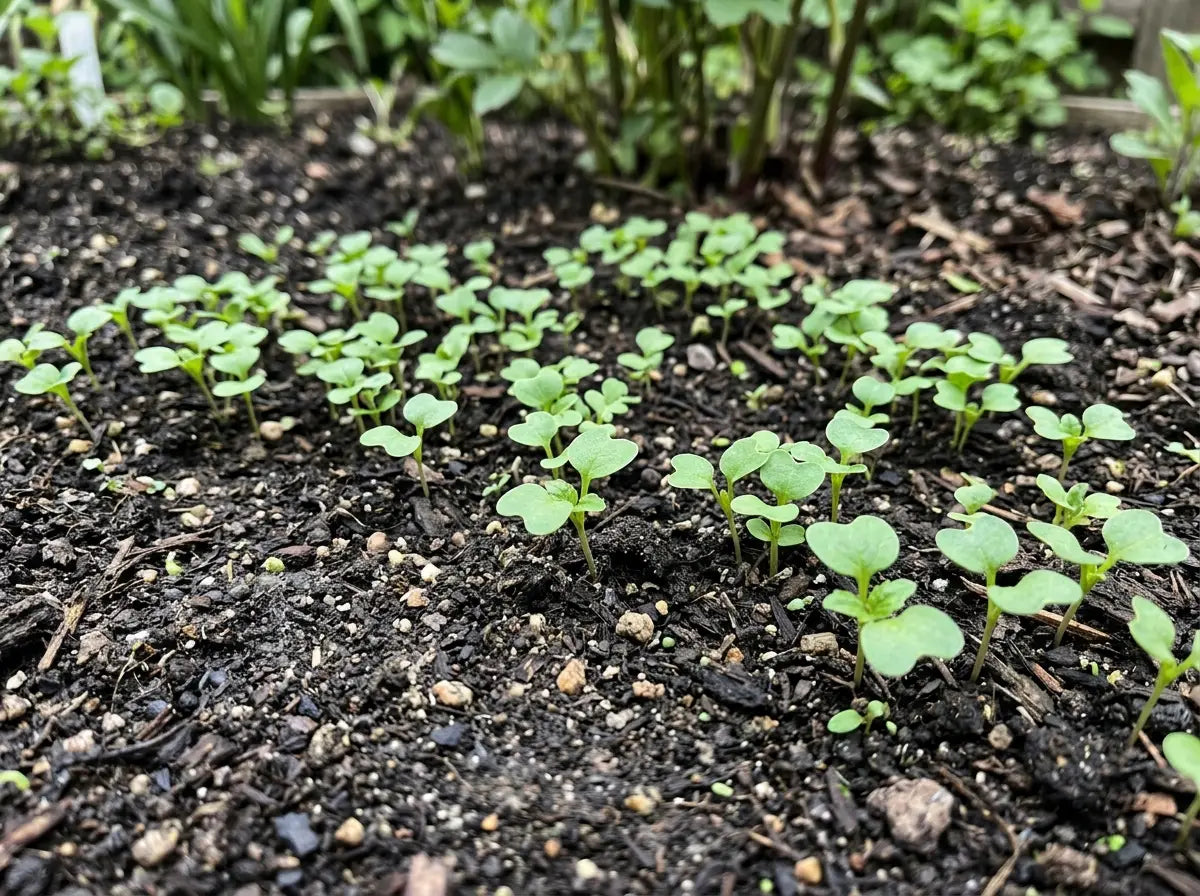
Why did nobody tell me growing from seed was THIS easy?? Day 7 and I already have sprouts everywhere.
This is the part I would have got wrong on my own.
If you plant one thing and it struggles, you have a bare bed. California Giant Zinnia, Bright Lights Cosmos and African Cracker Jack Marigold in the same ground — different heights, different bloom timing, different tolerances. Something is always working.
For someone who has failed before, that redundancy matters more than any single variety’s specs. You are not betting the whole season on one plant behaving.
The feelingNot having your whole garden riding on one guess.
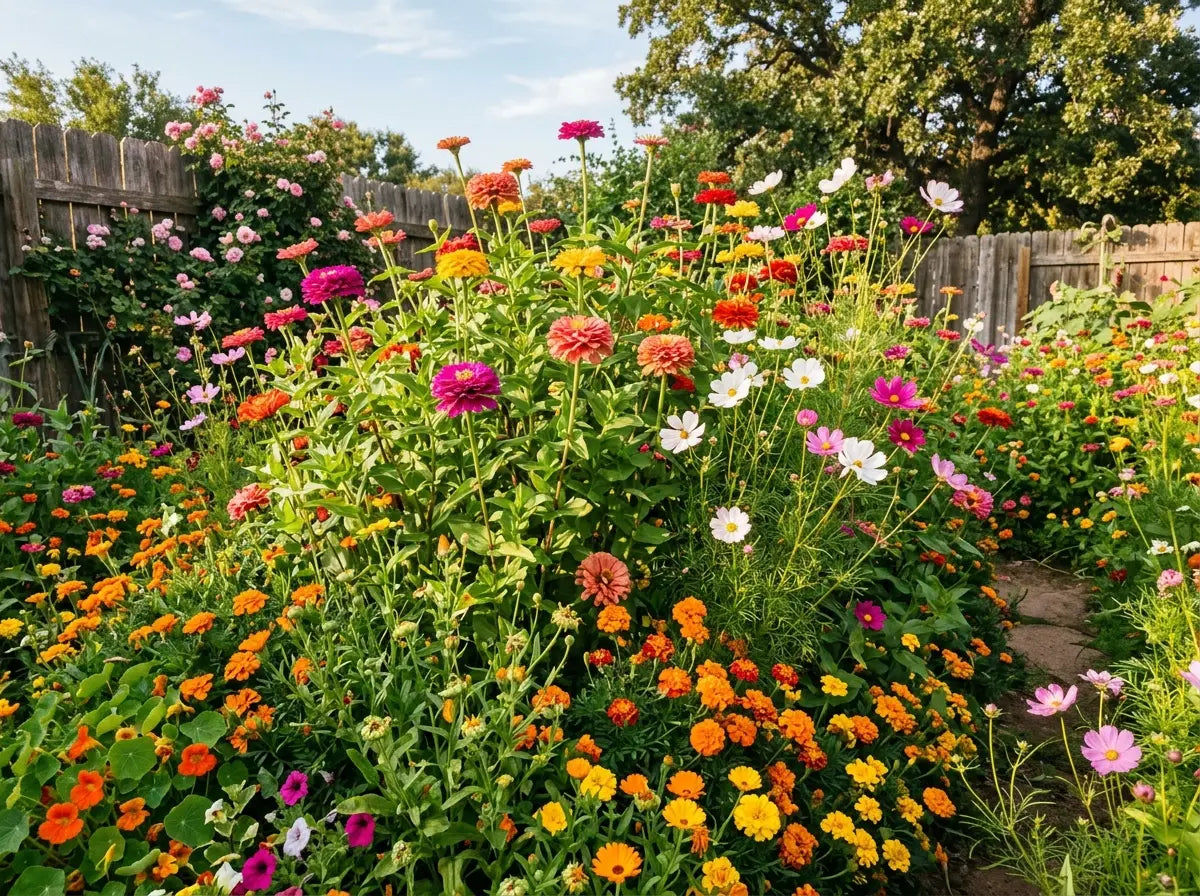
Two of my six failed years were deer. One was a July I forgot to water for eleven days.
Every variety in this bundle is deer resistant and drought tolerant. The deer walk past — they do not like the texture or the scent. And once these are established, missing a watering is not a death sentence; they are built for hot, dry midsummer.
If your past failures were caused by wildlife, or by simply having a life outside your yard, this is the specific thing that fixes it.
The feelingComing back from vacation and everything is still alive.
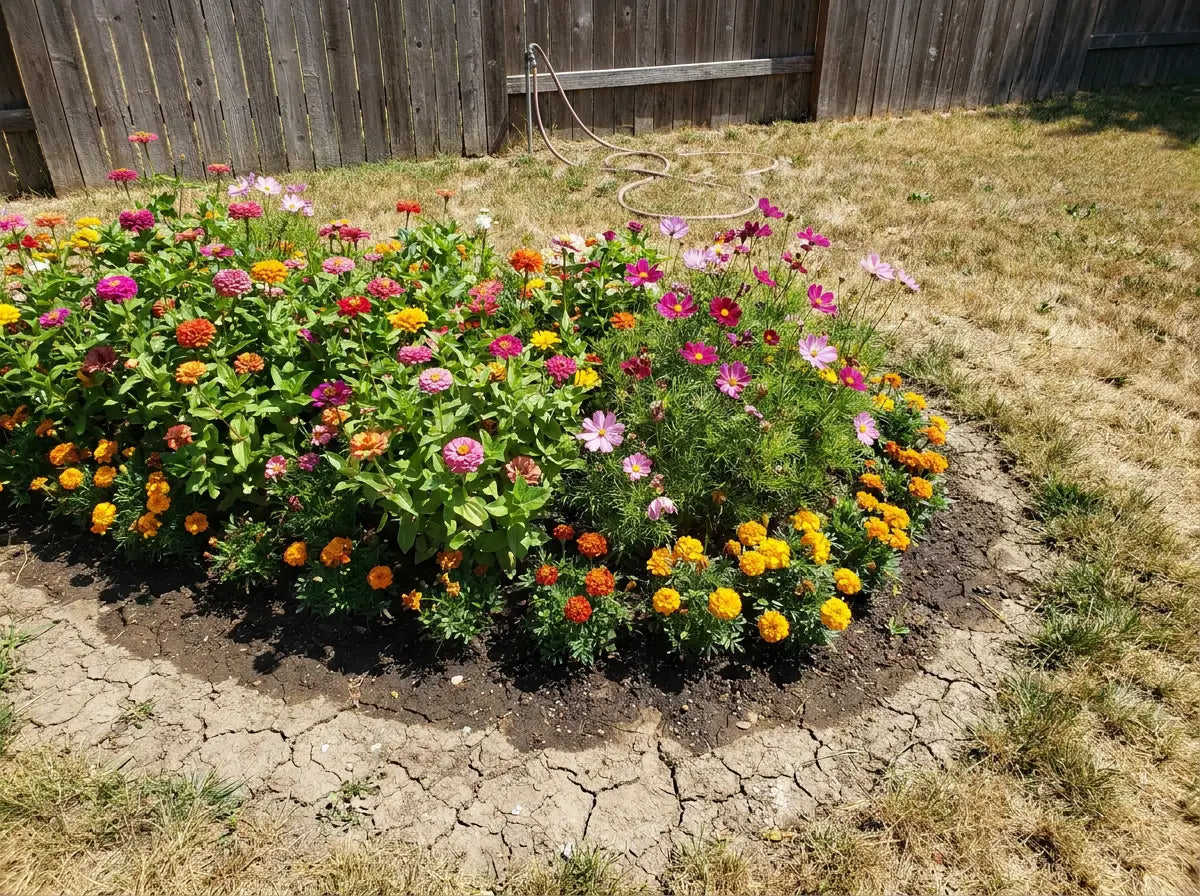
The cruellest part of my garden center years was the timing. Everything looked its best the day I bought it and worst by the time I actually wanted to be outside.
These run backwards from that. They start slower, then bloom continuously from midsummer all the way to your first frost — 60–75 days to first bloom, peaking exactly when you are out there in the evenings.
The feelingAugust, and your yard looks better than it did in June.
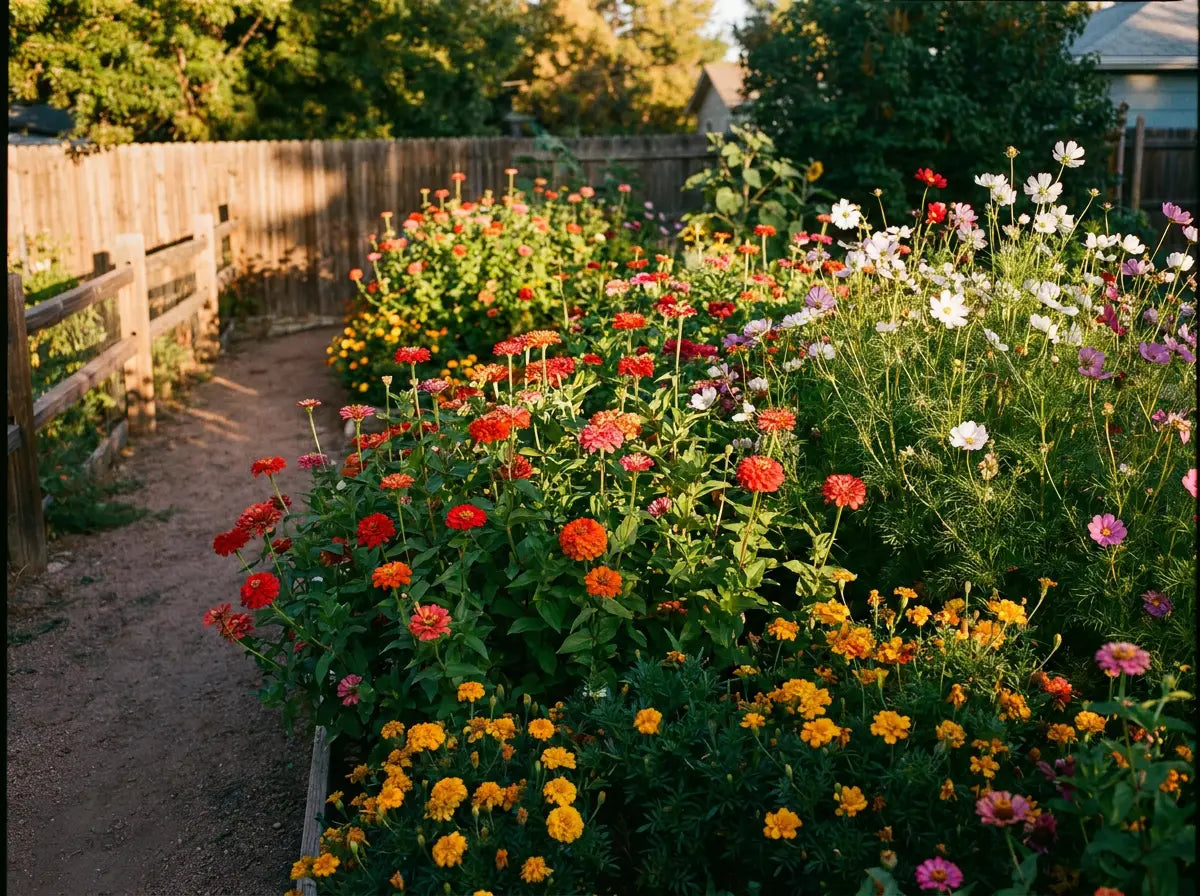
It is OCTOBER and I am still cutting fresh bouquets. Never going back to garden center plants.
I did not expect this to matter to me, and it did.
The first neighbour who stopped at the fence to ask what the tall pink ones were, I got weirdly emotional about. Six years of a yard I apologised for, and then someone wanted to know how I had done it.
By August I was cutting bouquets for people. With these, cutting actually makes the plants fuller — every stem you take triggers more growth — so the more you give away, the better the garden looks.
The feelingBeing asked for advice about the thing you used to be embarrassed by.

At the end of that first season I did nothing. I left the dead heads on the stems out of laziness, not strategy.
The next spring, things came up on their own. These are heirloom, open-pollinated seed — they drop viable seed and reseed themselves. My second year was fuller than my first, and I had not spent a dollar or made a single decision.
The feelingA garden that is finally on your side.
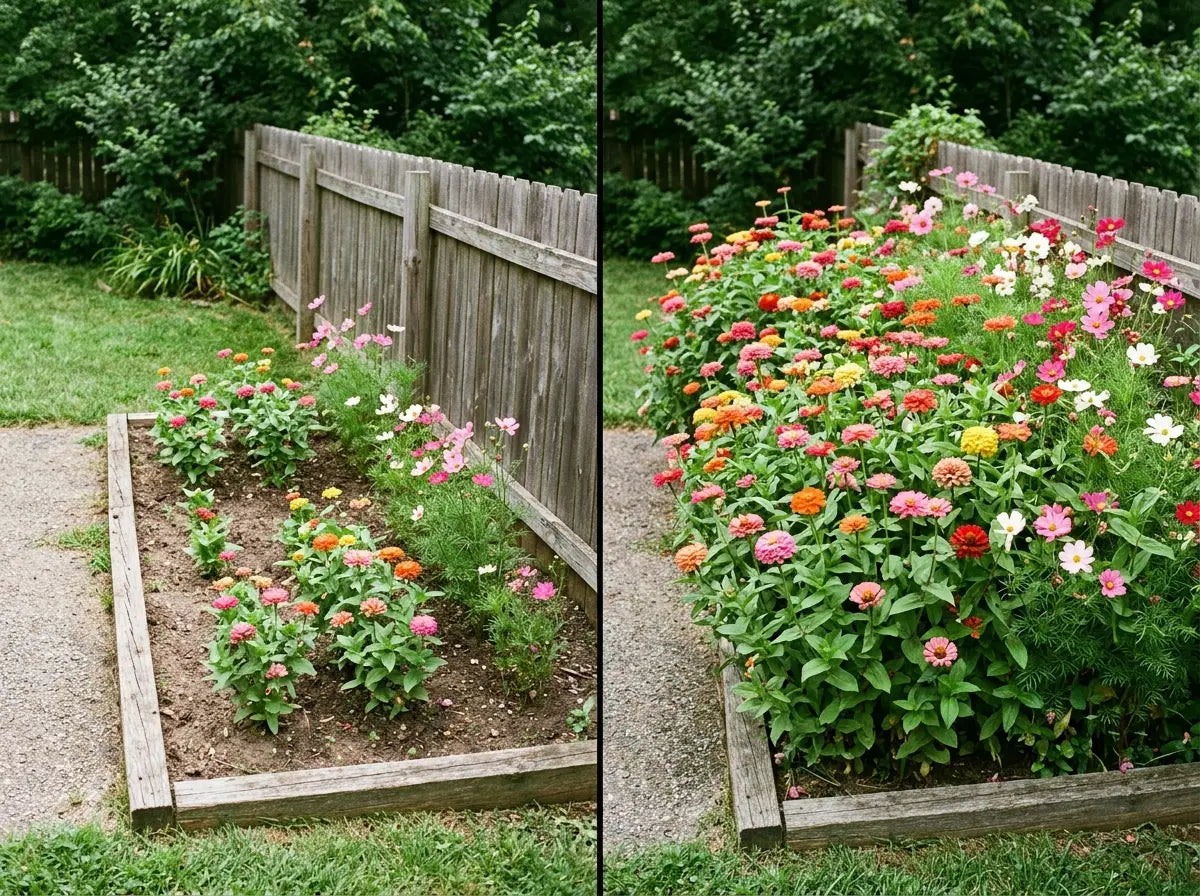
I genuinely could not keep a houseplant alive. Sprouts came up in eight days and I still don't fully believe it.
Tried three different years with garden center plants. This is the first thing that actually worked.
This is what I tell every beginner to start with now instead of nursery flats.
Direct Sow · Deer Resistant · Drought Tolerant · Heirloom Non-GMO
Shop Now →| What I Was Doing | Home Grown Heirloom Seeds | |
|---|---|---|
| The method | Buy plants, transplant, hope | Scatter, cover, water |
| Where it failed | Transplant shock, week one | Nothing to transplant |
| Deer | Ate them | Walk past |
| Missed watering | Usually fatal | Drought tolerant |
| Peak looks | The day you buy it | Midsummer through frost |
| Next year | Buy it all again | Reseeds itself |
| If it fails | Your problem | 60-Day Bloom Guarantee |
I said that sentence out loud, to people, for six years — so I am not going to argue you out of it. I will just point at the mechanism. The way most beginners kill a plant is transplanting it, over-watering it, or buying something that was never suited to their conditions. Direct-sown seed removes the first, tolerates the second, and this bundle is specifically chosen for the third. There is substantially less available to get wrong.
Neither do I, which is why this is the version I stuck with. The actual time investment was an afternoon of raking and scattering, then watering when I remembered, then nothing. These are not roses. They do not need pruning schedules or feeding regimens or your attention in August.
Mine was compacted clay with rocks in it. These varieties are notably unfussy — they are the plants people put on slopes, in dry strips, in the bad corner along the driveway. Rich soil makes them taller; poor soil still makes them bloom. If your yard grows weeds, it will grow these.
Then you get your money back — that is the 60-Day Bloom Guarantee, and it is the whole reason I was willing to try one more time after six failures. You are not being asked to bet on your own competence here. If it does not work, it costs you nothing.
Probably not. These run about 60–75 days from seed to bloom, so as long as you have that much runway before your first frost you will get real colour this year. The window does close eventually, though — that part is not marketing, it is just frost.
Clear a patch, loosen the top inch of soil, scatter the seed, cover lightly, water. That is the whole thing.
No. All varieties in this bundle are direct sow — straight into the ground.
Sprouts in roughly 7–10 days. Blooms in about 60–75 days.
After your last frost date, through early summer.
California Giant Zinnia (7,300+ seeds), Bright Lights Cosmos (2,500+), African Cracker Jack Marigold (35,000+).
These are among the more deer-resistant annuals. Deer generally leave them alone.
Once established they are drought tolerant. Water regularly for the first few weeks, then they are forgiving.
Yes — 12 inches or wider, full sun, good drainage.
Any amount. One bundle covers a large yard, but a single bed or a few containers works fine.
These are heirloom open-pollinated — leave some heads to dry and they reseed themselves.
These varieties are non-toxic.
60-Day Bloom Guarantee — full refund, no argument.
Ships within 48 hours; 3-5 business days delivery.
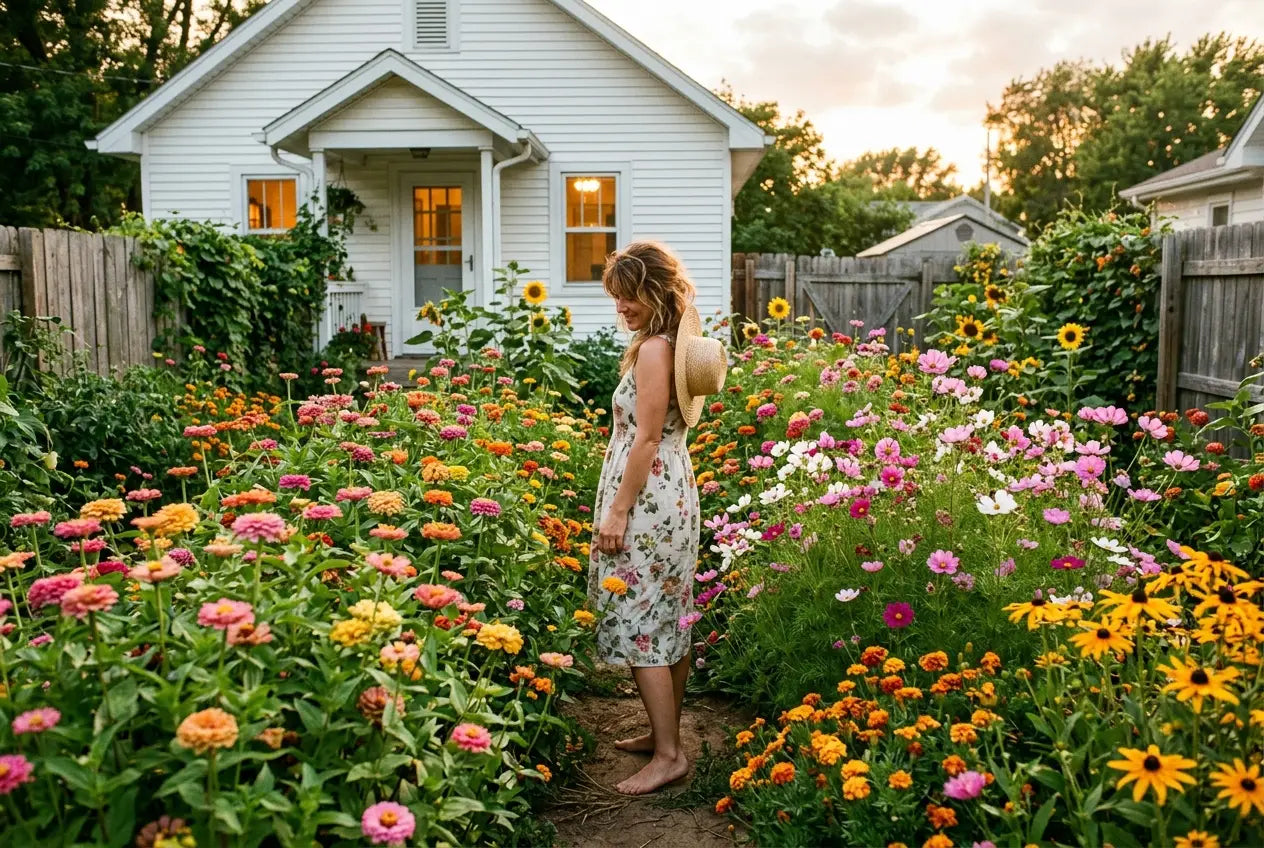
Not a perfect garden. Just a yard that is not weeds and sadness anymore.
Colour where the bare patch was. A jar of cut flowers on the counter you did not buy. Somebody at the fence asking what you planted — and you actually knowing the answer.
That is about eleven minutes of work and a bag of seed away.