Start here
Homestead
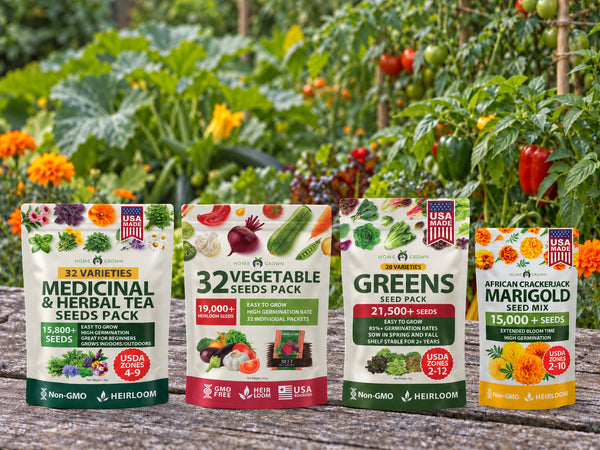
The Kitchen Garden plus the 20-variety Lettuce & Salad Greens pack, with about 12 greens the vault doesn't have. Four items, so every item is 10% off vs buying them one at a time.
 Better seeds, better garden.
Advertisement
From the HOME GROWN garden team
In 2020 seed was easy to buy — right up until the week everyone wanted it. Here's what I keep in a kitchen drawer now.
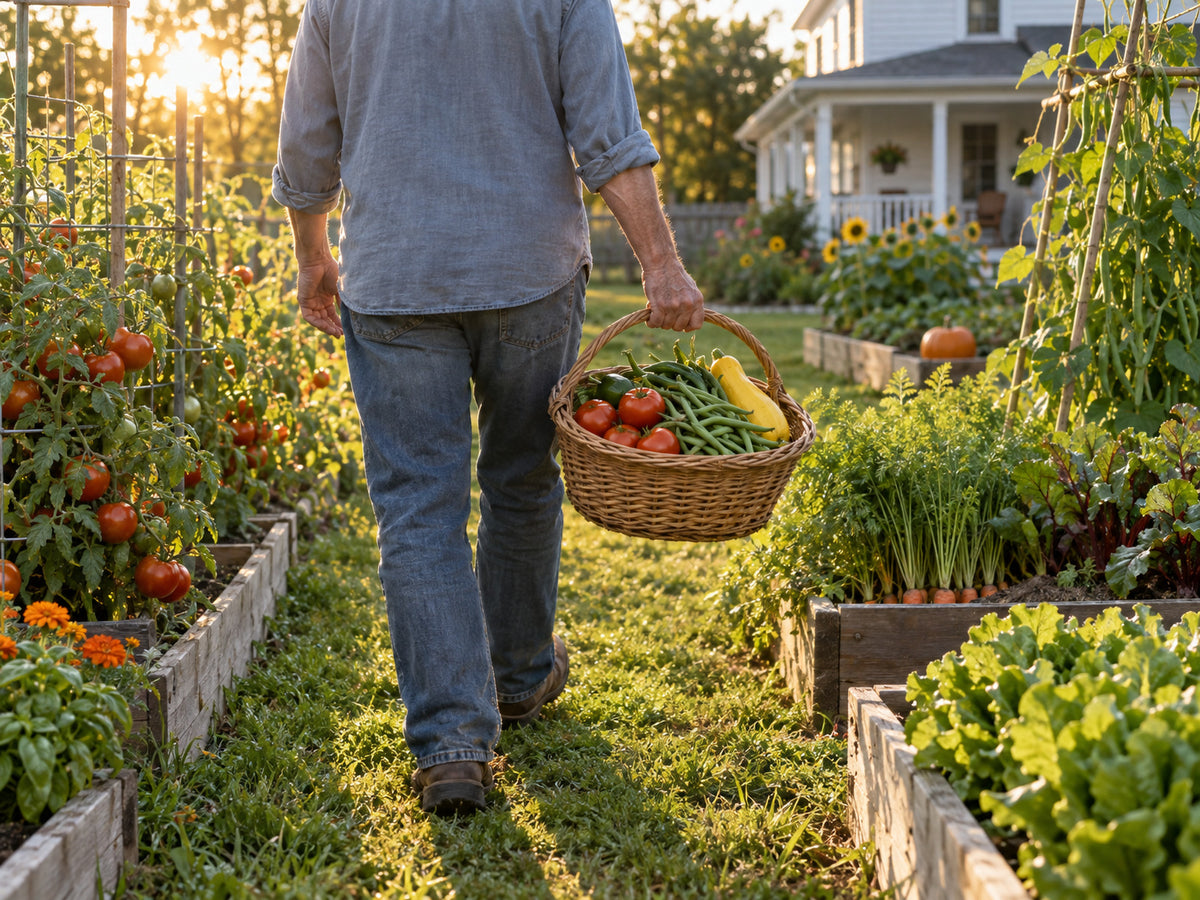
Everyone remembers spring 2020 for the toilet paper. Gardeners remember it for the seed.
That April, Burpee — 144 years old at the time — closed to new orders for about a week just to catch up. Its chairman called the surge “just unbelievable.” (CBS MoneyWatch, April 2020)
It didn't end that spring. Baker Creek's general manager later told Seed World that 2021 and 2022 were “a definite struggle to get some stuff,” with some varieties left out of the catalog because they couldn't get them. (Seed World, January 2024)
The honest part: there was no shortage of seed. It was a line, not an empty shelf, and by 2023 the rush had cooled. (CBS MoneyWatch, April 2020; Seed World, January 2024)
But the line taught a lesson. In 2020, seed was easy to buy right up until the week everyone wanted it. I'm not predicting the next one. I just don't plan on standing in that line.
Home garden seed demand ran 50% to 200% above normal in 2020, according to the National Garden Bureau. (Seed World, January 2024) Johnny's Selected Seeds took home-gardener orders only on Tuesdays and Wednesdays, while commercial farmers could order any day. (Modern Farmer, January 2021)
Seed is seasonal. Most of us want it in the same few weeks before planting, so a wave of new gardeners lands in the same line at once. The best time to buy seed is when nobody's thinking about it.
I'm not forecasting, just reading the numbers. The USDA expects fresh vegetable prices to rise 5.8% in 2026, faster than their 20-year average. Farm-level prices — paid before produce reaches a store — were 29.6% higher in September 2026 than a year earlier; in stores, up 2.8%. The USDA calls farm-level prices volatile, but it's the kind of number that makes a gardener look twice. (USDA ERS, October 2026)
I can't tell you when the next tight year comes. That's exactly why a seed drawer makes sense to me.
What's in the pouch
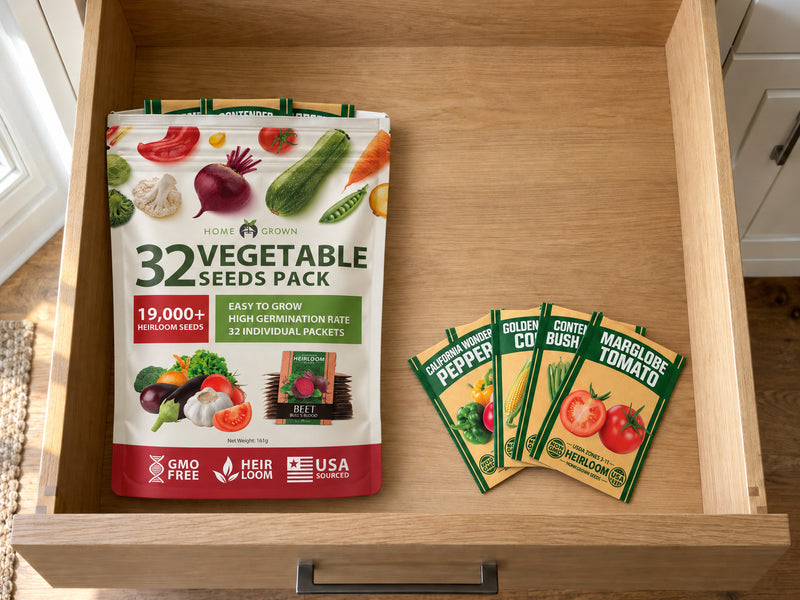
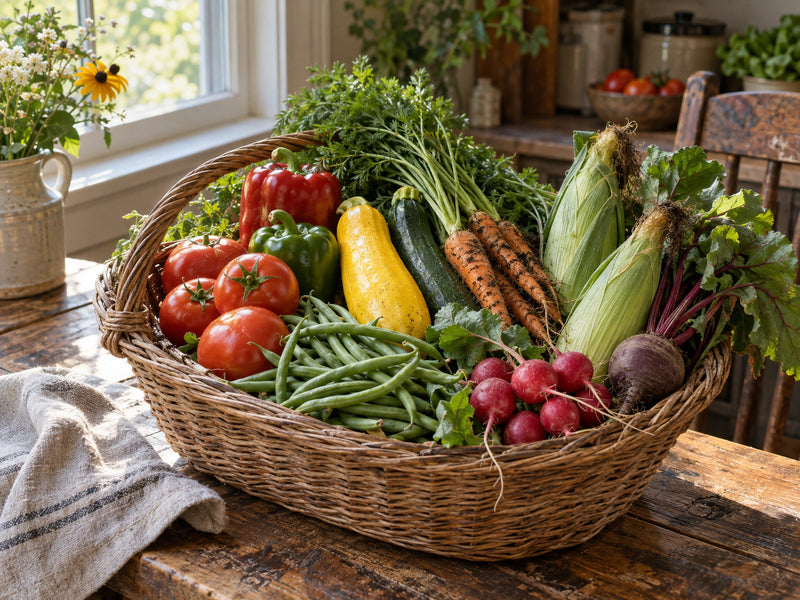
Beans, peas, tomatoes, peppers, squash, pumpkin, corn, greens and roots: 32 vegetable varieties in all, each in its own seed packet, all inside one resealable mylar pouch.
It mixes cool-season crops like peas, spinach and lettuce with warm-season crops like tomatoes, peppers and squash, so there's something for spring, summer and fall plantings. The filling crops are in there too: two kinds of beans, peas, corn, squash, pumpkin, beets, carrots and turnips.
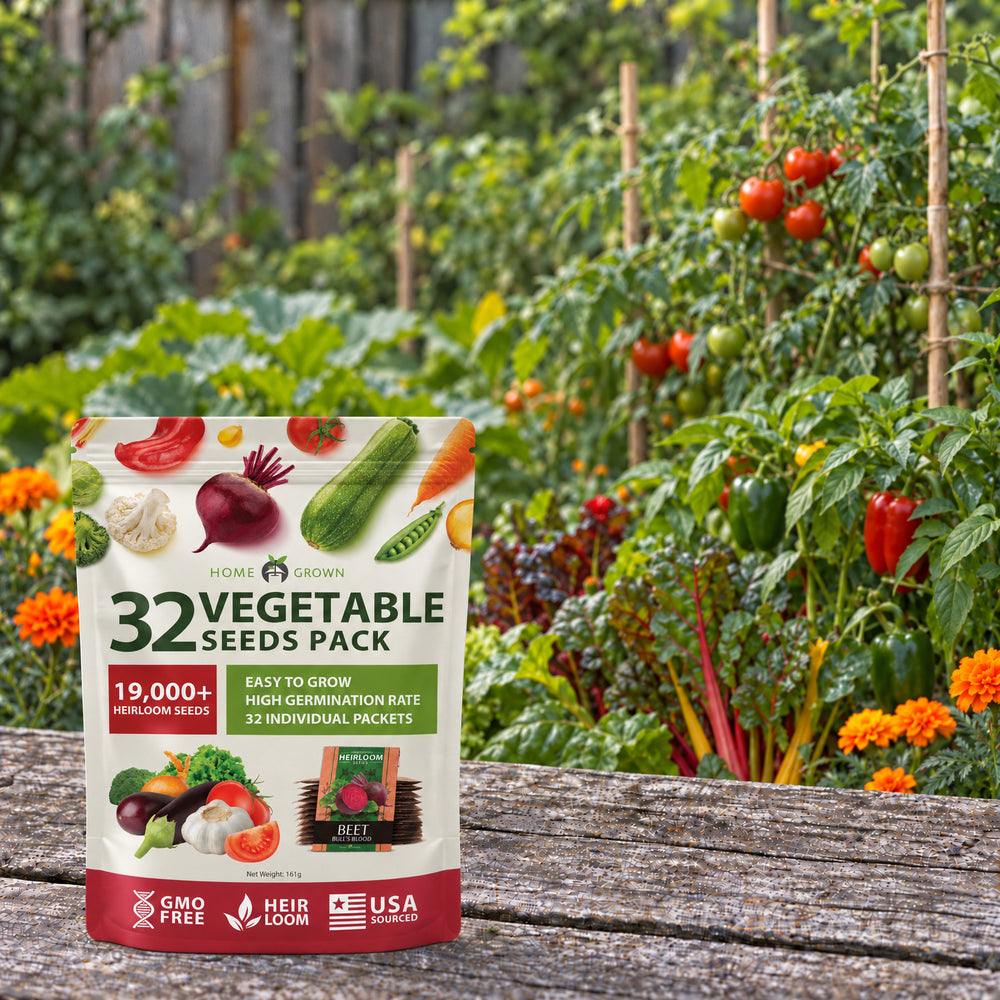
Knowing next spring's garden is already in the house.
19,000+ seeds across the 32 packets
Seed you can save
Every variety in the pouch is open-pollinated. That matters because seed saved from open-pollinated plants grows into plants much like the parent, while seed saved from hybrids is a gamble. (University of Minnesota Extension)
The easiest ones to start with are beans, peas, tomatoes and peppers, and the pouch has all four, with two kinds of beans.
Two caveats, so nobody's surprised. Squash and pumpkins cross with each other, and four in the pouch can cross (the pumpkin and three squash), so grow just one of them if you want to save its seed. And carrots and beets take two growing seasons to make seed, so they're a project for later.
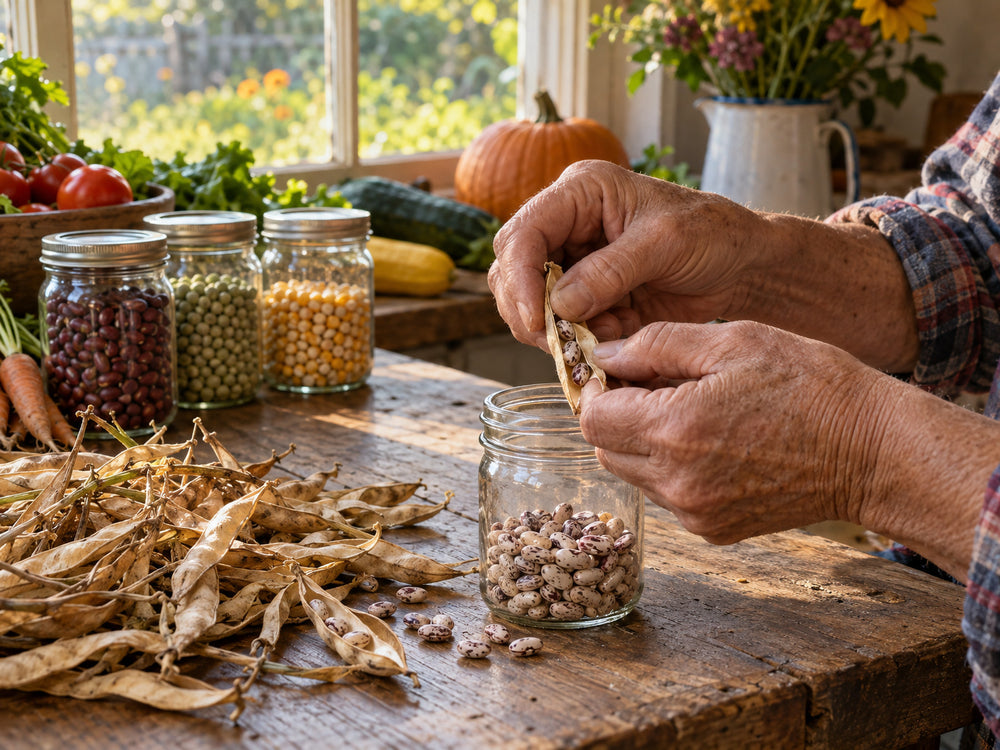
Easiest to save: beans, peas, tomatoes and peppers
A garden that hands you next year's seed.
Storing it
Seed doesn't go bad on a set date. It's alive, and its germination rate drops a little each year, faster in heat and damp. Stored cool, dry and sealed, most of these keep strong germination for about 3 to 6 years from packing; onions about one, peppers, okra and corn about two. (Illinois Extension)
The best spot is a sealed jar or bag in the refrigerator, below 45 F. If the fridge is full, keep the pouch somewhere cool and dry. When you take it out of the fridge, let it warm to room temperature before you open it. (Illinois Extension)
The simple rule: plant the faster-fading ones first. Onions and peppers go in this spring, and the lettuce, squash and tomatoes can wait in the drawer. Older seed doesn't stop all at once, either: fewer seeds sprout, so test 10 and sow more thickly if only 7 to 9 come up.
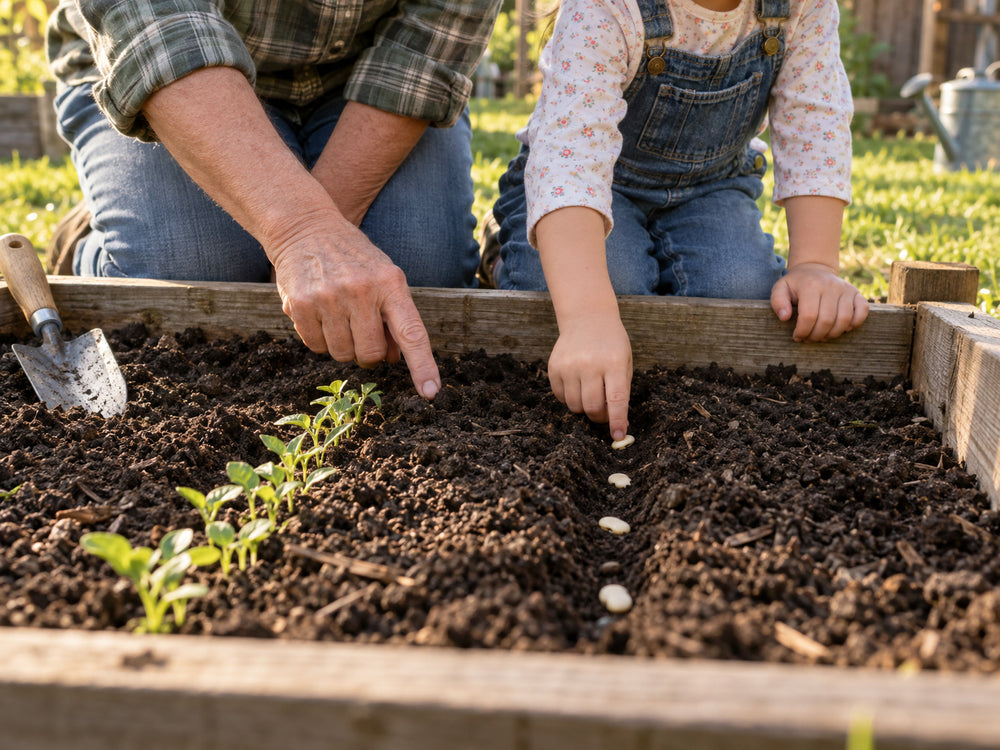
Stored cool and dry, most sprout strongly 3 to 6 years from packing
Knowing which packets to plant first, and which can wait.
The 32 Vault on its own, or with herbs, salad greens and marigolds.
Stock my seed drawerGrow some now
If you're buying seed to keep, my advice is to open it anyway. A seed drawer you've never opened is a bet. A garden you've grown once is a skill.
So start small. Pick one bed and sow a few easy ones: beans, peas, radishes, lettuce and squash. You'll learn your soil and your season, and you'll find out for yourself how the seed does in your ground. The rest go back in the pouch: reseal it and keep it cool and dry.
If you'd rather have two, one to plant now and one for next year, that's what the Plant One, Store One bundle is for.
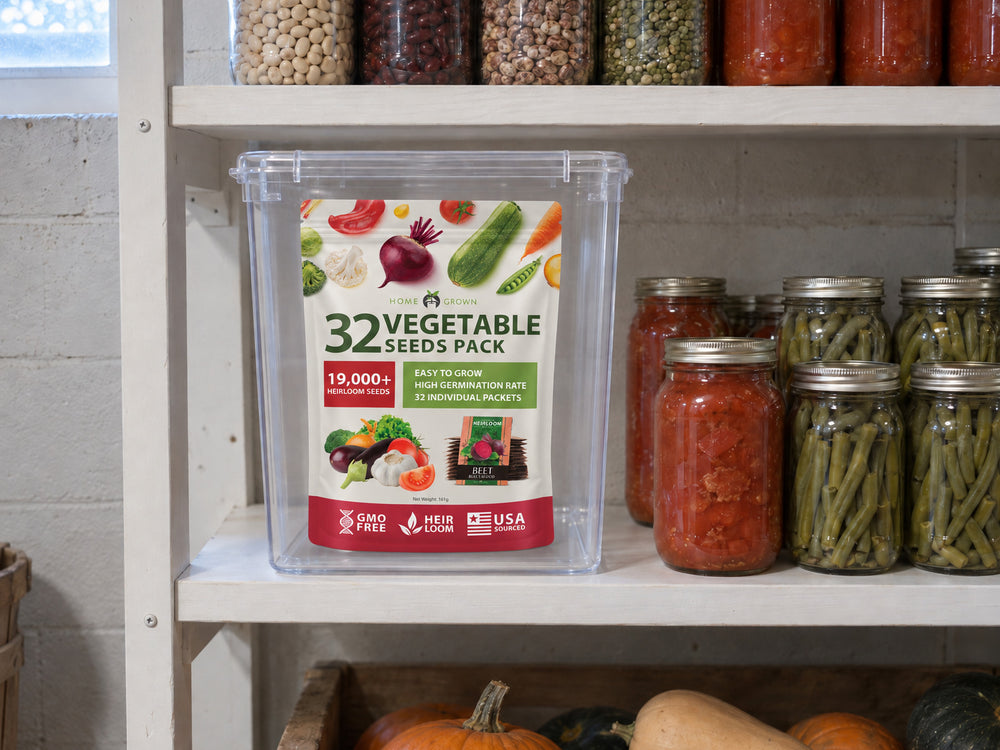
Finding out it grows long before you ever need it to.
Growing guide: scan the QR code on the pouch
This is a wonderful set of seeds for gardeners and survivalists. You get 32 different kinds of vegetables in all, and these are heirloom seeds. That is, you can save your own seeds as they will reproduce true to form, unlike hybrids. They are non-GMO.
Beyond the vegetable rows
To me, a kitchen garden means herbs by the back door and flowers at the ends of the rows. That's why our Kitchen Garden bundle pairs the 32 Vault with two more packs.
The Tea & Aromatic Herb pack adds 32 more varieties: classic tea herbs like chamomile, mint and lavender, kitchen herbs like basil, dill and thyme, and a few grown for their flowers, like pansy, California poppy and Chinese forget-me-not. Those are not for the teapot, so read each packet before you brew anything.
The Crackerjack Marigolds are there for bright color at the row ends and for cutting.
Tea and kitchen herbs, plus marigolds for color
Herbs for the kitchen and color at the end of every row.
Start here
The Kitchen Garden plus the 20-variety Lettuce & Salad Greens pack, with about 12 greens the vault doesn't have. Four items, so every item is 10% off vs buying them one at a time.
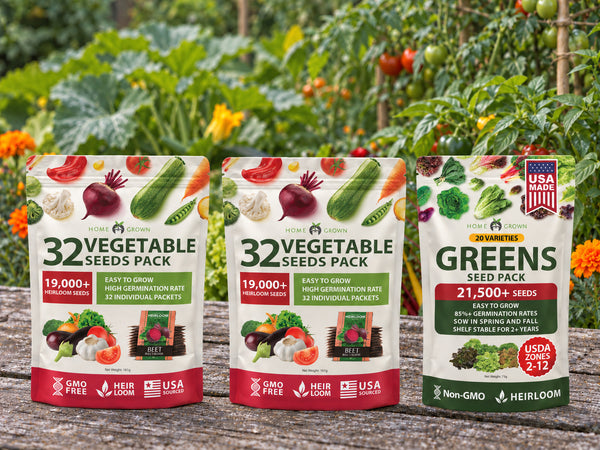
2 vaults
Two 32 Vaults, one to plant and one to keep, plus the 20-variety Lettuce & Salad Greens pack. Three items, so every item is 10% off vs buying them one at a time.
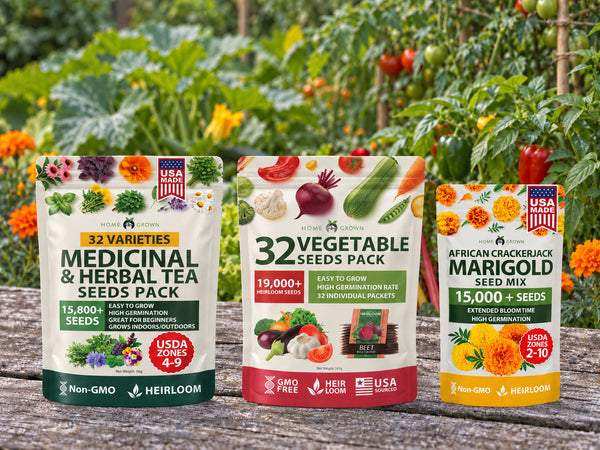
Herbs and marigolds
The 32 Vault plus the 32-variety Tea & Aromatic Herb pack and Crackerjack Marigolds: vegetables, herbs and flowers in one order.
I'd call it a vegetable garden in a pouch before I'd call it a survival kit. Seed won't feed anyone next week. It takes a season, plus soil, water and some work, so I'd rather you plant some than leave it all on a shelf.
What you get is 32 open-pollinated vegetable varieties, most of which keep sprouting strongly for years when stored cool and dry, and every one of which you can start growing this spring.
Every packet carries its packed-for date. Ours are normally packed within three months of when they ship.
Once it's in your hands, storage matters most. Keep the pouch sealed, cool and dry, in the fridge if you can, and plant the onions, peppers, okra and corn first.
You don't have to wait for spring to find out. When your pouch arrives, try the home test from Illinois Extension: put 10 seeds from a packet on a damp paper towel, fold it into a plastic bag and keep it somewhere warm. After the usual sprouting time for that crop, count how many have started to grow. If all 10 sprout, plant as normal; if 7 to 9 do, sow a little more thickly. (Illinois Extension) If 6 or fewer do, tell us within 30 days of delivery: our 30-day satisfaction guarantee gives you a free replacement or a refund of the product price.
Then there's our Spring Germination Promise. If any packet doesn't come up when you plant it as the packet directs, tell us within 12 months of delivery and we'll send a replacement free.
So plant some this spring rather than saving every packet for later, and see how the seed does in your own ground.
I can't promise every crop suits every garden, and nobody can. What changes most from place to place is timing. Cool-season crops like peas, spinach and lettuce go in early, while it's still cool. Warm-season crops like tomatoes, peppers, squash and corn wait for warm soil after your last frost.
Because of how 2020 went. The rush hit right at planting time, when everyone wanted seed in the same few weeks. Buying in the off season means your seed is already in the drawer when planting week comes.
I'm not predicting another rush. I just like having it sorted before planting season starts.
This is an advertisement for HOME GROWN.
A pouch of seed in the kitchen drawer. A bed of beans and peas coming up this spring. And if seed gets hard to find again, like it did in 2020, yours is already in the house.
32 vegetable varieties in one pouch, plus herb and marigold bundles
Stock my seed drawer