



Whether you're a home gardener trying to identify a growth stage, a blogger creating a planting guide, or an educator preparing a lesson, finding high-quality pictures of garlic plants is essential. The right image can clarify a concept instantly, from the first delicate green shoots to the papery skin of a fully cured bulb. Generic photos often fail to capture the specific details needed for accurate identification or instruction. This is why a curated guide to reliable image sources is so valuable for anyone passionate about gardening and cultivation.
This guide explores 8 of the best ways to find stunning garlic imagery, helping you locate the perfect visuals for your project. We will navigate platforms offering everything from royalty-free stock photos ideal for online content to detailed scientific galleries perfect for research. Each entry provides actionable insights, ensuring you can quickly locate specific photographs, whether you need to see the difference between hardneck and softneck varieties or diagnose a potential pest issue. While our focus is on botanical subjects, you might appreciate exploring diverse photography categories, like animal photography, for different visual aesthetics. Let's dive into the top resources for garlic plant photography.
1. Use the Unsplash Garlic Plant Collection
For anyone seeking high-quality, professional-grade pictures of garlic plants, using the Unsplash collection is an invaluable and accessible method. Unsplash is a platform dedicated to sharing stunning, royalty-free stock photography. Its vast library includes a diverse range of garlic imagery, from detailed close-ups of developing bulbs to wide shots of entire fields at harvest time. These photos are contributed by a global community of photographers, ensuring a wide variety of styles, lighting conditions, and compositions.
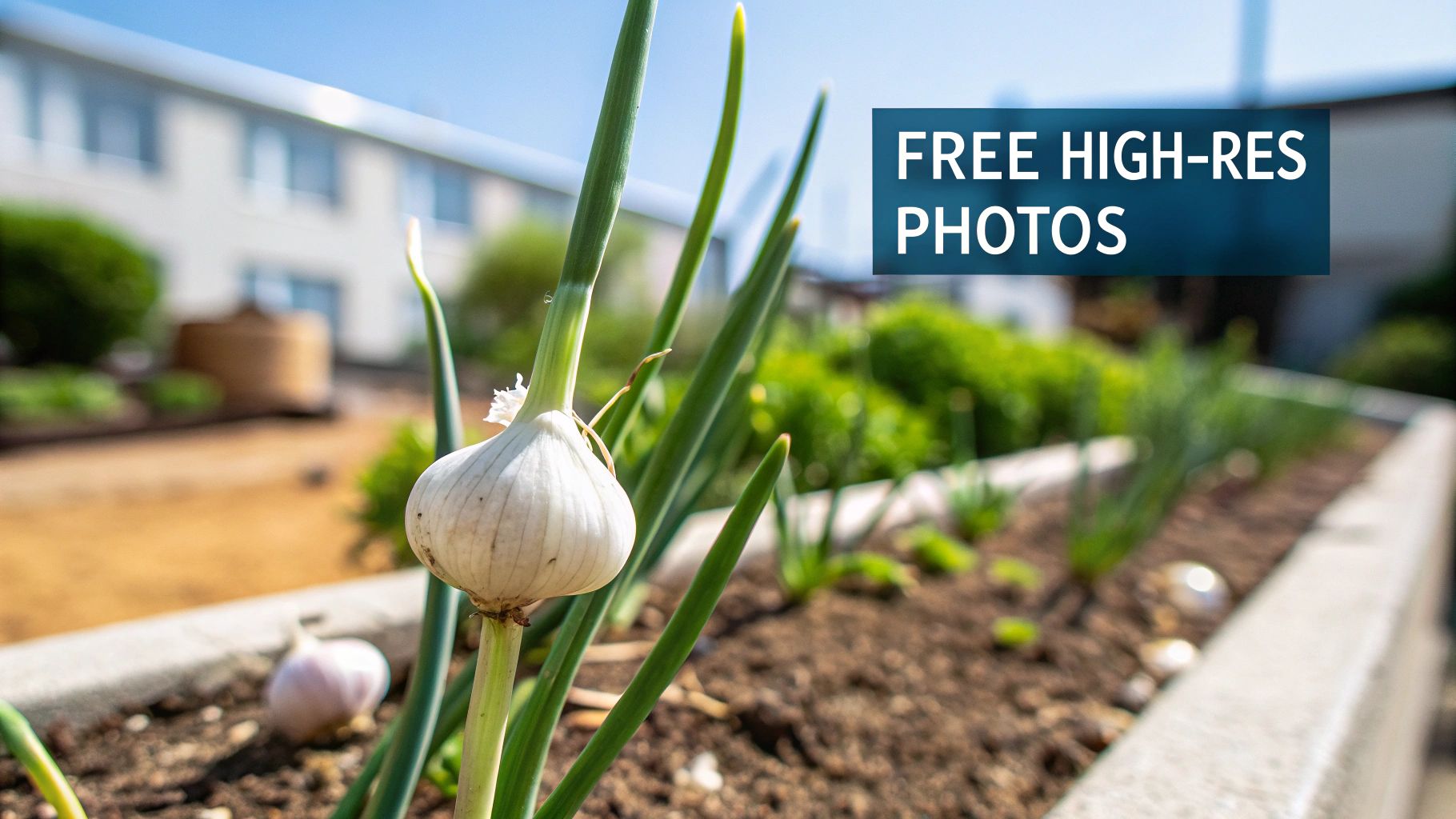
The primary benefit of Unsplash is its generous licensing model. All photos are released under the Unsplash License, which grants users an irrevocable, nonexclusive, worldwide copyright license to download, copy, modify, distribute, perform, and use the photos for free, including for commercial purposes. This makes it an ideal resource for bloggers, educators, website designers, and even small businesses creating product packaging.
Why It's a Top Method
Using Unsplash is perfect when you need visually compelling, high-resolution images without the cost or licensing complexities of traditional stock photo sites. Whether you're writing a blog post about growing garlic, creating educational materials for a horticulture class, or designing a label for a food product, this collection provides a wealth of professional options. The platform’s search functionality allows you to find precisely the image you need to illustrate specific concepts, from the first green shoots emerging from the ground to the final cured bulb. Seeing these growth stages is a great motivator, and a beautiful image can inspire you to get started with your own crop. To ensure your garlic has the best chance, you can learn more about preparing garden soil on homegrown-garden.com.
How-To Tips for Finding the Best Images
To make the most of the Unsplash collection, follow these actionable tips:
- Be Specific with Search Terms: Instead of just "garlic," try more descriptive phrases like "garlic scapes," "garlic plant growth," or "hardneck garlic harvest" to narrow down the results.
- Explore Photographer Profiles: If you find an image you like, click on the photographer's profile. They often upload a series of related photos from the same shoot, providing a consistent visual theme.
- Utilize Search Filters: Use the orientation (landscape, portrait, square) and color filters to find images that perfectly match your project's aesthetic and layout requirements.
- Download High-Resolution Files: Always choose the highest resolution available. This ensures your images look crisp and professional, especially for print projects or full-screen digital displays.
2. Search the Pexels Garlic Photography Database
For those in search of high-quality, artistically curated pictures of garlic plants, searching the Pexels database offers a fantastic and completely free method. Pexels is a popular stock photo platform that provides a carefully selected library of images and videos under its own permissive license. The collection features a wide array of garlic-related imagery, from minimalist shots of single cloves to lush scenes of garlic growing in a garden. Because Pexels emphasizes a high standard of quality, its photos often have a polished, professional feel.
The key advantage of Pexels is its simple and straightforward licensing. All photos on the platform are free to use for both personal and commercial projects without requiring attribution. This makes it an excellent choice for marketers creating materials for organic food businesses, educators developing content for agriculture courses, or even seed companies designing catalog illustrations. The platform's curation ensures you'll find visually appealing images that can elevate any project.
Why It's a Top Method
Pexels stands out for its emphasis on quality and aesthetic appeal. It is the perfect resource when you need a striking image that captures the beauty of garlic without any associated costs or complicated licensing. If you're designing marketing content, creating a presentation, or illustrating a "how-to" guide on planting garlic, you will find a wealth of professional-grade photos. The platform’s curated nature means you spend less time sifting through mediocre images and more time finding the perfect shot to convey the fresh, homegrown quality of garlic.
How-To Tips for Finding the Best Images
To effectively navigate the Pexels database and find the best pictures of garlic plants, use these actionable tips:
- Use Precise Search Queries: Combine keywords for better results. Try searching for "garlic plant soil," "garlic harvest," or "green garlic shoots" to find images that match specific stages or concepts.
- Check Collection Albums: Photographers and curators often group related images into "Collections." Searching for albums themed around "gardening," "vegetables," or "harvest" can reveal hidden gems.
- Download Multiple Sizes: Pexels allows you to download images in various sizes. Grab a high-resolution version for print and a smaller, web-optimized version for your website to improve loading times.
- Follow Photographers: If you admire a particular photographer's style, follow their profile. This way, you'll be notified when they upload new content, which may include more garlic-related photos.
3. Explore Pixabay's Garlic Plant Stock Images
For those seeking an extensive and completely free library of pictures of garlic plants, exploring Pixabay is a premier method. Founded in 2010, Pixabay is a vibrant community of creatives sharing copyright-free images and videos. Its collection includes a wide array of garlic imagery, covering everything from the first tender green shoots to robust, mature plants and perfectly cured, harvested bulbs. With a library of over 3.7 million assets, you can find diverse visuals suitable for any project.
The greatest advantage of using Pixabay is its straightforward licensing. Nearly all content is released under the Pixabay License, which is similar to Creative Commons CC0. This means you can use the images for almost any purpose, including commercial projects like agricultural blogs on WordPress, websites for non-profit farming organizations, or educational YouTube videos on garlic cultivation, without needing to ask for permission or provide attribution.
Why It's a Top Method
Exploring Pixabay is the ideal choice when you need a broad selection of high-quality, free-to-use images without any licensing concerns. The platform’s agriculture category is rich with content, making it perfect for creating a visual narrative of the garlic growing cycle. Whether you're a content creator needing images for a "how-to" guide, an educator illustrating plant biology, or a gardener looking for visual inspiration, Pixabay offers reliable and beautiful options. The sheer volume ensures you can find pictures that fit your specific aesthetic and informational needs.
How-To Tips for Finding the Best Images
To effectively navigate Pixabay's vast collection, apply these targeted search strategies:
- Use Specific Keywords: Go beyond a general search. Try terms like "garlic seedling," "garlic harvest," "garlic plant field," or "growing garlic" to find more relevant photos.
- Filter Your Results: Use the available filters to narrow your search by orientation (horizontal or vertical), size, and even color to match your design requirements.
- Check Upload Dates: Sorting by "latest" can help you find fresh, modern-looking images that may be more seasonally appropriate for your current content.
- Download in High Resolution: Always select the highest resolution available when downloading. This guarantees your images will be sharp and professional for both digital displays and print materials.
4. Consult the USDA Agricultural Research Service Photo Gallery
For those who need scientifically accurate and well-documented pictures of garlic plants, consulting the USDA Agricultural Research Service (ARS) Photo Gallery is an unparalleled method. This official collection is not focused on artistic composition but on providing clear, detailed imagery for educational and research purposes. The gallery contains photos that document garlic biology, various cultivation techniques, disease identification, and pest management, all produced by agricultural experts.
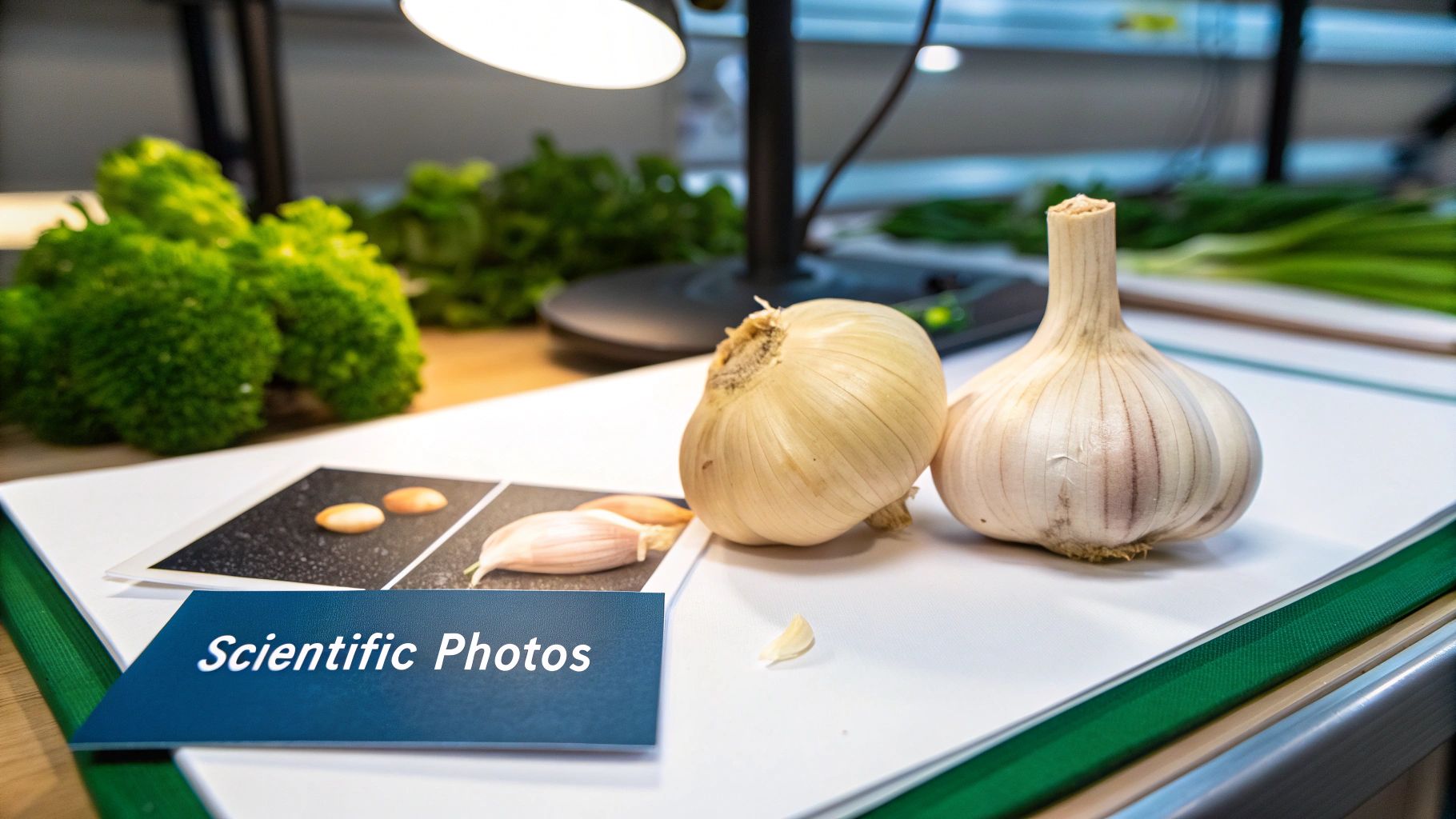
The images from the USDA ARS are in the public domain, meaning they are free to use for any purpose, including commercial projects, without needing permission. This makes the gallery invaluable for students, researchers, educators, and agricultural professionals creating presentations, academic papers, or training materials. The photos often come with detailed captions that provide crucial context, such as the specific garlic variety, the scientific name of a pest, or the conditions under which the photo was taken.
Why It's a Top Method
This gallery is the go-to source when you need images that are both credible and highly specific. If you are writing a research paper on garlic rust, creating a guide to identify common nutrient deficiencies, or developing a presentation for a farming workshop, the USDA ARS provides the authoritative visuals you need. These images lend a level of scientific credibility that artistic photos cannot. Using these detailed pictures can also help you identify issues with your own crop, which is a key part of understanding how to grow garlic successfully on homegrown-garden.com.
How-To Tips for Finding the Best Images
To effectively navigate this scientific collection, use these targeted strategies:
- Search with Scientific Terms: For precise results, use scientific names or technical terms. For instance, search for "Puccinia allii" instead of "garlic rust" to find specific disease imagery.
- Include Proper Attribution: Although not always required, citing the "U.S. Department of Agriculture, Agricultural Research Service" as the source adds credibility to your work.
- Request High-Resolution Files: The online gallery may display lower-resolution versions. For print publications or detailed analysis, you can often request the original high-resolution files.
- Explore Related Research: Use the image captions and associated data to find related scientific papers or research projects, providing deeper context for your topic.
5. Investigate Flickr Commons for Cultivation Photography
For those interested in the historical and cultural side of agriculture, investigating Flickr Commons is a unique way to find pictures of garlic plants. This collaborative project features public photography archives from cultural institutions worldwide, such as libraries, museums, and historical societies. The collection provides a fascinating glimpse into traditional garlic farming methods, heirloom varieties, and agricultural practices from different eras and regions, all with no known copyright restrictions.
The value of Flickr Commons lies in its authenticity and historical depth. These are not staged stock photos but genuine documentary images that tell a story about our relationship with food cultivation. It's an essential resource for researchers, documentary filmmakers, historians, and anyone creating content about agricultural anthropology or the evolution of farming. For gardeners, these images can offer inspiration by showcasing time-tested cultivation techniques.
Why It's a Top Method
Flickr Commons is the perfect source when you need images with historical weight and context. It’s ideal for academic projects, museum exhibits, or blog posts exploring the heritage of garlic. Unlike modern stock photos, these images capture the soul of agricultural traditions, from planting cloves by hand to braiding garlic for storage. Exploring these historical methods can even provide insights into timeless practices, such as how different crops were grown together. For more modern takes on this, you can discover a list of companion plants for garlic at homegrown-garden.com.
How-To Tips for Finding the Best Images
To effectively navigate the archival nature of Flickr Commons, use these targeted tips:
- Search by Institution: Use the advanced search to filter by specific cultural institutions known for their agricultural or regional archives, such as national libraries or agricultural museums.
- Use Geographic Keywords: Combine "garlic farming" with regional terms like "Tuscany," "California," or "Shandong" to find images depicting specific cultural cultivation methods.
- Examine the Metadata: Carefully read the descriptions and tags provided by the contributing institution. This metadata often contains valuable context, including dates, locations, and historical notes.
- Document Your Sources: Since these are archival images, it's good practice to properly cite the source institution. Flickr Commons makes this easy by providing all the necessary information.
6. License Images from Shutterstock's Premium Collection
For commercial-grade projects requiring the highest quality pictures of garlic plants, licensing images from the Shutterstock premium collection is a leading professional method. Shutterstock is a subscription-based stock photography giant, offering a vast and meticulously curated library of images. Its collection covers every conceivable aspect of the garlic life cycle, from microscopic seed details and macro shots of emerging sprouts to expansive aerial views of commercial garlic farms. These professional images are created by vetted photographers and are ideal for high-stakes projects.
Unlike royalty-free platforms, Shutterstock operates on a paid licensing model. This ensures photographers are compensated and often results in exclusive, higher-production-value content. The platform provides various subscription and on-demand purchasing options, making it scalable for freelancers, small businesses, and large corporations. The key benefit is access to a reliable stream of technically flawless and artistically composed imagery that meets professional advertising and publication standards.
Why It's a Top Method
Shutterstock is the go-to choice when your project demands a specific, high-quality image that free platforms may not offer. It's perfect for high-end food marketing campaigns, commercial seed company catalogs, premium gardening magazines, and professional restaurant branding. The extensive search and filtering capabilities allow users to pinpoint images based on composition, color, number of people, and even camera angle. For those creating detailed guides, finding a sequence of consistent, high-resolution photos showing garlic growth is a significant advantage. The platform's reliability and quality make it a cornerstone for professional visual content.
How-To Tips for Finding the Best Images
To effectively navigate Shutterstock’s massive library, use these professional tips:
- Use Advanced Filters: Move beyond basic keywords. Use filters for orientation, color, and "exclude keyword" to refine your search and eliminate irrelevant pictures of garlic plants.
- Review License Restrictions: Carefully read the terms of the Standard and Enhanced licenses before purchasing to ensure the image can be used for your specific commercial or editorial purpose.
- Create Collections: Use the "Collections" feature to save and organize potential images for a project. This helps you compare options and share them with team members for feedback.
- Explore Similar Images: When you find an image you like, look at the "similar images" and "more from this artist" sections. This is an excellent way to discover photos with a consistent style or from the same photoshoot.
7. Purchase from the Getty Images Agricultural and Botanical Collection
For projects requiring the highest caliber of professional imagery, purchasing from the Getty Images agricultural and botanical collection is the definitive method for finding premium pictures of garlic plants. As a world leader in visual communications, Getty offers a meticulously curated library of rights-managed and royalty-free photography. This collection features everything from stunning macro shots of garlic cloves to expansive aerial views of commercial harvesting operations, all produced by top-tier photographers.
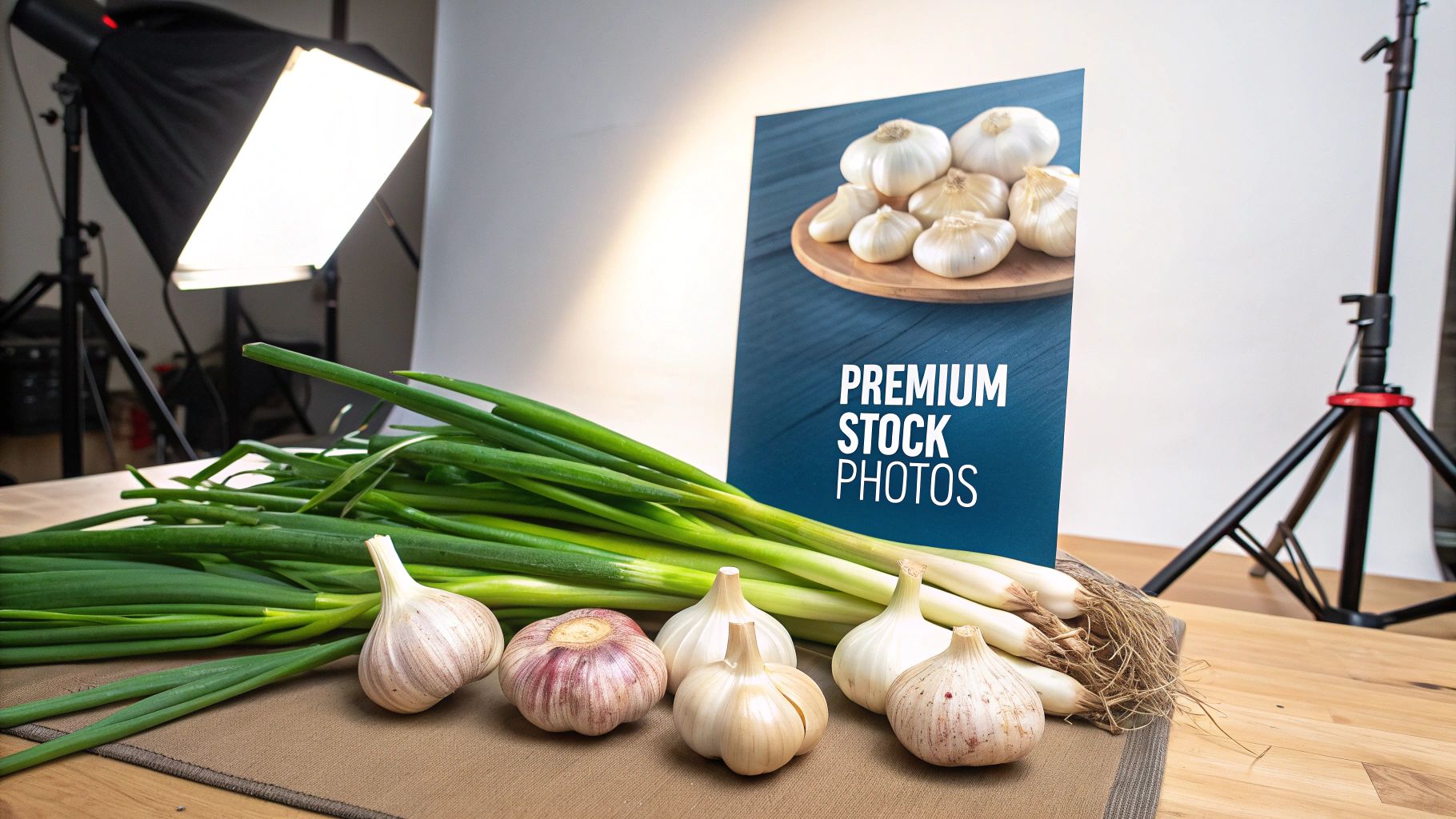
The primary advantage of Getty Images lies in its unparalleled quality and exclusive content, which is often unavailable elsewhere. The licensing models are designed for professional use, making it the go-to resource for major advertising campaigns, high-end editorial features in agricultural magazines, and documentary film productions. While it comes at a premium price, the investment ensures unique, legally-vetted images that can elevate a project from ordinary to exceptional.
Why It's a Top Method
Getty Images is the best choice for commercial or high-profile projects where budget allows for premium, exclusive visual content. If you are creating a corporate annual report for an agricultural business, designing a national advertising campaign, or producing a documentary, the artistic quality and legal protection offered by Getty are indispensable. The collection provides not just pictures, but powerful visual narratives that can tell the story of garlic from soil to market with cinematic flair and technical perfection.
How-To Tips for Finding the Best Images
To navigate the extensive Getty Images library effectively, use these professional strategies:
- Review Rights-Managed vs. Royalty-Free: Carefully understand the difference. Rights-managed licenses offer exclusivity for a specific use, time, and region, while royalty-free allows for broader, repeated use after a one-time fee.
- Use the 'Save to Board' Feature: Create and share boards to organize potential selections, collaborate with team members, and compare your favorite images before making a final decision.
- Contact Getty for Custom Licensing: For complex or large-scale projects, don't hesitate to contact a Getty representative to negotiate custom licensing terms that fit your specific needs and budget.
- Filter by 'Creative' or 'Editorial': Use the platform's primary filters to quickly find either artistic, conceptual images (Creative) or newsworthy, documentary-style shots (Editorial) of garlic cultivation.
8. Browse Wikimedia Commons for Garlic Plant Photography
For those in academia, education, or non-profit sectors, browsing Wikimedia Commons offers a fantastic way to find freely licensed pictures of garlic plants. As the central media repository for all Wikimedia Foundation projects, including Wikipedia, it is a massive collaborative effort. The collection contains an extensive range of images documenting everything from specific garlic cultivars and growth stages to pest identification and historical cultivation practices from around the globe.
The core value of Wikimedia Commons lies in its commitment to open knowledge. Images are contributed by a global community and released under various Creative Commons licenses, which explicitly permit reuse. This makes the platform an indispensable resource for creating educational materials, academic publications, open-source agricultural guides, and other non-commercial projects without navigating complex copyright issues.
Why It's a Top Method
Wikimedia Commons is the go-to source when you need scientifically or culturally specific images with clear licensing for educational or reference purposes. Its structured categorization allows users to find highly specific content, such as photos of a particular garlic disease or images showing how garlic is braided in different cultures. For educators developing a botany lesson or researchers illustrating a paper, the repository provides well-documented visual aids that are both free and legal to use with proper attribution.
How-To Tips for Finding the Best Images
To effectively navigate this vast educational library, follow these actionable tips:
- Verify the License: Before using any image, always check its specific Creative Commons license. While most allow free use, attribution requirements and restrictions on commercial use can vary.
- Use Category Browsing: The platform's category system is powerful. Start with a broad category like "Allium sativum" and drill down into subcategories like "Garlic scapes" or "Garlic cultivation" for targeted results.
- Check Image Descriptions: Read the file description for valuable context, including the photographer, location, date, and sometimes even the specific cultivar, which adds scientific value.
- Provide Proper Attribution: Follow the license requirements for attribution precisely. This usually involves crediting the photographer and linking back to the source file or license page.
8-Source Comparison of Garlic Plant Photos
| Source | Implementation complexity 🔄 | Resource requirements ⚡ | Expected quality ⭐ | Ideal use cases 💡 | Key advantages 📊 |
|---|---|---|---|---|---|
| Unsplash Garlic Plant Collection | Low — simple search & download | Free; high-res downloads; web access | ⭐⭐⭐⭐ — professional, aesthetic photos | Blogs, websites, commercial packaging | Free, high-quality, diverse photographer perspectives |
| Pexels Garlic Photography Database | Low — curated search, clear filtering | Free; curated high-res; fast downloads | ⭐⭐⭐⭐ — editor-verified selections | Educational materials, organic marketing, catalogs | Curated quality, detailed metadata, reliable downloads |
| Pixabay Garlic Plant Stock Images | Low–Moderate — large results need filtering | Free (CC0); no account required; many formats | ⭐⭐⭐ — variable quality across large set | Blogs, non-profit materials, general educational use | Massive collection, unrestricted public-domain use |
| USDA ARS Photo Gallery | Moderate — research-focused search & metadata | Free (public domain); may require requests for hi-res | ⭐⭐⭐⭐ — scientifically accurate, technical images | Academic publications, extension materials, farmer training | Authoritative source, detailed captions, pest/disease documentation |
| Flickr Commons Garlic Cultivation Photography | Moderate — archival navigation and provenance checks | Mostly free; licensing varies by institution | ⭐⭐⭐ — historical/unique value, variable quality | Historical research, documentaries, museum exhibits | Unique archival content with verified provenance |
| Shutterstock Garlic Plant Premium Collection | Low–Moderate — subscription and license selection | Paid subscription/licensing; commercial options | ⭐⭐⭐⭐⭐ — top-tier commercial photography | High-end marketing, catalogs, professional publications | Extensive library, consistent updates, strong licensing support |
| Getty Images Agricultural & Botanical Collection | Moderate–High — complex licensing & procurement | Premium paid; rights-managed & RF options | ⭐⭐⭐⭐⭐ — highest editorial/commercial standards | Major editorial features, ad campaigns, documentaries | Premium quality, legal indemnification, editorial credibility |
| Wikimedia Commons Garlic Plant Photography | Low — straightforward search but check licenses | Free; various Creative Commons licenses; attribution may be required | ⭐⭐⭐ — wide range; educational emphasis | Wikipedia, OER, academic references | Free, well-documented metadata, linked to encyclopedic context |
Choosing Your Best Shot for Garlic Greatness
We’ve journeyed through a visual feast of garlic, from the first green shoots pushing through the soil to the robust, papery bulbs ready for harvest. This curated exploration of eight distinct image libraries has equipped you with the resources to find the perfect pictures of garlic plants for any need. Whether you're a blogger seeking free, high-quality images or a researcher requiring scientifically accurate botanical photographs, the right source is now at your fingertips.
The key takeaway is that not all image sources serve the same purpose. Your project’s specific requirements should guide your selection. For creative and commercial projects, the vast, professionally shot collections on Shutterstock and Getty Images offer unparalleled quality and legal protection. In contrast, for community-driven content, educational presentations, or personal blogs, platforms like Pexels, Unsplash, and Pixabay provide a wealth of stunning, royalty-free options that capture the authentic beauty of garlic cultivation.
From Digital Inspiration to Tangible Reality
Beyond simply finding images, understanding the context behind them is crucial. The USDA Agricultural Research Service Photo Gallery, for instance, offers more than just pictures; it provides a verifiable, educational resource for identifying specific cultivars and growth stages. Similarly, Wikimedia Commons and Flickr Commons give us a free-to-use window into the diverse world of garlic, from heirloom varieties to large-scale farming operations, all contributed by a global community of photographers and enthusiasts.
Your visual journey doesn't have to end on a screen. Once you've selected your ideal garlic plant imagery, you might consider the options for printing them at home for educational charts, garden planners, or artistic displays; for this, explore guides on the best photo printers for high-quality output to ensure your printed images are as vibrant as their digital counterparts.
Putting Your Knowledge into Action
The ultimate goal for many gardening enthusiasts is to transition from observing pictures of garlic plants to cultivating their own. The images in these galleries serve as an excellent visual guide and a powerful source of inspiration for your own gardening adventure. By studying the different stages of growth, from sprouting cloves to curing bulbs, you have built a strong foundation for success.
Remember these three actionable steps as you move forward:
- Define Your Need: Before searching, clearly identify your purpose. Is it for a commercial advertisement, an educational slide, or a blog post? This will immediately narrow your options.
- Verify Licensing: Always double-check the license for each image, especially on free platforms, to ensure you comply with usage rights and attribution requirements.
- Use as a Blueprint: Let these photographs be your guide. Use them to identify pests, track growth milestones, and visualize your harvest goals.
By thoughtfully selecting and applying these visual resources, you empower yourself to not only share compelling stories about this incredible allium but to grow it with confidence and skill. The perfect shot is more than just a picture; it’s a tool for learning, a spark for creativity, and the first step toward your own bountiful garlic harvest.
Ready to move from inspiration to cultivation? Homegrown Garden offers a premium selection of heirloom and organic garlic seeds, plus all the expert guidance you need to grow picture-perfect plants. Visit Homegrown Garden to start your journey from viewing beautiful garlic to harvesting it from your own backyard.


