



If you’ve ever thought about starting a garden, I’ll let you in on a little secret: it’s way easier than it looks. The whole process really just comes down to finding a sunny spot, getting some good soil ready, and picking out a few plants that are known to be pretty forgiving.
The biggest piece of advice I can give anyone starting out? Start small and build your confidence. A few early wins will get you hooked. You absolutely don't need a sprawling backyard—a couple of well-placed pots on a balcony can yield some surprisingly delicious results.
Why Starting Your First Garden Is Easier Than You Think
Feeling the itch to get your hands dirty? You couldn't have picked a better time. The old-school image of gardening requiring generations of passed-down wisdom is officially a thing of the past. Today, we're surrounded by beginner-friendly tools, endless online guides, and incredibly helpful communities that are just a click away.
Honestly, gardening isn't about achieving perfection. It’s a hobby that’s all about learning as you go and just enjoying the ride. You can carve out a little green oasis almost anywhere, from a tiny apartment balcony to a forgotten corner of your yard.
The Rise of the Beginner Gardener
If you’re just getting started, you’re in good company. The pandemic sparked a massive interest in home gardening. In the U.S. alone, an estimated 18.3 million new gardeners picked up a trowel, looking for a way to unwind and connect with where their food comes from. This isn't just a passing trend, either. The home gardening market is set to grow steadily, proving this back-to-basics hobby has some serious staying power.
This boom has created an explosion of resources made specifically for people who are just starting out.
The biggest thing holding most new gardeners back isn't the lack of a "green thumb"—it's the fear of messing up. The real secret is to just embrace the process, get excited about the small victories (like your very first ripe tomato!), and remember that every expert gardener was once a beginner, too.
7 Reasons You Can Succeed as a New Gardener
Let go of the idea that you need some kind of innate, magical gardening talent. Modern gardening is for everyone. Here’s exactly why you’re set up for success from the get-go:
- Abundant Online Resources: Got a question? From YouTube tutorials to in-depth articles, you can find an answer in seconds. For more great reads and tips to keep you growing, check out DreamYard's gardening blog.
- Beginner-Friendly Kits: You can now buy all-in-one kits for growing herbs, veggies, and even flowers. They take all the guesswork out of getting started.
- Forgiving Plant Varieties: Plant breeders have been hard at work developing tough, disease-resistant plants that can handle the common mistakes we all make when we're learning.
- Community Support: Online forums and local gardening clubs are packed with friendly people who are more than happy to share what they’ve learned.
- Innovative Tools: Things like ergonomic hand tools, self-watering containers, and simple soil testing kits make the work easier and more effective.
- Small-Space Solutions: Container gardening and vertical planters are huge right now, which means you don’t need a traditional yard to grow your own food.
- Focus on Fun, Not Perfection: The goal is to enjoy yourself and learn something new, not to create a flawless, magazine-cover garden on your first attempt.
Step 1: Find the Perfect Spot and Style for Your Garden
Before you even think about buying seeds or soil, the first—and most important—decision is figuring out where your garden will live. A plant's success hangs almost entirely on its location, and the non-negotiable factor here is sunlight. Most vegetables and herbs need at least six hours of direct sun every single day to really take off.
The best way to figure this out is to play sun detective for a day. Pop outside in the morning, again around noon, and once more in the late afternoon. Take note of where the sun hits and for how long. A south-facing spot is usually a safe bet, but don't discount a west-facing balcony that gets baked in the afternoon sun—it can be the perfect home for sun-lovers like tomatoes and peppers.
Getting started can feel like a huge task, but it’s really just a series of small, manageable choices. This little flowchart can help you see just how simple that first step can be.
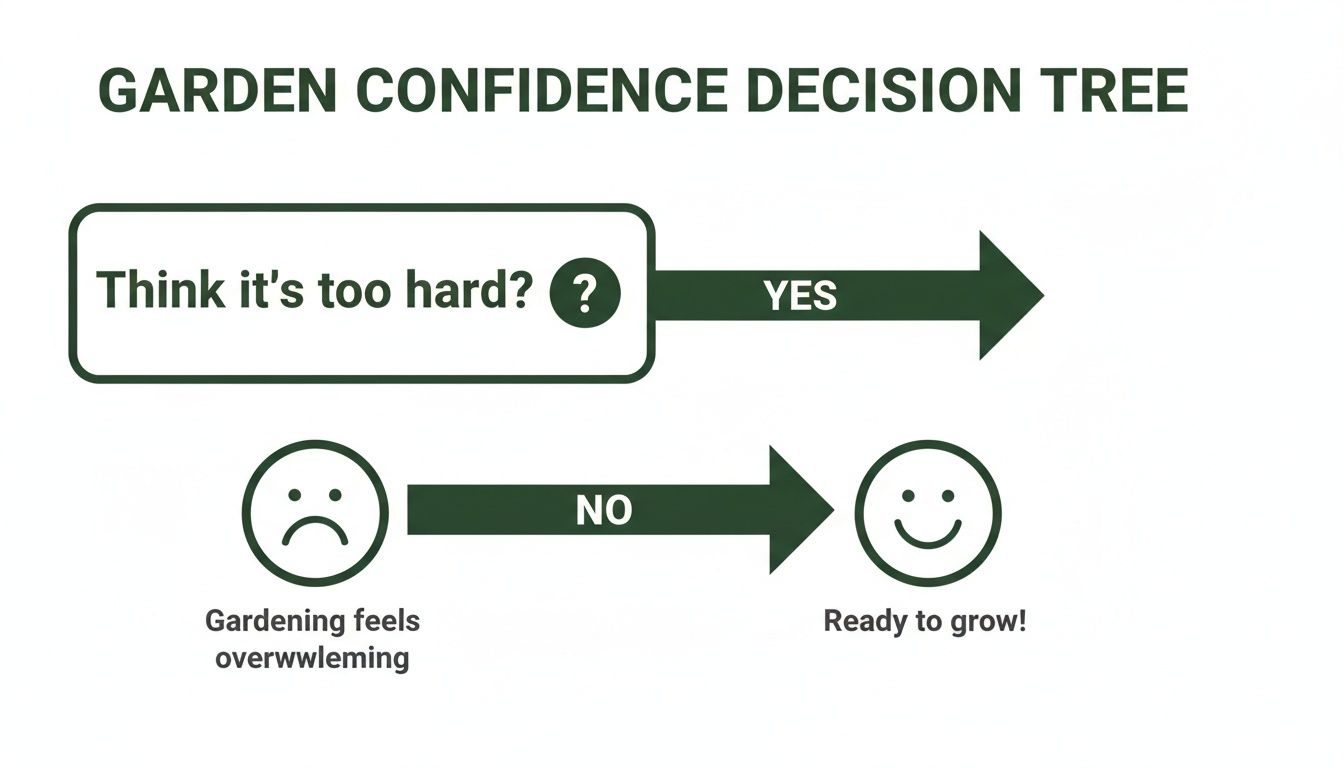
The big takeaway? Confidence grows from doing. The path forward is always much simpler than it looks from the starting line.
Step 2: Choose Your Garden Style: In-Ground, Raised Beds, or Containers?
Once you’ve found a sunny home for your future plants, it’s time to decide how you want to garden. The most common entry points for beginners are container gardening, raised beds, or planting directly in the ground. Running through these key questions will point you in the right direction for your space and lifestyle.
- How much space do you have? If you're working with a patio, balcony, or just a sunny stoop, containers are your best friend. Got a yard? A raised bed or an in-ground plot gives you a lot more room to play with.
- What's your budget looking like? Containers can be super affordable, especially if you upcycle things like old buckets (just make sure to drill drainage holes!). Raised beds and amending in-ground soil require a bigger upfront investment in materials and good-quality soil.
- Are you renting or do you own? Containers are portable, which makes them the obvious choice for renters. Raised beds and in-ground gardens are more permanent fixtures.
- What’s your native soil like? If your yard is full of rocks, heavy clay, or just generally poor soil, a raised bed or container lets you start fresh with a perfect soil mix. You get to control the growing environment from day one.
- How much bending and kneeling can you handle? Raised beds are a game-changer for anyone with a bad back. You can build them to a comfortable height to make planting and weeding so much easier.
- What are you dreaming of growing? Small herbs, lettuces, and peppers are perfectly happy in pots. But if you have visions of sprawling zucchini or long rows of carrots, a raised bed or in-ground garden will give their roots the space they need.
- Do you want to start small and scale up? Containers are the ultimate way to dip your toes in. You can start with just one or two pots this year and add more as your confidence grows.
Step 3: Compare the 3 Beginner Garden Styles
To help you visualize the options, let's break down the pros and cons of the three main approaches for new gardeners. Each has its own strengths depending on what you're working with.
| Garden Type | Best For | Initial Cost | Pros | Cons |
|---|---|---|---|---|
| Containers | Renters, small spaces (balconies, patios), total soil control, accessibility | Low | Portable, excellent drainage, easy to start small, fewer weed problems. | Requires frequent watering, limited root space for large plants. |
| Raised Beds | Homeowners, poor native soil, gardeners seeking better ergonomics (less bending) | Medium-High | Great drainage, control over soil quality, warms up faster in spring, defined space. | Higher upfront cost for materials and soil, can dry out quickly. |
| In-Ground | Homeowners with good soil, larger-scale planting, growing deep-rooted crops | Low-Medium | Most affordable option, less frequent watering needed, allows for large plant growth. | Requires amending native soil, more susceptible to weeds and soil pests. |
Ultimately, there's no single "best" way to garden. It's all about finding the method that fits your life right now.
Think about it in real-world terms. An apartment dweller with a sunny balcony could start with a few five-gallon pots for cherry tomatoes and a window box for basil and mint. It’s a low-cost, manageable setup that’s perfectly suited to their space.
On the other hand, a homeowner with a sunny patch of lawn might build a 4x4 foot raised bed. That’s plenty of room for a "salad garden"—think neat rows of lettuce, spinach, radishes, and carrots—and will yield a much bigger harvest. For a deeper dive, check out our complete guide on how to plan a garden from the ground up.
The most common mistake I see beginners make is starting way too big. A small, thriving garden you can actually keep up with is infinitely more rewarding than a huge, weedy plot that overwhelms you. Your goal for year one is simple: learn and build confidence. You're not trying to feed the whole neighborhood.
There's a reason urban gardening is exploding in popularity—it’s accessible to almost everyone. While some folks have huge plots, the median garden size is just 96 square feet, which is the perfect footprint for a couple of raised beds or a nice container collection. It’s a hobby that pays off, too; well-kept gardens can boost property values by 10-20%, turning your new pastime into a smart investment for your home.
Step 4: Get Your Hands Dirty: Prepping the Perfect Soil
If there's one secret to a knockout garden, it's the soil. Seriously. Forget fancy fertilizers for now; the real magic happens underground. Think of your soil as the living, breathing foundation that will feed your plants and help them flourish. Getting this part right from the get-go is the most important thing you can do for a successful first harvest.
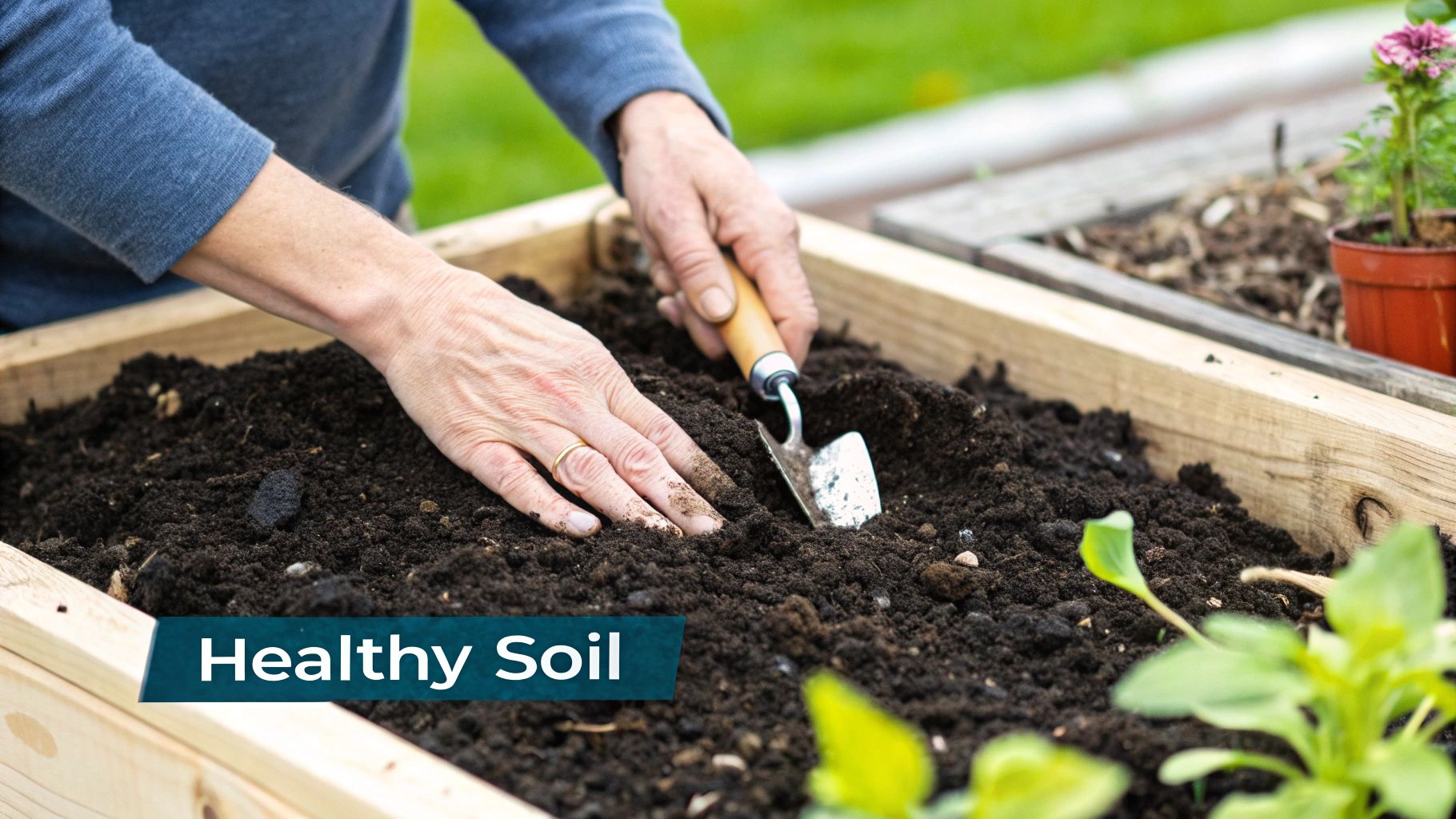
So, what makes soil "good"? It's all about balance. You want a texture that holds moisture without turning into a muddy swamp, and you need enough air pockets for roots to breathe and stretch out. Let’s dig into how you can create this ideal home for your plants.
Step 5: Test What Kind of Soil You're Starting With
Before you start adding anything, you need to get a feel for your native soil. Most soil is a combination of sand, silt, and clay, and knowing your ratio tells you a lot about how it will behave.
You don't need a lab for this—a simple jar test works wonders.
- First, dig down about 6 inches and scoop up a cup of soil.
- Pop it into a clear jar, fill it about three-quarters of the way with water, and add a tiny squirt of dish soap.
- Now, shake it like crazy for a good minute until every last clump has dissolved.
- Let it sit for at least 24 hours. You'll see distinct layers form as the particles settle.
The heavy stuff at the bottom is sand, the middle layer is silt, and the fine, almost cloudy layer at the top is clay. This quick visual will tell you if your soil drains too fast (sandy) or holds onto too much water (clay), which helps you choose the right fixes. For a deeper dive, our guide on preparing garden soil has even more detailed strategies.
Step 6: Use the 5 Go-To Ingredients for Better Soil
Improving your soil isn't as intimidating as it sounds. It really just comes down to adding good-quality organic matter to improve its structure and fertility. These additions work wonders on any soil type—they help sandy soil hold onto water and nutrients, and they break up dense clay to let air and water flow.
Here are the 5 essentials I always recommend to new gardeners:
- Compost: This is the undisputed champion. It adds a full spectrum of nutrients, builds great soil structure, and feeds the beneficial microbes that keep your garden ecosystem healthy.
- Aged Manure: Well-rotted manure (think cow, horse, or chicken) is a fantastic source of nitrogen and other key nutrients plants crave. Just make sure it's "aged" or composted, as fresh manure is too strong.
- Leaf Mold: Simply put, it's just decomposed leaves. It creates an amazing, fluffy material that improves moisture retention and invites earthworms to the party.
- Peat Moss or Coco Coir: These are fantastic for lightening up heavy clay soil. They also help sandy soils hold more water, creating a perfect, spongy texture for roots.
- Worm Castings: Think of this as a superfood for your plants. It’s a nutrient-dense, gentle fertilizer packed with beneficial microbes that give your plants a natural boost.
Don't ever feel like you have to spend a fortune on fancy products. The best soil is built over time with simple, organic materials. Everything from your kitchen scraps to the leaves you rake in the fall can be turned into black gold for your garden.
For containers or raised beds, you get to take a huge shortcut. Buying high-quality potting mix or raised bed soil is the quickest way to guarantee your plants have what they need. For those interested in the bigger picture, exploring sustainable landscaping techniques like erosion control and water management can also help protect your garden space for years to come.
Step 7: Choose Your Plants: 11 Easy Winners for Your First Garden
This is the fun part—dreaming about what you'll actually grow. But walk into any garden center, and the sheer volume of options can feel overwhelming. What's the secret to a successful first season? Keep it simple.
You want to choose plants known for being productive and forgiving. The best way to get hooked on gardening is to experience some early wins. Start with plants that are happy to grow, even if you’re still figuring things out.
Seeds vs. Starter Plants: What's the Right Call?
Before you pick what to grow, you need to decide how you'll start. You can either grow from tiny seeds or buy young plants (often called "starts" or "transplants") from a local nursery.
-
Growing from Seed: This is your most budget-friendly option, and it opens up a world of unique and heirloom varieties you’ll never find at a big-box store. There's a special kind of magic in watching a plant emerge from a tiny speck. It just takes a bit more patience and initial setup.
-
Buying Starter Plants: Think of this as the fast-track to harvest. A nursery has already done the tricky work of germination and nurturing the fragile seedlings. You get a healthy, established plant that’s ready to pop right into your garden. It costs more per plant, but it’s a nearly foolproof way to guarantee you’ll get something to show for your efforts.
For your first year, I highly recommend a hybrid approach. Try something easy like lettuce or radishes from seed, and then buy a sturdy starter plant for a tomato or pepper. You get the best of both worlds!
5 Easy-to-Grow Vegetables
There’s nothing quite like eating food you grew yourself. These five vegetables are famously productive and low-maintenance—perfect for getting your feet wet.
- Lettuce (Loose-leaf types): Forget the fussy head lettuces for now. Loose-leaf varieties are amazing because you can snip off the outer leaves for a salad, and the plant keeps on producing for weeks. They grow fast in cooler weather and do great in containers or beds.
- Radishes: Want a quick victory? Plant radishes. Many varieties go from seed to your plate in less than a month. They're perfect for tucking into small spaces and are fantastic for teaching kids (and impatient adults) about how fast things can grow.
- Bush Beans: Unlike pole beans that need a tall trellis to climb, bush beans grow into compact, tidy plants that support themselves. They are workhorses in the garden, and just a small patch can give you handfuls of fresh green beans every few days.
- Zucchini & Summer Squash: Brace yourself for an avalanche of zucchini! These plants are legendary for their productivity. Just give them a sunny spot with good soil, and a single plant will likely produce more than your family can eat.
- Cherry Tomatoes: While the big, beautiful heirloom tomatoes can be a bit dramatic, cherry tomatoes are eager to please. They pump out sweet, bite-sized fruits all summer long and are far more resistant to the common diseases that can plague their larger cousins.
Looking for even more ideas? Check out our complete guide on the best vegetables to grow for beginners.
3 Fragrant and Forgiving Herbs
Herbs are one of the best entry points into gardening. They're generally tough, thrive in pots, and add incredible flavor to your cooking. You can have a whole herb garden right on a sunny windowsill.
- Basil: The absolute icon of summer, basil loves all the heat and sun it can get. Be sure to pinch the tops regularly to encourage it to grow bushy and full, which also stops it from flowering (flowering can make the leaves taste bitter).
- Mint: A word of warning: mint is so easy to grow that it can quickly take over your entire garden. My advice? Always plant it in a container by itself to keep its aggressive roots in check. You’ll be rewarded with an endless supply for teas and cocktails.
- Chives: This mild, onion-flavored herb is a hardy perennial, meaning it will come back on its own year after year. It's one of the first green things to pop up in the spring and has beautiful purple flowers that are also edible!
3 Cheerful and Resilient Flowers
A garden isn't just about food! Flowers add beauty, support pollinators, and can even help protect your vegetables from pests.
More and more, gardeners are planting with a purpose. A recent Spring 2025 analysis found that 34% of U.S. adults now buy plants specifically to support wildlife, and 25% are choosing native varieties. When you plant pollinator-friendly flowers, you're doing more than just decorating—you're creating a vital habitat. You can dive into more of these emerging gardening motivations in the full analysis.
- Marigolds: These cheerful, sunny flowers are a classic companion for veggie gardens. Their scent is thought to deter pests, and they are ridiculously easy to grow from a packet of seeds.
- Sunflowers: Nothing says "summer" quite like a towering sunflower. You can find varieties of all sizes, from giants to compact types perfect for pots. They are simple to plant and are a magnet for bees and, later in the season, birds.
- Zinnias: If you want a non-stop explosion of color, plant zinnias. They bloom their heads off from mid-summer until the first frost and come in a whole rainbow of colors. The best part? The more you cut them for bouquets, the more they bloom.
11 Easiest Plants for Your First Garden
To make it even easier, here's a quick-reference table with all our top picks. Use this as your shopping list when you're ready to get started!
| Plant Name | Type (Veggie/Herb/Flower) | Sunlight Needs | Water Needs | Beginner Tip |
|---|---|---|---|---|
| Lettuce | Veggie | 4-6 hours | Consistent moisture | Harvest outer leaves to keep it producing. |
| Radishes | Veggie | 6+ hours | Consistent moisture | Plant a new batch every two weeks for a continuous supply. |
| Bush Beans | Veggie | 6-8 hours | Moderate | Don't soak seeds before planting; they can rot easily. |
| Zucchini | Veggie | 8+ hours | High | One plant is probably enough for a small family! |
| Cherry Tomatoes | Veggie | 8+ hours | Deep, consistent | Buy a starter plant for the easiest path to success. |
| Basil | Herb | 6-8 hours | Moderate | Pinch the tops often to encourage bushy growth. |
| Mint | Herb | 4-6 hours | High | CRITICAL: Plant in a pot to contain its spread. |
| Chives | Herb | 6+ hours | Low to Moderate | A perennial that will come back bigger each year. |
| Marigolds | Flower | 6+ hours | Low to Moderate | Plant them around your tomatoes to help deter pests. |
| Sunflowers | Flower | 8+ hours | Moderate | Choose a variety that fits your space (some are huge!). |
| Zinnias | Flower | 6-8 hours | Moderate | Cut flowers regularly to promote even more blooms. |
Picking from this list is a fantastic way to build your confidence. These plants are reliable, rewarding, and will make you feel like a seasoned gardener in no time.
Step 8: Plant and Care for Your Garden
Alright, your garden space is prepped and you’ve got your plants. This is the moment we've been waiting for—it's time to bring your garden to life! This is where the real fun begins, transforming that patch of dirt into a living, breathing part of your home. The process is simpler than you think and incredibly satisfying.
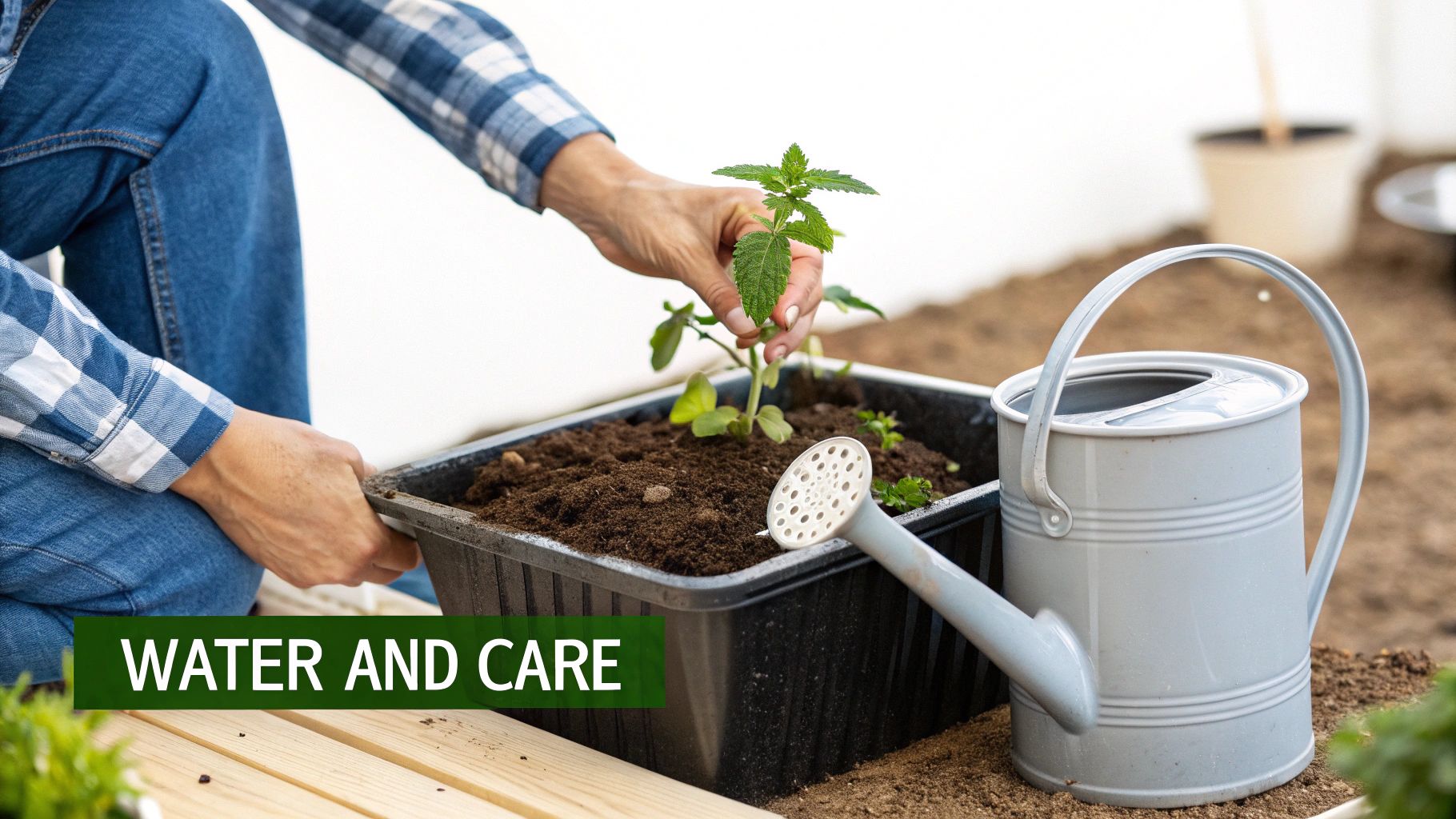
Let's walk through how to get your seeds and starters into the ground properly. Then, we'll cover the simple daily rhythms that will help your new green friends thrive. Think of it less like a chore list and more like a peaceful new routine.
7 Essential Planting Guidelines to Follow
Giving your plants a strong start is all about proper planting. Get this right, and you’re halfway there. It really boils down to two golden rules: plant spacing and planting depth. One of the most common beginner mistakes is overcrowding, which invites pests and diseases.
The most magical part about nature is its unpredictability. Perfection is out! If you can expect your garden to be one thing, it's dynamic. Embrace the small surprises and learning moments along the way.
- Read the Seed Packet: Seriously, this is your bible. It tells you everything you need to know: how deep to plant, how far apart the seeds should be, and the ideal spacing for your rows.
- Dig the Right-Sized Hole: For seedlings (starter plants), the hole should be just as deep as the pot it came in, but a little bit wider. The goal is to have the top of the seedling's soil sit flush with your garden bed's soil.
- Gently Tease the Roots: If you pop a starter plant out and its roots are a tangled, circular mess at the bottom (we call this being "root-bound"), gently pull them apart. This little step encourages the roots to spread out and explore their new home.
- Firm, Don't Pack: Once the plant is in its hole, fill the space back in with soil. Pat it down gently but firmly to get rid of any big air pockets. You want good contact, not compacted, concrete-like soil.
- Water Immediately: Give every new plant a good, long drink as soon as it's in the ground. This helps settle the soil and reduces the shock of being moved.
- Label Everything: Trust me on this one. You'll think you can remember which row is basil and which is cilantro, but it's shockingly easy to forget. A few simple plant markers will save you a lot of guesswork later on.
- Consider Companion Planting: Some plants are great neighbors. Planting marigolds alongside your tomatoes, for example, is a classic trick to help ward off certain pests.
Developing Simple Care Routines
Your garden doesn't need you to hover over it 24/7, but a little consistent attention makes a world of difference. The trick is to build simple, repeatable habits for watering, feeding, and weeding.
Watering is where most new gardeners stumble, usually by over-loving their plants (too much water!) or forgetting them (too little). The best tool you have is your own finger. Stick it an inch or two into the soil near your plants. If it comes out dry, it's time to water. This "finger test" is way more reliable than a strict schedule. When you do water, aim for a deep soak at the base of the plant to encourage strong roots.
A few easy practices will keep your garden looking great and cut down on your future workload:
- Add a Layer of Mulch: Once your plants are a few inches tall, spread a 2-3 inch layer of mulch (like straw or shredded leaves) around them. Mulch locks in moisture and keeps weeds from sprouting.
- Feed Your Plants Simply: If you started with good, compost-rich soil, you may not need to fertilize. If plants look pale, a dose of all-purpose organic liquid fertilizer every few weeks is all they'll need.
- Weed a Little, Often: Don't let weeding become a dreaded chore. Spend five minutes every other day pulling any little weeds you see. When they're small, they come out easily.
Step 9: Enjoy the Payoff and Dream of Next Year
This is it. The moment you've been waiting for. After all the planning, digging, and watering, you finally get to taste the results. Seriously, there's nothing quite like walking outside to snip a few herbs for dinner or biting into a tomato that's still warm from the sun.
Take a moment to savor it. You grew that! Snap some photos, share the extra zucchini with your neighbors (they'll thank you), and just appreciate what you've created. This feeling is the real reward of gardening.
Step 10: Plan for Next Season with These 7 Ideas
As the days get shorter and your first growing season starts to wrap up, the itch to plan for next year begins. Don't lose that momentum! Now is the perfect time to think about what you’d like to try next, building on everything you learned this year.
Here are seven simple ideas to get you started:
- Tackle One "Challenge" Plant: Feeling a bit more confident? Pick one plant that seemed a little too tricky this year and just go for it. Maybe it’s cauliflower, or maybe it’s finally trying to grow a melon.
- Start a Simple Compost Bin: This is a game-changer. You can turn your coffee grounds, eggshells, and yard trimmings into incredible, free fertilizer for your garden. It’s way easier than it sounds.
- Expand Your Growing Space: You don't have to double your garden overnight. Just add one more pot to your patio collection or extend your raised bed by a foot or two. Small, smart additions make a big difference.
- Plant a Fall Garden: The end of summer doesn't have to be the end of your harvest. As your summer crops finish up, you can pop in cool-weather lovers like kale, spinach, or even garlic to harvest next year.
- Feed Your Soil: Good soil is everything. Make a simple plan to top off your beds with a fresh layer of compost in the fall or early spring. Your future plants will thank you for it.
- Try Saving Your Own Seeds: It feels a bit like magic. Learn how to save seeds from some of your best-performing, open-pollinated plants (tomatoes and beans are great for this) to plant for free next season.
- Keep a Garden Journal: This might be the single best tip for becoming a better gardener. A simple notebook where you jot down what you planted, when you planted it, and what worked (or didn't) becomes your personal roadmap for future success.
Gardening is a journey, not a destination. It’s totally normal for some plants to fail or for pests to win a battle or two. Every single gardener I know, myself included, has plenty of flops each year. What matters is that you tried, you learned, and you’re ready to get your hands dirty all over again.
Got Questions? We've Got Answers
Even the most seasoned gardeners had to start somewhere, and it's totally normal to have a million questions when you're just getting your hands dirty. Let's tackle some of the most common head-scratchers that new gardeners face.
How Much Does It Really Cost to Start a Small Garden?
This is the best part: you are in complete control of the budget. Gardening doesn't have to be an expensive hobby, especially when you're starting out.
For a simple container garden, you can honestly get started for under $50. That’ll cover a few decent-sized pots, a good bag of potting mix, and several packets of seeds or a few starter plants. If you have your heart set on a raised bed, a basic 4x4 foot kit can range from $50 to $150, plus the cost of soil to fill it up.
My best advice for saving money? Get resourceful. You can use old five-gallon buckets as planters (just drill drainage holes!), start from seed which is way cheaper than buying plants, and even make your own compost for free, top-tier soil enrichment down the line.
What Are the Top 5 Mistakes New Gardeners Make?
I’ve made them all, so you don’t have to. Seriously, avoiding these classic beginner blunders will save you a lot of heartache and put you on the fast track to a successful harvest.
- Going Too Big, Too Fast: Your enthusiasm is awesome, but a massive garden can quickly turn into a full-time job. It’s so much more rewarding to manage a small, thriving plot than to fight a losing battle against a huge, weed-infested one.
- Ignoring the Sun: You can't fight nature on this one. Planting a sun-worshipping tomato plant in a shady spot just won't work. Before you dig a single hole, spend a day watching how the sun moves across your yard. It’s a crucial first step.
- Watering Wrong: It’s a classic Goldilocks problem—too much water rots the roots, and too little stresses the plant. Forget fancy gadgets; your best tool is your finger. Stick it an inch or two into the soil. If it feels dry, it's time to give your plants a good, deep drink.
- Skimping on Soil: This is the one place you should never cut corners. Healthy soil is the absolute foundation of a healthy garden. Spending a little extra on quality compost or a premium potting mix is the single best investment you can make.
- Crowding Your Plants: Those tiny seedlings look so far apart, I know! But it's tempting to cram them in. Don't do it. Overcrowding blocks airflow and sunlight, which is an open invitation for pests and diseases. Check the plant tag and give everything the room it needs to flourish.
How Do I Know When My Vegetables Are Ready to Pick?
Learning the perfect time to harvest is part art, part science, and it gets easier with a little practice. Your seed packet or plant tag is your first clue—it usually gives an estimate for "days to maturity."
As a general rule, it's often better to pick a little early than a little late. Veggies like zucchini, cucumbers, and green beans are at their best when they're young and tender. If you leave them on the plant for too long, they can become tough or bitter. For things like tomatoes and peppers, color is your guide; wait for them to reach that deep, vibrant shade they're meant to be. If you're ever unsure, a quick search for "how to harvest [vegetable name]" will show you exactly what to look for.
Feeling inspired to get growing? At Homegrown Garden, we have everything you need to kick off your gardening adventure, from unique heirloom seeds to curated beginner-friendly kits. Let's start planning your dream garden today.


