



What if you could walk out your back door and gather fresh vegetables for dinner without having to spend hours every week weeding, watering, and wrestling with pests? A low-maintenance vegetable garden isn't just a dream; it's a completely achievable goal. The entire philosophy boils down to one simple idea: work smarter at the beginning to save yourself a ton of work later.
This guide will walk you through 7 key steps to setting up a garden that practically takes care of itself.
Laying the Groundwork for an Easy Harvest
Forget the notion that a productive garden requires constant, back-breaking labor. The real secret to an easy harvest is all in the planning. It's about making smart, strategic decisions before a single seed goes into the ground. This isn't about cutting corners; it's about creating a resilient little ecosystem where your plants can thrive with very little help from you.
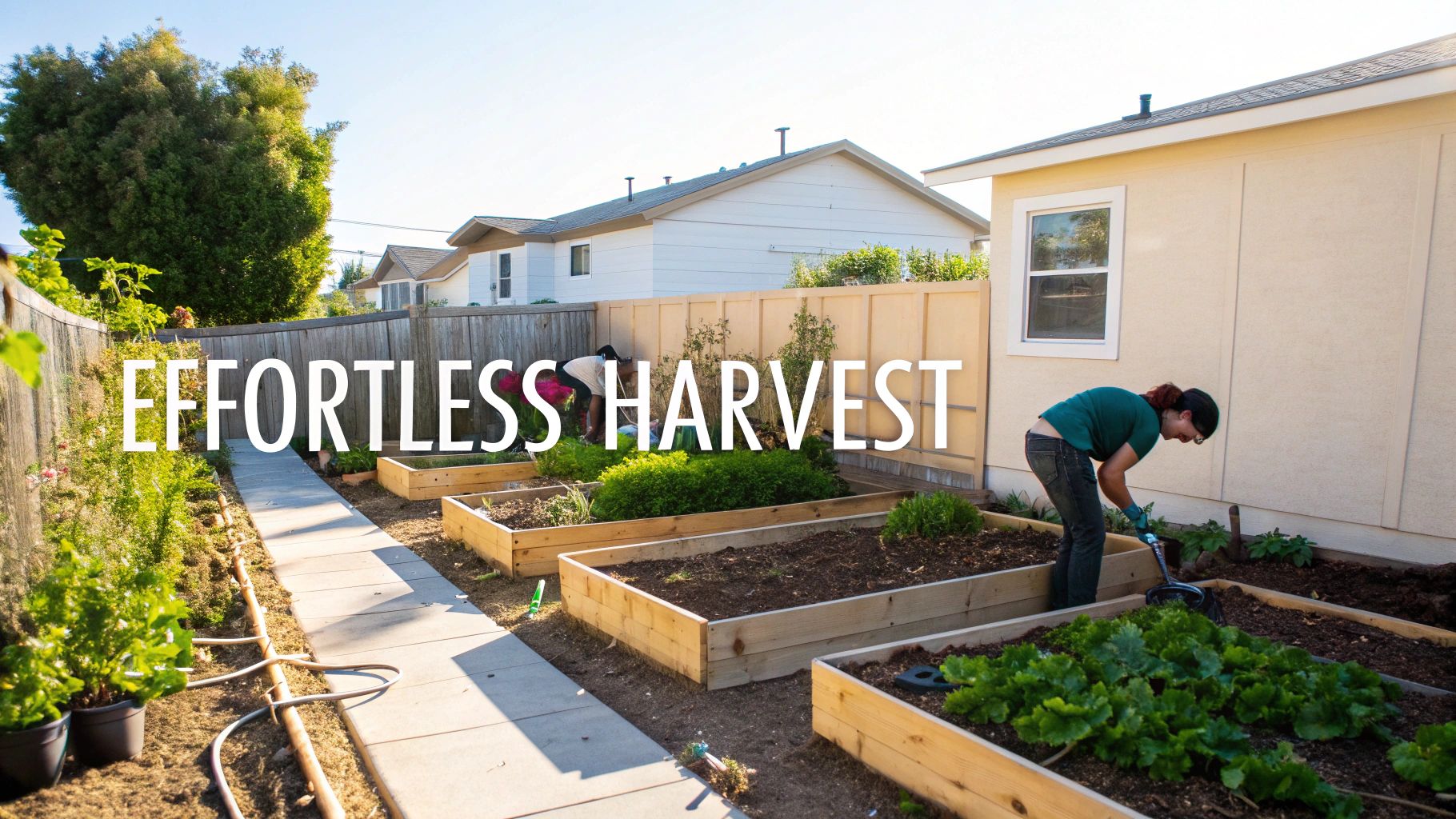
We're going to focus on the foundational elements—the things that have the biggest impact on your workload down the road. The result? You'll spend more time enjoying your homegrown produce and less time bogged down by daily chores.
The Core Principles of Hands-Off Gardening
The whole idea hangs on a few key concepts that shift the effort from ongoing maintenance to the initial setup. By investing time and thought upfront, you create a system that pretty much runs on its own.
Here are the pillars of this low-effort approach:
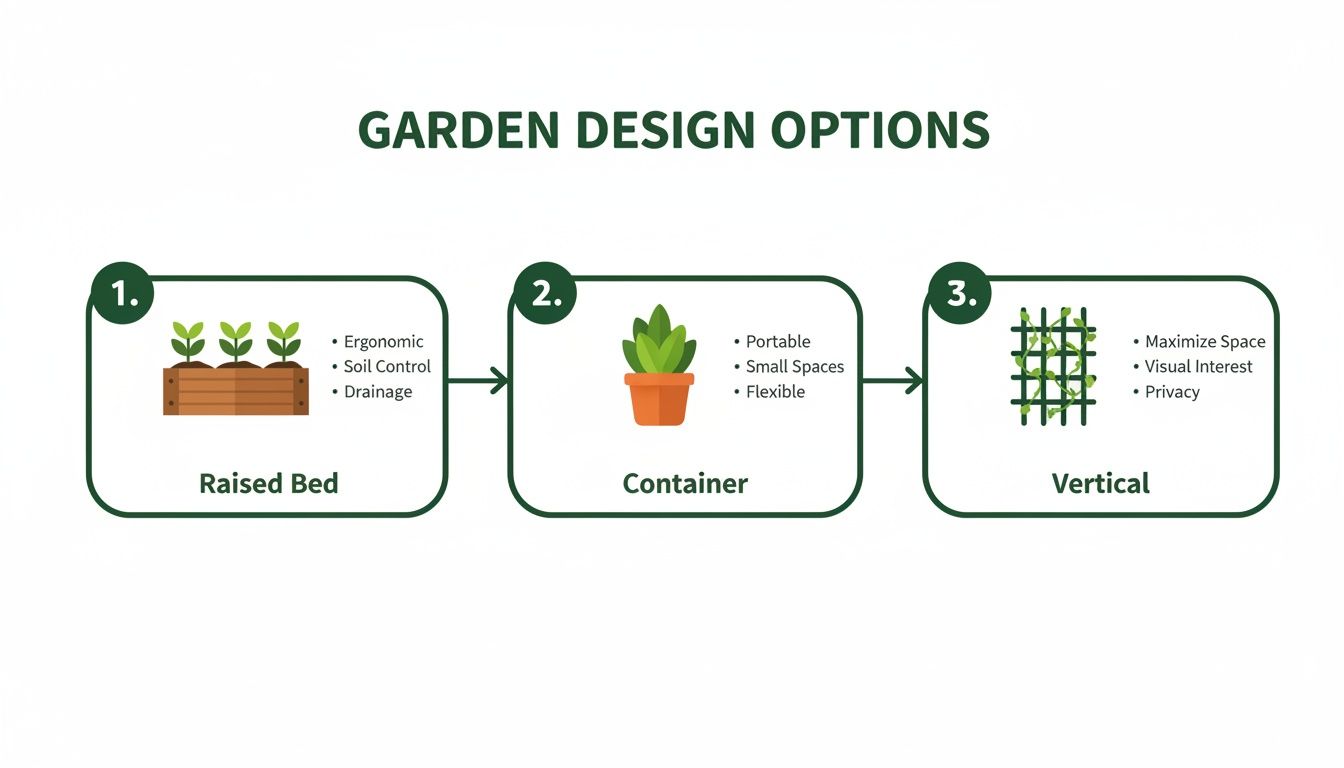
- Smart Site & Structure: Choosing the right spot and using structures like raised beds or containers can make a world of difference. It means less bending, better drainage, and way fewer weeds.
- Soil is Everything: Building rich, living soil is about more than just feeding plants. Great soil holds moisture longer (less watering for you) and naturally suppresses weeds.
- Choosing the Right Plants: This is arguably the most critical step. Picking hardy, disease-resistant vegetables that are a perfect match for your climate means you won't have to constantly baby them.
- Set-It-and-Forget-It Systems: Simple, automated tools like drip irrigation on a timer can completely eliminate the daily chore of watering. Your plants get consistent moisture without you lifting a finger.
The goal is to create a partnership with nature, where your garden's design and biology do most of the heavy lifting. Your role becomes that of a happy overseer, not a full-time laborer.
By nailing these core areas from the start, you'll be well on your way to a productive, beautiful, and genuinely low-maintenance vegetable garden.
Step 1: 9 Smart Design Choices for an Easy-Care Garden
The secret to a genuinely low-maintenance vegetable garden isn't about finding a magic plant; it’s all in the planning. The choices you make before you ever break ground are what will save you the most time and effort down the road. By thinking strategically about your garden's layout and structure, you create a space that practically takes care of itself.
1. Embrace Raised Garden Beds
There's a good reason you see raised beds everywhere—they solve a whole host of common gardening headaches from day one. By lifting the garden off the ground, you get complete control over your soil. No more fighting with dense clay or nutrient-poor sand. You just fill the beds with the good stuff.
This elevation also provides fantastic drainage, which means you won't have to worry about plant roots getting waterlogged after a big storm. And let's be honest, it's also a huge win for your back and knees. Less bending and stooping makes every task, from planting to harvesting, so much more comfortable. If your yard has a slope, incorporating something like a retaining wall can level out your space and manage soil perfectly. You can find some great retaining wall design ideas to see how this could work.
2. Go Vertical to Save Space and Effort
When you're short on space, think up, not out. Vertical gardening is a brilliant way to grow vining plants like cucumbers, pole beans, and those sprawling indeterminate tomatoes by giving them a trellis or stake to climb.
But this isn't just a space-saving trick. Getting plants up off the ground dramatically improves air circulation around the leaves. This is one of the simplest and most effective ways to prevent common fungal diseases like powdery mildew from taking hold. Plus, harvesting is a breeze when the veggies are hanging right at eye level instead of hiding under a canopy of leaves on the dirt.
3. Use Containers for Control and Flexibility
For anyone with a patio, balcony, or deck, container gardening is the ultimate power move. It gives you pinpoint control over the soil, water, and sunlight for every single plant.
Want to make it even easier? Look into self-watering planters. These pots have a built-in water reservoir at the bottom that wicks moisture up to the roots as the plant needs it. This simple piece of tech can easily turn a daily watering chore into a once-a-week task, which is a game-changer in the heat of summer.
4. Group Plants with Similar Needs
This is one of my favorite low-effort, high-impact strategies. Think of it as "functional companion planting." Simply group vegetables together that like the same amount of water and sun.
For instance, put your thirsty plants like tomatoes and cucumbers in one bed, and group drought-tolerant herbs like rosemary and oregano in another. This way, you can water each zone efficiently without drowning one group while the other wilts. It makes your irrigation routine so much simpler and more effective.
5. Plan for Pathways
Don't let your pathways be an afterthought! Trying to tiptoe through a jungle of plants to pull a few weeds is frustrating and often leads to broken stems. Make sure you design clear, dedicated paths that are wide enough for you to walk and kneel comfortably—and maybe even get a wheelbarrow through.
Covering your paths with a few inches of wood chips or straw is a pro move. It keeps your shoes from getting muddy and, more importantly, suppresses weeds right where they love to pop up.
6. Adopt the Square-Foot Gardening Method
If you want maximum output from a minimum footprint, the square-foot gardening method is for you. The concept is simple: divide your garden bed into a grid of one-foot squares and plant a specific number of vegetables in each square based on their mature size.
This intensive planting layout is incredibly efficient. You get a huge harvest from a tiny plot, which means far less area to weed, water, and manage. As the plants grow, their leaves create a "living mulch" that shades the soil, keeping it cool, moist, and free of weeds.
7. Choose the Right Location
This step costs absolutely nothing but can make or break your garden. Before you build a single thing, spend a day watching the sun move across your yard. Most vegetables need at least 6-8 hours of direct sunlight to really produce. Find that sunny sweet spot.
Also, think about your water source. Hauling a heavy watering can all the way across the yard every day gets old, fast. Siting your garden near a hose spigot will save you a ton of hassle.
8. Design for Water Efficiency
Beyond just grouping plants, the very structure of your garden can be designed to save water. Smart planning from the start is key.
A well-designed, low-maintenance garden can be incredibly water-wise. Efficient methods like drip irrigation can cut water and maintenance needs by 60–80% compared to traditional garden beds once they're established.
This means thinking about installing soaker hoses or a drip irrigation system before you plant. These systems deliver water slowly and directly to the base of the plants, right where it's needed. You lose almost nothing to evaporation, which saves water, money, and time.
9. Start Small and Plan for Expansion
Here’s my final piece of advice: fight the urge to go big your first year. It’s so easy to get excited and build a massive garden, only to feel completely overwhelmed by mid-summer.
Start with just one or two manageable beds or a handful of containers. This lets you learn the rhythm of gardening and celebrate your successes without getting burned out. You can always add another bed next year. A small, thriving garden is infinitely more rewarding than a large, neglected one.
Step 2: Choose from 11 Easy Vegetables That Practically Grow Themselves
Let's be honest: your plant choices will make or break your low-maintenance garden. If you pick needy, diva-like vegetables, you'll spend all summer fussing over them. The real secret is to choose resilient, productive varieties that are happy to do their own thing.
This isn't just a random list; it's a curated selection of the garden's true workhorses. I've picked these 11 vegetables specifically for their hands-off nature—whether that’s because pests leave them alone, they laugh off a missed watering, or they don’t care if you forget to harvest them for a few days.
When you combine these easy-going plants with smart garden designs like raised beds or containers, you really start to minimize your to-do list.
To make it even easier, here’s a quick-glance table comparing my top picks.
Top 11 Low Maintenance Vegetable Varieties
| Vegetable | Key Low-Maintenance Trait | Sunlight Needs | Water Needs |
|---|---|---|---|
| Lettuce (Leaf) | "Cut and come again" harvest | 4-6 hours (partial shade tolerant) | Consistent |
| Swiss Chard | Heat and cold tolerant; pest resistant | 6+ hours (full sun) | Moderate |
| Kale | Very cold hardy; few pests | 6+ hours (full sun) | Moderate |
| Zucchini | Extremely productive; fast growing | 6-8 hours (full sun) | High |
| Bush Beans | No staking needed; fixes soil nitrogen | 6-8 hours (full sun) | Consistent |
| Cherry Tomatoes | Disease resistant; vigorous grower | 8+ hours (full sun) | Consistent |
| Radishes | Super-fast growth (harvest in <1 month) | 4-6 hours (partial sun) | Consistent |
| Carrots | Set-it-and-forget-it root crop | 6+ hours (full sun) | Consistent, deep watering |
| Green Onions | Compact; can be regrown from scraps | 6+ hours (full sun) | Moderate |
| Cucumbers (Bush) | Compact plant, no large trellis needed | 6-8 hours (full sun) | High |
| Bell Peppers | Sturdy stems; naturally pest resistant | 8+ hours (full sun) | Moderate |
These varieties are proven winners for gardeners who want more harvest with less hassle. Now, let's look at what makes each one so great.
Leafy Greens That Keep on Giving
1. Lettuce (Leaf Varieties)
Forget trying to grow a perfect, dense head of Iceberg. Leaf lettuce varieties like 'Black Seed Simpson' or 'Red Sails' are your best friends in a low-effort garden. You just snip off the outer leaves as you need them, and the plant keeps pushing out new growth from the center for weeks. They’re quick, have shallow roots, and are perfect for containers.
2. Swiss Chard
If I had to pick one superstar for a low-maintenance garden, this would be it. Swiss chard is gorgeous, ridiculously productive, and nearly indestructible. It handles both cool nights and warm days better than almost any other green, and most common pests just ignore it. A few plants will give you a steady supply all season long.
3. Kale
Just like its cousin, chard, kale is a powerhouse. It’s famous for being cold-hardy—in fact, a light frost makes many varieties taste even sweeter. Once you get it established, kale needs very little from you besides regular harvesting to encourage those new, tender leaves.
Reliable and Productive Fruiting Vegetables
4. Zucchini and Summer Squash
You’ve heard the jokes about gardeners leaving bags of zucchini on their neighbors’ porches for a reason. These plants are legendary producers. Just stick to bush varieties to keep them from taking over your yard, give them good soil, and watch them go. They grow so fast they often outrun any potential pest or disease problems.
5. Bush Beans
While pole beans need a whole support system, bush beans stand on their own. They grow into compact little shrubs and produce their crop in a concentrated window, which makes harvesting a quick, one-and-done job. Bonus: they actually enrich your soil by adding nitrogen, making it better for whatever you plant there next.
6. Cherry Tomatoes
Big heirloom tomatoes can be drama queens, prone to cracking and diseases. Cherry tomatoes, on the other hand, are tough little workhorses. Varieties like ‘Sungold’ are incredibly vigorous, producing hundreds of sweet little fruits with far fewer issues. Just give them a sturdy cage and stand back.
Pro Tip: A key to low-maintenance gardening is choosing plants bred for vigor and disease resistance. An 'indeterminate' cherry tomato might need a tall stake, but it will fruit for months with less fuss than many larger, more demanding 'determinate' types.
Hearty Root Vegetables
7. Radishes
Want a quick victory to build your confidence? Plant radishes. Many varieties go from a tiny seed to a crunchy snack in under 30 days. Because they grow so fast, you usually pull them out of the ground before pests even know they’re there. They’re perfect for tucking into any small, empty spots in the garden.
8. Carrots
Once you get them past the tiny seedling stage, carrots are surprisingly self-sufficient. The most crucial part is giving them loose, rock-free soil so their roots can grow down straight. After that, consistent water and a thick layer of mulch will keep them happy until harvest time.
9. Green Onions (Scallions)
It doesn’t get much easier than green onions. You can grow them from seeds or little bulbs (called sets), and they take up almost no space. For a truly zero-effort method, you can regrow them from the white ends of scallions you bought at the store. Just put the root ends in a glass of water, and once new roots sprout, plant them in some dirt.
Unique and Hassle-Free Additions
10. Cucumbers (Bush Varieties)
Just like zucchini, cucumber plants can be wildly productive. By choosing a compact bush variety like 'Spacemaster' or 'Bush Champion', you skip the hassle of building a big trellis. These are ideal for large pots or raised beds, giving you a full harvest from a very manageable plant.
11. Bell Peppers
Bell peppers are another great set-it-and-forget-it plant. They love heat and sun, and their naturally sturdy, upright stems mean they rarely need staking. In my experience, they are bothered by far fewer pests than many other popular garden vegetables, making them a solid bet for any sunny spot.
For a deeper dive into plants that are especially forgiving for new gardeners, check out our guide on the best vegetables to grow for beginners, which expands on many of these great options.
Step 3: Build Rich Soil That Does the Work for You
The real secret to a low-maintenance vegetable garden isn't a special tool or a fancy gadget—it's what’s happening right under your feet. If there’s one thing you can do to set yourself up for success, it’s building rich, healthy soil. Think of it as creating a self-sustaining engine for your garden that handles most of the tough jobs on its own.
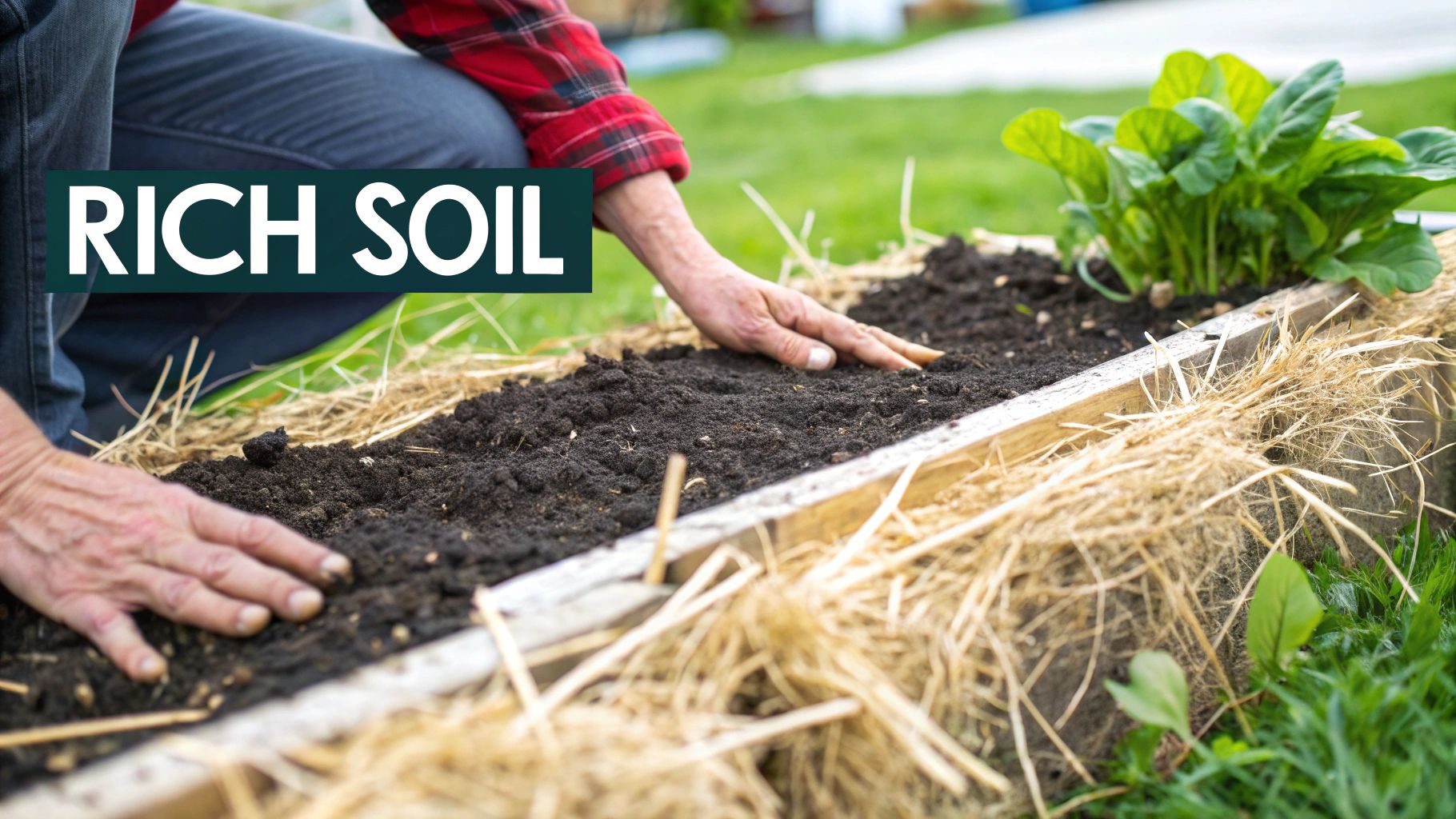
Fantastic soil acts like a sponge, holding onto moisture so you don't have to water constantly. It’s also packed with nutrients, meaning you can ditch the endless cycle of fertilizing. A thriving soil ecosystem even helps smother weeds, saving your back a lot of trouble.
Adopt a No-Dig Mentality
For decades, we were all taught that turning over the soil each spring was a must. We now know this can do more harm than good. Tilling actually destroys the complex web of beneficial fungi, worms, and microbes that work tirelessly to keep your soil healthy.
This is where the no-dig (or no-till) method comes in. It's a simple yet incredibly powerful alternative.
The whole idea is to leave the soil structure undisturbed. Instead of digging in amendments, you just layer organic matter right on top. This approach perfectly mimics how nature builds soil in a forest, where leaves and other materials decompose on the surface. It encourages earthworms to do the tilling for you, creating tunnels that naturally aerate the soil and improve drainage without you lifting a shovel.
Make Compost Your Best Friend
If there's one non-negotiable ingredient for creating incredible soil, it’s compost. It is the absolute superfood for your garden. High-quality compost is teeming with microbial life and provides a perfectly balanced mix of nutrients that plants can access whenever they need them.
Adding compost achieves several goals at once:
- It feeds your plants. Compost is a slow-release fertilizer, providing a steady stream of nutrition all season long.
- It improves soil structure. In sandy soil, compost helps retain water. In heavy clay, it improves drainage and stops compaction.
- It boosts plant health. The good microbes in compost help suppress diseases and strengthen your plants’ natural defenses against pests.
To get a new no-dig bed started, lay down a layer of cardboard to smother any grass or weeds. Then, top it with a generous 3-4 inch layer of good compost. That’s it—you can plant directly into this layer. Each year, just add another inch or two on top to keep the nutrients topped up.
Building great soil is a long-term strategy. You’re not just feeding this year’s plants; you’re creating a fertile, self-regulating system that will get better and require less input every single season.
The Magic of Mulching
Once your beds are planted, the final step to lock in all that goodness is mulching. Spreading a thick blanket of organic mulch over the soil surface is one of the best time-saving tricks in any gardener's playbook. A 2-4 inch layer is perfect.
Mulch is a true multitasker. It shades the soil, preventing most weed seeds from ever seeing the light of day. It also insulates the soil, keeping plant roots cooler in the summer and warmer in the winter.
But its most important job is saving moisture. Mulch dramatically slows down evaporation from the sun and wind, keeping your soil moist for much longer after a good rain or a deep watering.
Effective Mulch Options for Your Garden:
| Mulch Type | Best For | Key Benefit |
|---|---|---|
| Straw | Vegetable beds, pathways | Excellent weed suppression and moisture retention. |
| Shredded Leaves | All garden areas | Free, nutrient-rich, and decomposes quickly. |
| Wood Chips | Pathways, around perennials | Long-lasting and great for suppressing tough weeds. |
| Grass Clippings | Around heavy feeders (tomatoes) | Adds a quick boost of nitrogen; apply in thin layers. |
By layering compost and mulch, you create a top-down system that continuously feeds the soil. As the mulch breaks down, earthworms pull it down into the soil for you. This simple, nature-inspired process of preparing garden soil builds a foundation that does the hard work for you, season after season.
Step 4: Automate Your Garden with 3 Smart Systems
Watering and weeding. Let’s be honest, these are the two chores that can suck the joy right out of gardening, turning it into a relentless taskmaster. But what if you could practically make them an afterthought?
By setting up a few simple, automated systems, you can take back your time and rest easy knowing your garden will thrive, even when you're busy or out of town. The whole point is to create a garden that can pretty much take care of itself for days on end.
This shift toward smarter, less hands-on gardening isn't just a niche trend. The global home gardening market is actually projected to grow by nearly 6% each year through 2034 as more people discover these low-effort solutions. You can dig into the numbers yourself in this home gardening market report from custommarketinsights.com.
1. Set Up a Simple Automated Watering System
Consistent watering is non-negotiable for healthy veggies, but it doesn't have to be a daily chore you're chained to. An automated irrigation system is hands down the single best investment you can make for a low-maintenance garden. It’s far more efficient than hand-watering, saves a ton of time, and helps prevent common leaf diseases that spread when you splash water everywhere.
For most home gardeners, two fantastic, beginner-friendly options stand out:
- Drip Irrigation: This is the gold standard. A network of tubes with small emitters delivers a slow, steady drip of water right at the base of each plant. It gets water directly to the root zone, which means less evaporation and practically zero water waste. You can buy kits that are surprisingly easy to snap together.
- Soaker Hoses: It doesn't get much simpler than this. A soaker hose is made from a porous material that "weeps" water along its entire length. You just snake it through your garden bed, connect it to your spigot, and it provides a deep, thorough watering with minimal effort.
The real magic happens when you pair either of these systems with a cheap, battery-powered timer. For around $30, you can get a timer that attaches right to your hose spigot. Set it to water for 30 minutes every other morning at 6 AM, and you’ve just automated your most time-consuming garden task.
2. Use Proactive Strategies to Eliminate Weeds
Weeding is the garden chore everyone loves to hate. While we've already talked about mulching as your number one defense, you can layer in a few more strategies to make weeds a total non-issue. The key is to stop them before they ever have a chance to get started.
A powerful technique is to combine mulch with a physical barrier. For the pathways between your raised beds, for example, lay down a layer of cardboard or landscape fabric first. Then, cover it with a solid 2-3 inches of wood chips. This one-two punch is nearly impenetrable for even the most stubborn weeds.
Another great strategy is dense planting, a core concept in square-foot gardening. When you space your plants just close enough, their mature leaves will touch, creating a living canopy that completely shades the soil below. This natural shade blocks sunlight, preventing most weed seeds from ever germinating. No sun, no weeds.
3. Consider Advanced Automation for the Tech-Savvy Gardener
If you enjoy tinkering with tech, you can take your garden automation even further. Smart home gadgets aren't just for inside the house anymore. You can now find smart water timers that connect to your Wi-Fi, letting you adjust watering schedules from an app on your phone based on real-time weather forecasts.
This is all part of a larger movement toward smarter living. For a great overview of the principles that you can apply to your garden, you can learn how to automate your home easily.
For those gardening in containers, technology offers some of the easiest wins. You can supercharge your pots with systems designed to handle the watering for you. To see some of my favorite options, check out our guide to the best self-watering planters. They can easily turn a daily task into a weekly one.
By combining smart design with simple technology, you really can build a garden that works for you, not the other way around.
Step 5: Answer Your Top 4 Questions About Easy Gardening
Jumping into gardening can feel a bit daunting, and it's smart to have questions. The whole point of this low-maintenance approach is to create a garden that's more joy than chore. Let’s clear up some of the most common queries so you can get started with confidence.
1. How Much Time Does a Low-Maintenance Garden Really Save?
This is the big one, isn't it? After all, your time is precious. Once your garden is up and running, a properly designed low-maintenance plot should only need 1-2 hours of your attention per week, even at the height of summer. Most of that time will be spent on the fun stuff, like harvesting and just checking in on your plants.
Compare that to a conventional garden, which can easily eat up 5-10 hours a week. The secret is the upfront investment. You'll spend more time initially on building fantastic soil, setting up your irrigation, and selecting the right plants. That one solid weekend of work at the beginning will pay you back all season long.
2. Can This Actually Work in a Hot, Dry Climate?
Absolutely. In fact, these principles are even more critical when you're dealing with intense sun and scarce water. A low-maintenance design isn't just a convenience in hot climates; it's the key to success.
To make it work, you just need to lean into a few key strategies:
- Be picky with your plants: Choose varieties known for their heat and drought tolerance. Think okra, Armenian cucumbers, and specific types of melons or hot peppers.
- Mulch is your best friend: A thick 4-6 inch layer of straw or shredded leaves is non-negotiable. It acts like insulation for your soil, keeping it cool and drastically reducing water evaporation.
- Water smarter, not harder: A drip irrigation system is the way to go. It delivers water straight to the plant roots with almost no waste. Water deeply but less frequently, always in the cool of the early morning, to train roots to grow deep and strong.
With these adjustments, you can have a thriving garden even when the weather is working against you.
It's not just about saving time, either. A home garden has proven benefits that go straight to your dinner table. Research shows that even small gardens significantly improve nutrition and food security by providing easy access to fresh, diverse produce. You can read more in this in-depth study on home gardens and dietary diversity.
3. What’s the Single Biggest Mistake Beginners Make?
Impatience. It’s the number one pitfall for new gardeners. In the rush of excitement to get something planted, it’s so tempting to cut corners on the foundational work. People often skip the crucial steps of site selection, thoughtful layout, and especially, soil preparation.
This almost always creates a high-maintenance headache later on. The plants struggle, weeds invade, and watering becomes a never-ending battle. The single best thing you can do for a low-maintenance future is to take one extra weekend at the start to build a great garden bed with rich, healthy soil.
4. Are Perennial Vegetables a Good Idea for Low-Maintenance?
Perennials are one of the savviest moves you can make for an easy-care garden. Unlike annuals that you have to replant every single year, these plants come back all on their own. That saves a huge amount of work.
Think about plants like asparagus, rhubarb, or certain bunching onions. Over time, they develop deep, powerful root systems that make them incredibly self-sufficient and resilient against pests and drought. Once they're established after a year or two, they ask for very little besides harvesting. Setting aside a dedicated patch for these reliable performers is a fantastic long-term strategy for any gardener.
At Homegrown Garden, we believe everyone deserves the joy of a garden that gives back more than it takes. Explore our curated selection of heirloom seeds, beginner-friendly kits, and all the supplies you need to build your own effortless oasis. Visit us today at https://www.homegrown-garden.com to get started.


