



When it comes to choosing the best vegetables for raised beds, the secret ingredient is control. Think of it like this: you're not just planting seeds in the ground and hoping for the best. Instead, you're building a five-star, custom-tailored home for your plants. It's the difference between roughing it in the wild and checking into a luxury hotel—and your vegetables will absolutely notice.
Why Raised Beds Are a Gardener's Secret Weapon
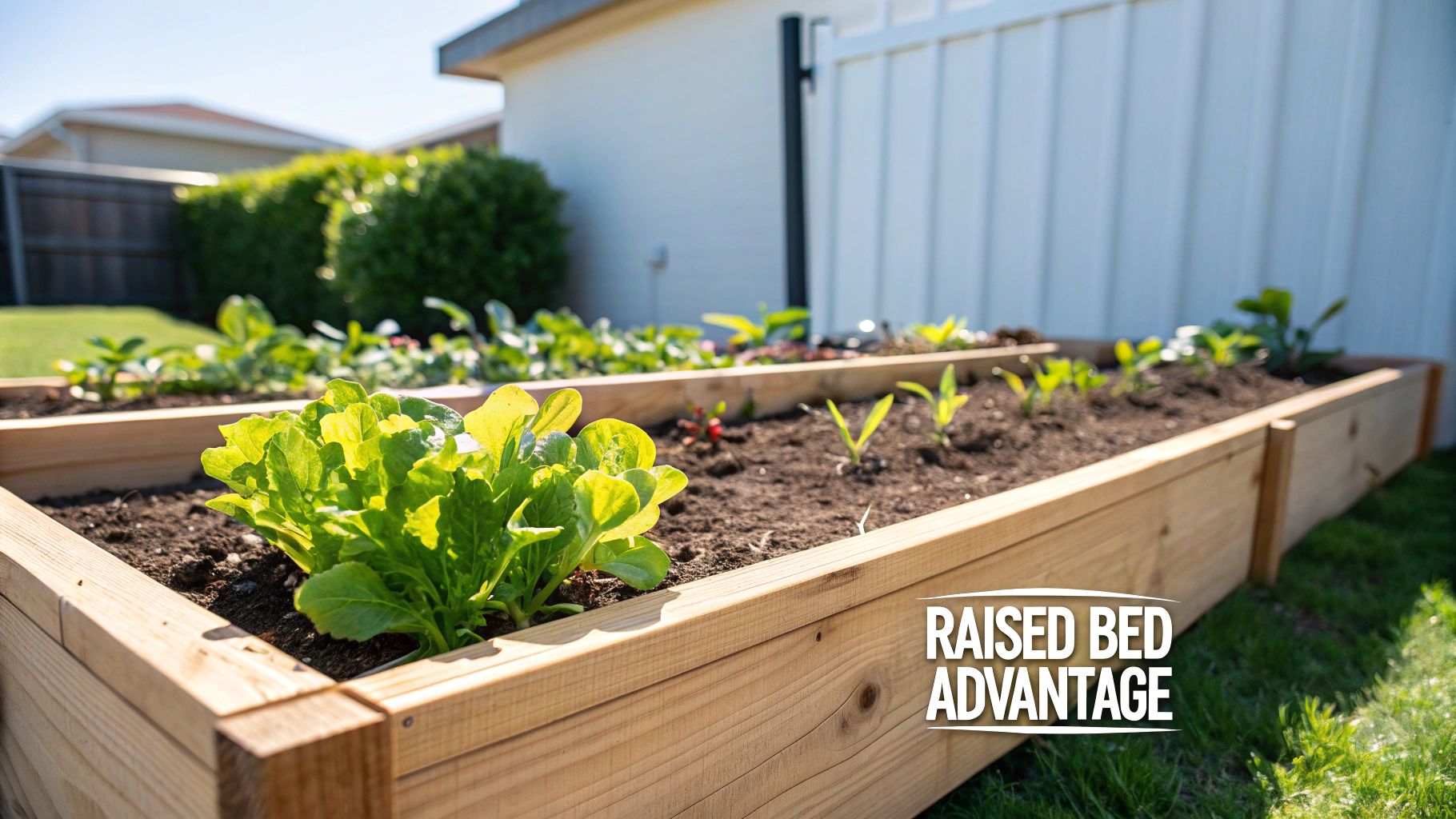
A raised garden bed is essentially a VIP section for your plants' roots. Forget about fighting with your yard's native soil, whether it's rocky, compacted clay, or just plain nutrient-starved. With a raised bed, you get to play architect, designing the perfect growing medium from the ground up. This level of control is a total game-changer, setting you up for a bountiful harvest right from the start.
This approach isn't just a niche trend; it's a fundamental shift in home gardening. The global market for raised garden beds is on track to hit over USD 288,000 thousand by 2029, which tells you just how many gardeners are seeing the incredible benefits firsthand.
The 4 Core Advantages of Raised Bed Gardening
The biggest win is, without a doubt, the soil. You get to fill your beds with a perfect, fluffy blend of compost, topsoil, and other goodies that plants go crazy for. This rich, loose soil is a world away from the compacted dirt in most backyards, giving roots the freedom to stretch out and grow deep.
But the perks don't stop there. Raised beds deliver a whole host of practical benefits that lead directly to healthier plants and bigger yields:
- Excellent Drainage: Say goodbye to waterlogged roots. Excess moisture flows right out, which is a lifesaver if you have heavy clay soil.
- A Head Start on Spring: The soil in a raised bed warms up much faster when the sun comes out, letting you get a jump on the growing season.
- Far Fewer Weeds: You're starting with a clean slate of soil, which means you won't be battling nearly as many pesky weeds.
- Easier on Your Body: Tending to plants at a comfortable height saves your back and knees, making the whole experience more enjoyable.
A raised bed gives plant roots more room to grow down, which means you can pack more plants in side-by-side. This is the key to getting a massive harvest from a surprisingly small space.
By sidestepping common headaches like poor soil and endless weeding, you can pour your energy into the fun part: nurturing vibrant, delicious vegetables. If you're weighing your options, it's worth taking a closer look at the pros and cons of raised beds versus in-ground gardening.
Building the Perfect Foundation for Your Vegetables
A spectacular harvest doesn’t happen by accident. It all starts with what’s going on beneath the surface—the foundation you build for your plants. Think of yourself as a chef crafting the perfect recipe for your garden; you're combining the best ingredients to give your vegetables everything they need to flourish.
We're basically mixing up a batch of "gardener's gold." The ideal mix for a raised bed is a simple but powerful trio of ingredients that create a balanced, thriving environment for your plants.
The 3 Ingredients for a Perfect Soil Recipe
The goal here is simple: create a growing medium that’s loose, full of nutrients, and drains well. This magic combination helps you dodge common problems like root rot and gives your plants a serious head start.
- Topsoil: This is the base of your mix, the main body that gives it structure. It acts as an anchor, giving roots something solid to grab onto.
- Compost: This is the powerhouse. Good, rich compost is like a slow-release fertilizer, feeding your plants throughout the entire season and fueling all that vigorous growth.
- Aeration Material: Things like vermiculite, perlite, or even peat moss are crucial for keeping the soil light and fluffy. They create tiny air pockets, which stop the soil from compacting and make sure roots get the oxygen they need to breathe.
Mixing these together creates a beautiful, light texture that plant roots absolutely love. You can dive deeper into getting your garden plot ready in our guide to preparing garden soil for planting.
3 Steps to Set Up Your Bed for Success
Before you even touch a bag of soil, there are a few non-negotiable steps that will make or break your garden's success. Don't skip these—they're just as critical as the dirt itself.
Your garden's location is its most important feature. Most vegetables are sun-worshippers and need a ton of direct light to grow strong and produce. Even the best soil in the world won't save a plant that's stuck in the shade.
- Choose a spot that gets at least 6-8 hours of direct sunlight every day. Take a day to watch how the sun moves across your yard and find that perfect, sunny patch that isn't shaded by trees or your house.
- Make sure your raised bed is level. If it's tilted, water will just pool up on one side, leaving you with soggy roots there and bone-dry soil on the other end.
- Think about depth. You'll want a minimum depth of 10-12 inches. This gives shallow-rooted plants like lettuce plenty of room, while also letting deep-rooted crops like carrots grow long and straight without hitting a dead end.
The Top 11 Vegetables That Thrive in Raised Beds
Alright, you’ve built the perfect foundation, and now it's time for the best part: deciding what to plant. While you can grow almost anything in a raised bed, some vegetables don't just grow—they flourish. They absolutely love the controlled, nutrient-dense environment you've created.
Think of these as the all-stars of raised bed gardening. We’ll walk through 11 of the best, exploring why each one is such a great fit and offering up some tips on spacing and even specific varieties that stay compact while delivering huge yields.
Before we dig in, let's quickly revisit the core of raised bed success.
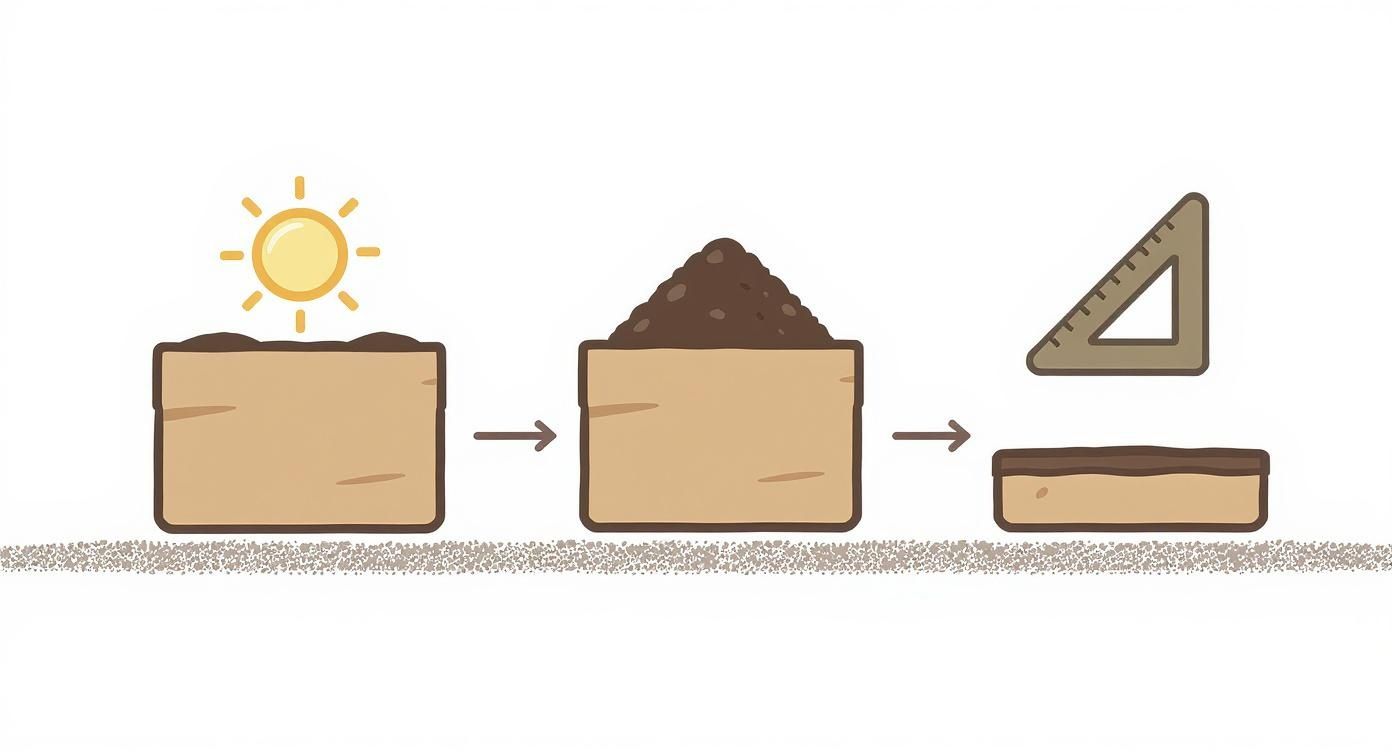
This simple graphic is a great reminder of the essentials: good sun, great soil, and enough depth. Keep these in mind, because they're the secret sauce for every single vegetable we're about to cover.
Top 11 Vegetables for Raised Beds at a Glance
For a quick overview, this table summarizes our top picks. It gives you a handy reference for how many you can fit in a square foot and a snapshot of why they're such a perfect match for raised bed gardening.
| Vegetable | Ideal Spacing (per sq. ft.) | Why It Thrives in Raised Beds |
|---|---|---|
| Leafy Greens | 4-16 plants | Shallow roots love the perfect, well-draining soil. |
| Root Veggies | 9-16 plants | Fluffy, rock-free soil allows for perfectly formed roots. |
| Tomatoes | 1 plant | Warm soil boosts growth and helps prevent fungal diseases. |
| Peppers | 1 plant | Contained root systems and excellent drainage prevent root rot. |
| Zucchini | 1 plant (per 2-3 sq. ft.) | Improved airflow from elevation reduces powdery mildew risk. |
| Onions & Garlic | 9-16 plants | Loose soil is crucial for unhindered bulb development. |
| Bush Beans | 9 plants | Compact growth habit is space-efficient; they also fix nitrogen. |
| Cucumbers | 2 plants (with trellis) | Vertical growth saves space and keeps fruit clean. |
| Kale | 1-2 plants | Resilient and loves nutrient-rich soil for continuous harvests. |
| Herbs | 4-9 plants | Excellent drainage is perfect for herbs that hate "wet feet." |
| Peas | 8 plants (with trellis) | Climbers that maximize vertical space in the cool season. |
This table is a great starting point, but let’s get into the details of what makes each of these a fantastic choice for your garden.
1. Leafy Greens (Lettuce, Spinach, Arugula)
Leafy greens are the undisputed champions of raised bed gardening. Their root systems aren't very deep, so they don’t need a ton of soil depth, and they adore the loose, well-draining soil that keeps their roots from getting soggy.
You can really pack these in, making them a dream for Square Foot Gardening. A single square foot can easily hold 4 to 9 lettuce plants or an impressive 16 spinach plants. The "cut-and-come-again" harvest method works beautifully here; just snip the outer leaves, and the plant will reward you with fresh greens for weeks.
- Recommended Varieties: 'Black Seed Simpson' (Lettuce), 'Bloomsdale Long Standing' (Spinach), 'Astro' (Arugula).
2. Root Vegetables (Carrots, Radishes, Beets)
This is where you'll really see your raised bed pay off. In typical garden soil, root vegetables are constantly fighting against rocks, heavy clay, and compaction, which results in sad, stunted, or forked veggies. The fluffy, obstacle-free soil in your raised bed is heaven for them.
This perfect environment lets carrots grow long and straight, radishes form perfectly crisp globes, and beets swell into tender bulbs without a single thing getting in their way. Just make sure your bed is at least 12 inches deep to give them plenty of room to stretch downwards.
- Recommended Varieties: 'Danvers 126' (Carrots), 'Cherry Belle' (Radishes), 'Detroit Dark Red' (Beets).
3. Tomatoes (Bush Varieties)
Everyone wants to grow tomatoes, but the sprawling vines can quickly become a jungle. That’s why compact, determinate (or "bush") varieties are a perfect match for raised beds. These plants grow to a predetermined, manageable size and produce their fruit all at once, meaning you won't need an elaborate staking system.
A single bush tomato plant per 1-2 square feet is a good rule of thumb. The soil in a raised bed also warms up faster, which tomatoes love, and the good drainage helps fend off common fungal diseases.
- Recommended Varieties: 'Celebrity', 'Patio', 'Bush Goliath'.
4. Peppers (Bell and Hot)
Just like their tomato cousins, peppers thrive in the warm, well-draining soil that raised beds are known for. Their root systems are relatively contained, making them a natural fit for the confines of a bed, and the excellent drainage is key to preventing root rot, a frequent problem for peppers.
Giving each pepper plant about one square foot is plenty of room for them to mature without feeling crowded. Their naturally upright growth also makes them a very space-efficient choice.
Research has shown that certain cool-season crops excel in the controlled environment of raised beds. Specific vegetables have demonstrated superior performance, with radish, kale, and cilantro showing the highest yields regardless of growing conditions. Kale, recognized as a superfood, is especially valuable for home gardeners because it provides exceptional nutritional density. You can read more about these high-yield findings in urban agriculture.
5. Zucchini and Summer Squash (Compact Varieties)
A standard zucchini plant is a garden hog, sprawling everywhere. Luckily, breeders have developed many compact bush varieties specifically for smaller spaces, and these are a fantastic choice for raised beds.
A single plant is often a powerhouse producer, so one per 2-3 square feet is usually more than enough for a family. Being elevated off the ground also improves air circulation around the leaves, which can dramatically reduce the risk of powdery mildew.
- Recommended Varieties: 'Black Beauty' (Zucchini), 'Sunburst' (Patty Pan Squash).
6. Onions and Garlic
If you want to maximize your harvest, onions and garlic are your best friends. Their slender, vertical growth means you can plant them very densely. The loose soil is absolutely critical here, as it allows the bulbs to expand easily without being squeezed by hard-packed earth.
You can fit up to 9 onions or 16 garlic cloves in a single square foot. As a bonus, they're great companion plants that can help repel pests from their neighbors.
7. Bush Beans
Bush beans are another highly productive, no-fuss crop. Unlike their vining pole bean cousins, they don't need a trellis. They grow into a tidy, compact bush that’s perfectly suited for the dimensions of a raised bed. They even give back to your garden by fixing nitrogen in the soil, which benefits the plants growing around them. Planting 9 plants per square foot can give you a surprisingly huge harvest.
8. Cucumbers (Trellised)
Cucumbers might seem like an odd choice, but they are brilliant in raised beds when you grow them vertically. Plant them along the edge of the bed and train the vines up a trellis. This simple trick saves a massive amount of garden real estate. Growing them upwards also improves airflow, which cuts down on disease, and keeps the fruit off the soil for cleaner, straighter cukes.
9. Kale
Kale is a nutritional powerhouse that's also incredibly tough. It loves the rich soil in a raised bed and can be harvested again and again with the "cut-and-come-again" technique. Best of all, it's quite frost-tolerant, meaning you can keep harvesting long after other plants have given up for the season.
10. Herbs
Don't forget the herbs! Plants like basil, parsley, cilantro, and thyme are perfect for tucking into the empty spaces around your larger vegetables. They have shallow roots and don't mind sharing space. The fantastic drainage of a raised bed is especially important for Mediterranean herbs like rosemary and thyme, which absolutely hate having "wet feet."
11. Peas (Sugar Snap and Snow)
Just like cucumbers, peas are natural climbers that are made for vertical gardening in a raised bed. Plant them along a trellis to make the most of your space. Since they are a cool-season crop, you can plant them early in the spring and get a full harvest in before your summer vegetables even need the room.
Smarter Care for a Healthier Garden
Choosing the right vegetables gets you started, but it's the day-to-day care that really brings home a bountiful harvest. The good news? Raised beds make this part so much easier. You have total control, letting you create the perfect environment for your plants to flourish all season long. It’s all about working smarter, not harder.
One of the best tricks up a raised bed gardener's sleeve is companion planting. Think of it as creating a bustling, friendly neighborhood where your plants help each other out. Some combinations are fantastic at warding off pests, while others attract helpful insects or even make their neighbors taste better.
3 Companion Planting Combinations to Try
- Marigolds and Tomatoes: Classic for a reason. Marigolds release a compound into the soil that repels root-knot nematodes, which are a major headache for tomato roots.
- Basil and Peppers: Pests like thrips and spider mites can't stand basil. Planting it near your peppers acts as a natural shield.
- Rosemary and Carrots: The potent aroma of rosemary is great for confusing the carrot root fly, keeping it away from your future carrot crop.
Efficient Watering and Feeding
Raised beds drain like a dream, which is a huge plus for preventing root rot. The flip side is they can dry out much faster than a traditional garden patch. Your goal should be to water deeply and consistently, getting moisture right down to the root zone where it matters most.
Efficient watering isn't just about saving water—it's one of your best defenses against fungal diseases. When you water the soil instead of the leaves, you keep the foliage dry, which is a simple but incredibly effective way to stop problems like powdery mildew before they start.
For a raised bed, you really can't beat a drip irrigation system or a soaker hose. These tools are game-changers. They deliver water slowly and directly to the soil, cutting down on evaporation and making sure the roots get a good, long drink. You'll be amazed at how much less water you use compared to a sprinkler.
As for feeding your plants, think of it as giving them well-timed energy bars. Because you're planting so intensively, the soil in a raised bed needs its nutrients topped up regularly. Organic liquid fertilizers like fish emulsion or a good compost tea are perfect for this. Once heavy producers like tomatoes and zucchini start flowering, give them a boost every 2-3 weeks to keep the harvest coming.
Finally, lock in all that hard work with a good layer of mulch. Spreading 2-3 inches of straw, shredded leaves, or wood chips over the soil surface can slash water evaporation by as much as 70%. If you want to dive deeper into what works best, take a look at our guide on the best mulch for vegetable gardens. Put these simple steps together, and you'll have everything your veggies need to thrive.
Harvesting Your Garden's Bounty
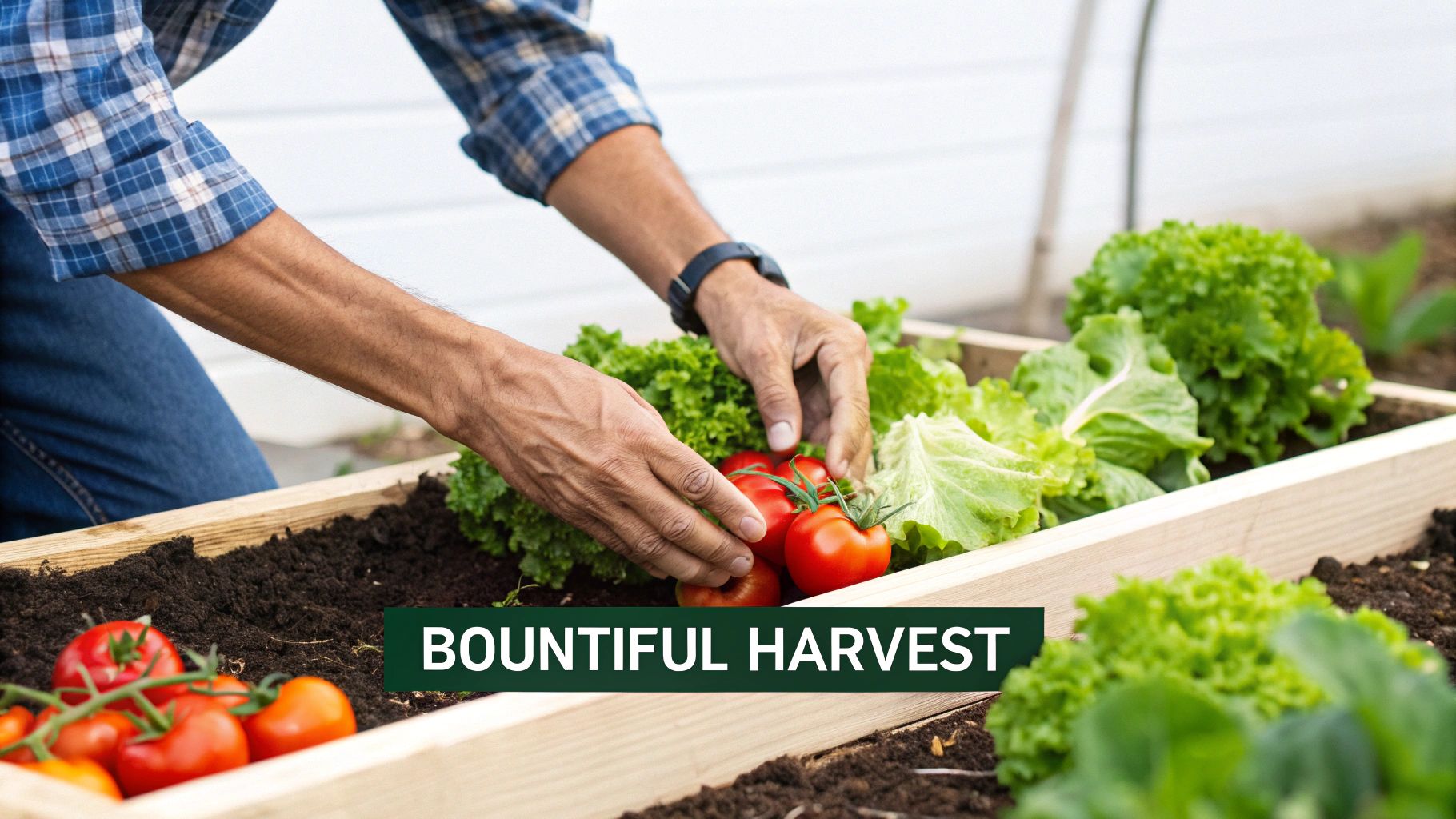
This is it—the moment all your careful planning and tending comes to fruition. There's nothing quite like stepping out to your garden and picking vegetables you grew yourself, knowing they're packed with flavor and nutrients.
The key is learning to read the signs. Every vegetable has its own way of telling you it's ready for the table. For leafy greens like lettuce and spinach, harvesting isn't a one-and-done event. It's a continuous reward.
You can use a simple technique called the “cut-and-come-again” method. Just snip off the outer, larger leaves and leave the smaller, central ones intact. The plant will keep right on producing, giving you a steady stream of fresh greens for weeks from a single planting.
Just How Much Can You Grow?
It's one thing to see a thriving garden, but it's another to know what it can actually produce. You might be surprised by just how much food you can grow in a relatively small space. The controlled environment of a raised bed is incredibly efficient.
One study actually measured the output from raised bed gardens and the results were stunning.
Researchers found that raised beds produced an average of 128.58 pounds (58.06 kilograms) of food. That works out to about 0.51 pounds (0.23 kilograms) per square foot.
Think about that for a moment. That's a serious return on your effort. What’s even more encouraging is that many of the gardens in the study were in less-than-ideal climates, which really speaks to how well raised beds overcome environmental challenges. You can dig into the specifics and read about these impressive raised bed yield findings yourself.
3 Simple Tips for a Better Harvest
Timing is crucial, but how you harvest matters, too. Following a few simple practices will help you get the most out of every plant while keeping them healthy and productive.
- Go Early: The best time to pick is in the cool of the morning. Vegetables are at their crispest then, full of moisture and ready for your kitchen.
- Use Sharp Tools: A clean, sharp pair of scissors or garden shears makes all the difference. Clean cuts cause less damage and help the plant heal quickly.
- Handle with Care: Be gentle with your harvest. Bruised or damaged produce won't last nearly as long.
Once you bring your beautiful harvest inside, the final step is making sure it stays fresh until you're ready to eat it. It's worth learning some effective hacks for keeping your produce fresh longer to truly enjoy the fruits of your labor.
Got Questions? We’ve Got Answers.
Even the most seasoned gardeners had questions when they first started. It’s completely normal to have a few "what ifs" pop up as you get your hands dirty. We've been there, so we’ve pulled together some of the most common questions that come up when planting vegetables in raised beds.
Think of this as your quick-start guide to sidestepping those little mistakes that can trip up new gardeners. Getting these details sorted out now will make the whole process smoother and a lot more fun.
Your Top 7 Raised Bed Questions, Answered
Let's dig into the practical stuff. Getting the basics right from the beginning is the secret to a great harvest later on.
-
How deep does my raised bed really need to be?
This all comes down to what you’re planning to grow. For the vast majority of vegetables—think lettuce, spinach, peppers, and most herbs—a depth of 10-12 inches is plenty. But if you have your heart set on those long, picture-perfect carrots or big, beautiful potatoes, you'll want a deeper bed. Aim for 12-18 inches to give those deep-rooted veggies all the room they need to stretch out. -
What's the best material to build a raised bed with?
You can't go wrong with untreated wood. Cedar and redwood are fantastic choices because they hold up against rot for years without any chemicals. Galvanized metal beds are another popular, super durable option that has the added benefit of warming up the soil a bit faster in the spring. The one thing to avoid is older pressure-treated wood (from before 2003), as it could contain arsenic. -
Should I put anything on the bottom of the bed before the soil?
Yes! This is a simple trick that makes a huge difference. Before you add any soil, lay down a layer of plain cardboard. It smothers the grass and weeds underneath, acting as a free, biodegradable weed barrier that will break down over time.
If you live in an area with burrowing critters like gophers or moles, lining the bottom with hardware cloth (it's a tough wire mesh) is an absolute must. It's the only surefire way to stop them from munching on your plant roots from below.
-
How often do I need to water a raised bed?
Raised beds have amazing drainage, but that also means they can dry out faster than a traditional garden. The best way to know when to water is to just feel the soil. Stick your finger in about two inches deep—if it feels dry, it's time for a good, deep soak. Using a soaker hose or a drip irrigation system is a great way to deliver water right to the roots without a lot of waste. -
Can I use the same soil year after year?
Absolutely, and this is one of the best parts of raised bed gardening! You don't need to replace it. Just plan on refreshing it each spring. All it takes is adding a 2-3 inch layer of rich compost and mixing it into the top several inches of soil. This replenishes all the nutrients your plants used up last season. -
Do I need to worry about the soil getting packed down?
Nope, and that’s a huge plus. Since you never step on the soil in a raised bed, it stays wonderfully light and airy. This makes it so much easier for plant roots to get the oxygen they need and grow strong. -
How should I prep my raised bed for winter?
Once you’ve harvested your last vegetable, don’t just leave the soil bare. Cover it with a thick blanket of mulch, like shredded leaves or straw. This simple step protects your soil from winter rains and erosion, keeping its structure intact so you're ready to hit the ground running next spring.
Here at Homegrown Garden, we’re passionate about helping people grow their own food. Check out our collection of heirloom seeds, starter kits, and practical guides to get your garden off to a great start. You can find everything you need at https://www.homegrown-garden.com.
Plant your raised beds with proven performers from our heirloom vegetable seed vault.


