



Starting a small garden is wonderfully simple. It really just boils down to four key things: finding a sunny spot, choosing a container, filling it with the right soil, and picking some easy-to-grow plants. If you can get these fundamentals down, you’ll be well on your way to a thriving garden, no matter how tiny your space is.
4 Keys to Planning Your Perfect Small Garden
Jumping into gardening is exciting, and the best part is you don't need a huge backyard to grow your own food or beautiful flowers. Small-space gardening has taken off for a reason—it’s accessible, incredibly rewarding, and a great way to reconnect with nature right at home. It's a huge movement, actually. The global gardening market is valued at approximately USD 120 billion in 2024, and a lot of that growth comes from people just like you getting into home and urban gardening.
This first section is all about the planning phase. Honestly, getting these initial decisions right is the single most important part of the whole process.
1. Find the Perfect Sun-Soaked Spot
Before you buy a single seed or pot, play detective for a day. Just watch your space. Most vegetables and flowering plants need at least six to eight hours of direct sunlight to really do their thing. This is a non-negotiable for most of the good stuff you want to grow.
Your best location might be a south-facing balcony, a west-facing patio that gets hammered with afternoon sun, or even a surprisingly bright windowsill. Don't just guess—see where the light lands and for how long. This simple bit of observation will guide every other choice you make, from the plants you can successfully grow to how often you'll need to break out the watering can.
2. Choose the Right Containers or Raised Beds
Okay, you’ve found your sunny spot. Now, what will you plant in? The beauty of gardening in a small space is the sheer variety of containers you can use. Forget the traditional garden plot; your garden can live in pretty much anything that holds soil and lets water drain out.
- Fabric Grow Bags: I'm a huge fan of these for beginners. They're lightweight, cheap, and the aeration is fantastic for roots, which helps prevent the dreaded overwatering. A 5-gallon bag is perfect for a single tomato plant.
- Terracotta or Ceramic Pots: The classic choice. They look great, but be warned—terracotta dries out much faster than other materials, so you'll be watering more often.
- Window Boxes: Perfect for herbs, lettuces, or trailing flowers. They're a brilliant way to use vertical space, especially for apartment dwellers.
- Small Raised Beds: If you have a bit more room on a patio or in a small yard, a 2x4 foot raised bed is totally manageable and can produce a surprising amount of food.
The most common mistake new gardeners make is picking a container without drainage holes. If excess water can't escape, the roots will sit in a puddle and rot. It’s a quick death for any plant. If you find a pot you absolutely love but it has no holes, you can usually drill a few yourself.
3. Get the Dirt on Soil Selection
Here's a critical point that trips up so many new gardeners: potting mix is not the same as garden soil. Garden soil, or topsoil, is heavy and dense. In a container, it will compact down into a solid brick, choking out roots and blocking drainage.
You have to use a high-quality potting mix made specifically for containers. This stuff is lighter and usually contains ingredients like peat moss, perlite, and compost that hold moisture while still allowing air to get to the roots. Spending a little extra on good soil is one of the best investments you can make for your garden's health. For a deeper dive into setting everything up, check out our comprehensive guide on how to plan a garden.
4. Select Easy Plants for a Confident Start
For your first go, set yourself up for a win. Choose plants that are known for being forgiving and productive. Nothing builds confidence like a successful first harvest.
Great starter options include loose-leaf lettuce, spinach, radishes, and bush beans. For herbs, you absolutely can't go wrong with basil, mint, or parsley. And if you're dreaming of homegrown tomatoes, look for compact or "patio" varieties that are specifically bred for growing in containers. These choices will give you a delicious and motivating start to your gardening journey.
To make this even easier, here's a quick reference table to get you started on the right foot.
Quick Start Guide for Your Small Garden
| Action | Key Consideration | Why It's Important |
|---|---|---|
| Observe Sunlight | Find a spot with 6-8 hours of direct sun. | Plants need sunlight for photosynthesis—their energy source for growth. |
| Pick a Container | Ensure it has drainage holes at the bottom. | Prevents water from pooling, which causes root rot and kills plants. |
| Buy the Right Soil | Use potting mix, not garden soil. | Potting mix is light and airy, allowing roots to breathe and grow properly in pots. |
| Choose Beginner Plants | Start with easy-to-grow varieties like lettuce, herbs, or radishes. | Early success builds confidence and makes the experience more enjoyable. |
Following these simple actions will put you on the fast track to a successful and rewarding first garden. It's all about getting the foundation right.
9 Best Plants for Small Garden Success
Alright, this is the fun part—choosing what you’ll actually grow. The real secret to getting a great harvest from a tiny space is picking plants that are happy to live in containers or small plots. If you try to grow something that wants to sprawl everywhere, you're just setting yourself up for frustration. The goal here is to choose compact, productive varieties that make your gardening journey feel like a win.
I’ve put together a list of nine fantastic plants that are practically made for balconies, patios, and raised beds. We'll touch on everything from must-have herbs and speedy greens to flowers that pull double duty in the garden.
This little decision tree is a great visual for the first few things you need to figure out for any plant you decide on: light, container, and soil.
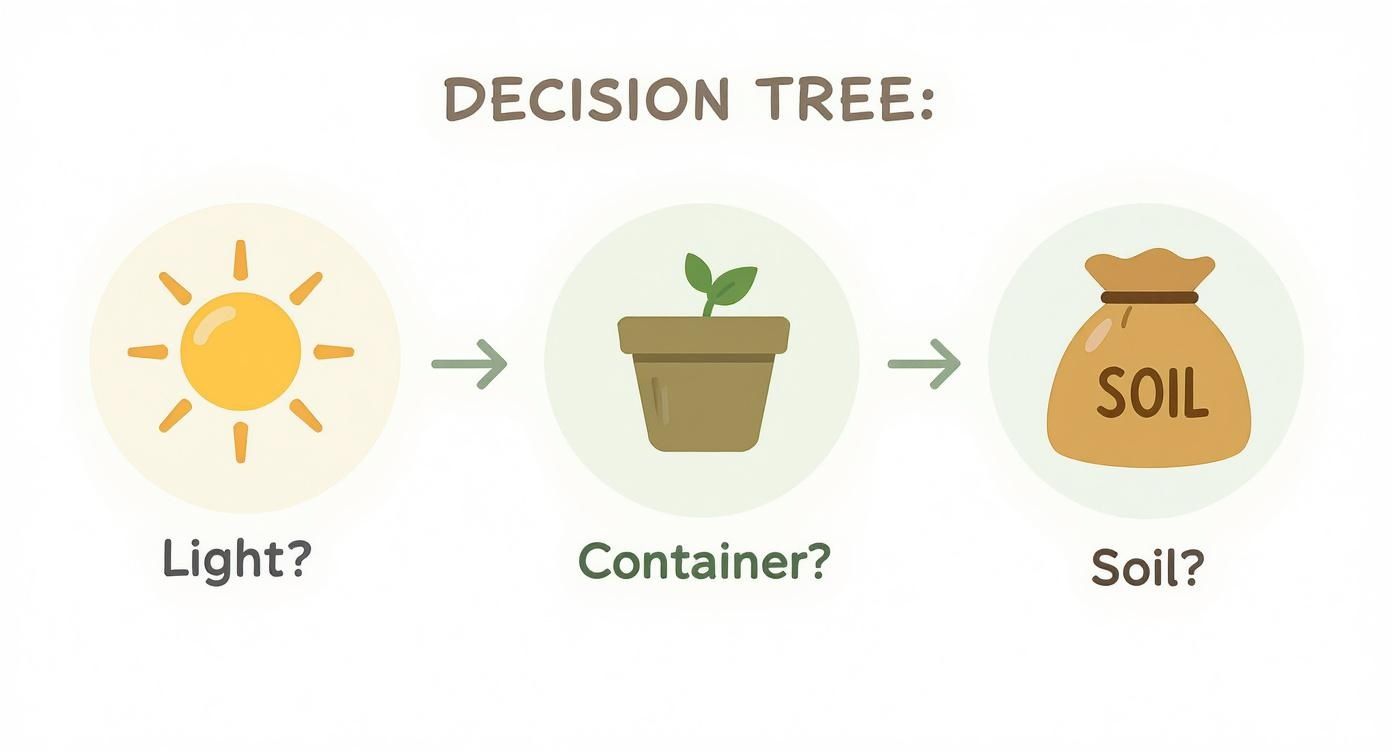
Think of these three as the foundation of your garden. If you get the light, container, and soil right for your specific plant, you’re already halfway to success.
1. Leaf Lettuce and Spinach
Leafy greens are the undisputed champions of small-space gardening. Forget head lettuce; you want loose-leaf varieties like 'Black Seed Simpson' or 'Red Sails'. You can just snip the outer leaves as you need them, and the plant will keep growing from the center. This "cut-and-come-again" harvesting means you get a steady supply of fresh salad greens for weeks from just a couple of pots.
Spinach works the same way and is a powerhouse in the kitchen. Both are cool-weather lovers, so they're perfect for getting your garden started in the spring and for a second round in the fall.
2. Radishes
Want to feel like a gardening pro, fast? Plant radishes. I'm not kidding—some varieties like 'Cherry Belle' can go from a tiny seed to a crunchy, ready-to-eat radish in as little as 25 days. They're small enough to tuck into window boxes or share a pot with a slower-growing plant. That quick turnaround is a massive confidence boost when you're just starting out.
3. Bush Beans
Many people think beans need huge trellises, but that's not true for all of them. Look for bush beans, which grow into tidy, compact plants that don’t need any support. They're perfectly happy in something like a 5-gallon container. A reliable variety like 'Bush Blue Lake' will give you a surprisingly big harvest of classic green beans.
4. Basil
I'm convinced no small garden is complete without herbs, and basil is non-negotiable. One healthy plant in a sunny spot will keep you supplied with fresh leaves all summer for pesto, caprese salads, and anything else you can think of. The best part? The more you harvest, the bushier and more productive the plant gets.
5. Cherry Tomatoes
Big, sprawling tomato plants are a nightmare on a balcony, but that doesn’t mean you have to give up on homegrown tomatoes. Plant breeders have created some amazing varieties just for this purpose.
- 'Tiny Tim' is an incredibly compact plant that churns out a ton of sweet, bite-sized tomatoes.
- 'Patio Princess' is another go-to that stays a manageable size but still delivers on that classic tomato flavor.
These are "determinate" types, meaning they grow to a fixed size, set their fruit, and are way easier to handle than their wild, "indeterminate" cousins.
Here's a common mistake I see all the time: underestimating what even a small tomato plant needs. It still requires at least a 5-gallon container, very consistent watering, and all the direct sun you can give it—we're talking 8+ hours per day if possible.
6. Peppers
Whether you like them sweet or hot, peppers grow on fairly compact plants that absolutely thrive in pots. They crave heat and sun, so a sun-drenched balcony is their ideal home. You can easily get a dozen or more peppers from a single plant in a 3- to 5-gallon pot over the course of the season.
7. Swiss Chard
If you want a plant that’s as beautiful as it is delicious, you have to try Swiss chard. Varieties like 'Bright Lights' have these stunning, vibrant stems in shades of yellow, pink, and red that look incredible in a pot. Just like lettuce, it’s a cut-and-come-again green, so you'll be harvesting from it for a long, long time.
8. Marigolds
Don’t forget the flowers! Marigolds are a fantastic choice for any garden, big or small. They are ridiculously easy to grow from seed, don't mind a bit of neglect, and their bright blooms just make you happy. Even better, they have a distinctive scent that is known to repel some common garden pests, making them a great little bodyguard to plant alongside your veggies.
9. Strawberries
Yes, you can absolutely grow strawberries in a small space! They are perfectly suited for life in hanging baskets, window boxes, or those special tiered strawberry pots. If you pick an "everbearing" variety, you won't get one giant harvest, but rather a slow and steady trickle of sweet, fresh berries all summer long.
For more inspiration, you can check out our guide on some of the other best vegetables to grow for beginners to see what else might work for you.
7 Essential Tools for the Beginner Gardener
When you're just starting out, it's easy to get overwhelmed by the sheer number of gardening gadgets on the market. But you really don't need a whole shed full of stuff. In my experience, focusing on a few high-quality essentials will make your gardening journey so much more enjoyable and successful.
Think of these seven items as your core toolkit. They're the things you'll reach for again and again, from the first day of planting to your final harvest.
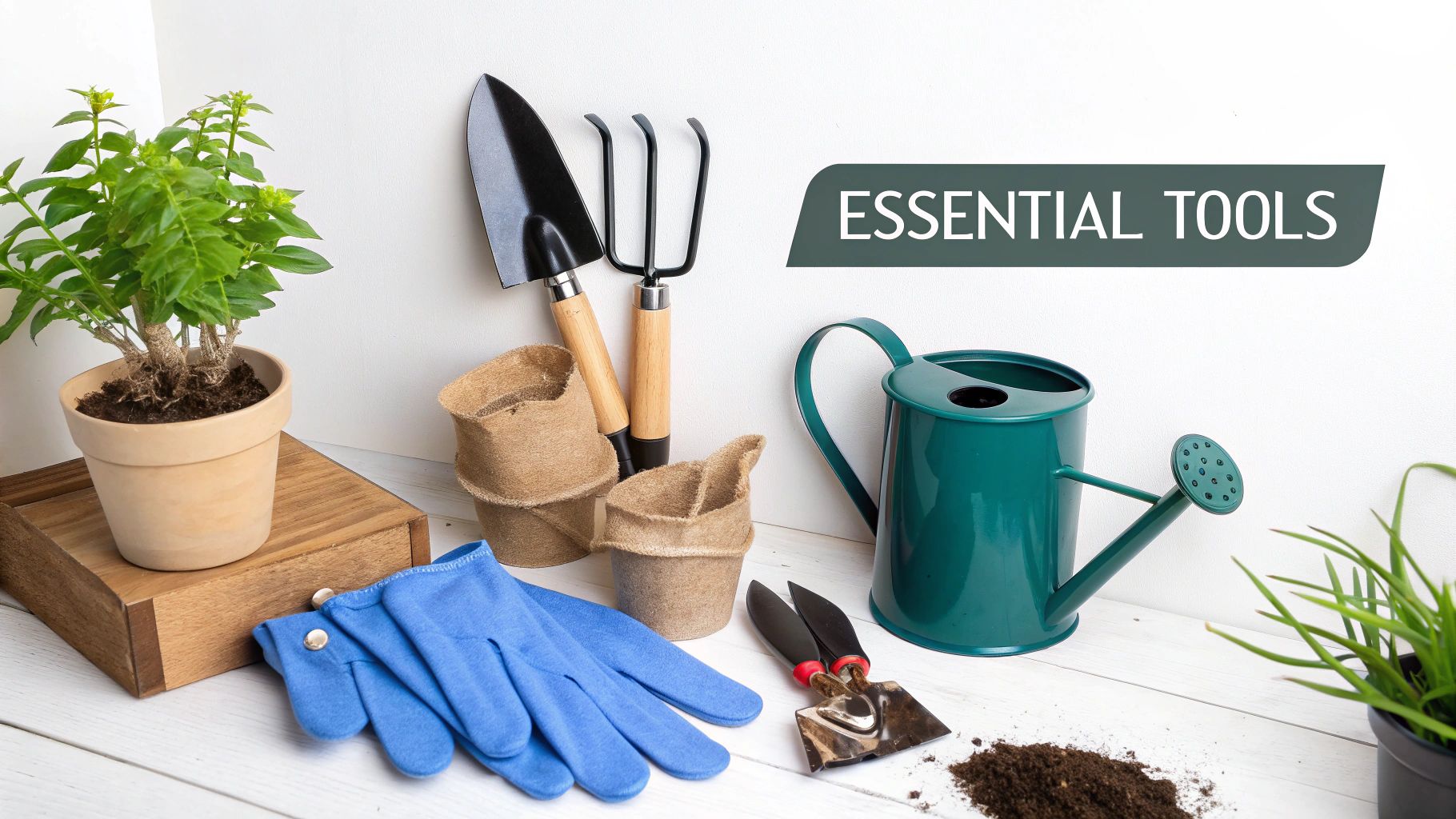
1. High-Quality Gardening Gloves
Don't skip these. Seriously. A good pair of gloves is your best friend in the garden, saving your hands from thorns, dirt, and blisters. The work is just plain more comfortable when you're wearing them.
I recommend looking for a pair that's water-resistant but still breathable. A snug fit is key, as you want to be able to feel what you're doing. For example, gloves with a nitrile coating on the palms and fingers give you a great grip for handling tiny seeds without sacrificing protection.
2. A Sturdy Hand Trowel
You will use this tool more than any other. A hand trowel is your go-to for digging holes for transplants, scooping soil into pots, and tackling pesky weeds. Avoid the flimsy plastic ones—they just don't last.
Invest in a trowel made from stainless steel or forged aluminum; it won't bend under pressure or rust after a season. An ergonomic handle makes a huge difference, and if you can find one with depth markings etched on the blade, grab it. It takes all the guesswork out of planting bulbs and seeds.
3. Precision Pruning Shears
Often called snips or secateurs, a sharp pair of pruners is absolutely vital for keeping your plants healthy and productive. You'll use them constantly for harvesting herbs, snipping off dead or yellowing leaves, and deadheading flowers to encourage more blooms.
My advice is to get a "bypass" style pruner, where the two curved blades slide past each other like scissors. This gives you a clean cut that helps the plant heal quickly, unlike the anvil style which can crush delicate stems.
A clean cut from sharp pruners helps the plant heal faster and reduces the risk of disease. Regularly cleaning your blades with a little rubbing alcohol is a simple pro habit that prevents spreading potential pathogens from one plant to another.
4. A Gentle Watering Can
How you water your plants, especially when they're young, is just as important as when you do it. A watering can with a "rose" attachment—that sprinkler-like spout—is a must-have. It creates a gentle shower that won't blast away your soil or damage delicate seedlings.
For a balcony or patio garden, a 1-gallon or 2-gallon can is usually perfect. It’s big enough to save you from running back and forth to the tap, but not so heavy that it's a chore to carry when full.
5. The Right Potting Mix
Okay, so it's not a "tool" in the traditional sense, but the right soil is easily the most critical supply you'll buy. Remember, container gardens need a dedicated potting mix, not soil dug up from the yard. A quality mix is specifically designed to be light and well-draining while holding onto just enough moisture.
For a little extra help, look for a mix that includes a slow-release fertilizer. This provides a steady stream of nutrients to your plants for weeks, which means less for you to worry about.
6. All-Purpose Plant Food
Even the richest potting mix can't feed your plants forever. To keep everything lush and productive all season, you'll need a simple, all-purpose plant food. You have a couple of options here.
You could go with a liquid fertilizer that you mix into your watering can every few weeks, or a granular type that you just sprinkle onto the soil. Both work great—just be sure to follow the package directions. Over-fertilizing can burn the roots, so less is often more.
7. Reliable Containers
Last but not least, you need something for your plants to live in! Whether you fall in love with classic terracotta pots, modern fabric grow bags, or traditional window boxes, there's one non-negotiable feature: drainage holes.
Without proper drainage, water will pool at the bottom of the pot, suffocating the roots and causing root rot—the number one killer of container plants.
Gardening's popularity is booming, which is great news for beginners because there are more options for supplies than ever. Recent surveys show that approximately 56% of consumers are planning to expand their gardens, which keeps pushing innovation in the market. You can read more about what's new from reports on current gardening trends.
5 Core Principles of Small Garden Care
Alright, your seeds and seedlings are all tucked into their new homes. Now the real relationship with your garden begins. Keeping a small garden thriving isn’t about some secret, complicated formula; it's about getting into a rhythm with your plants and paying attention to their needs.
Forget a long list of chores. If you can get a handle on these five key areas—watering, sunlight, feeding, pests, and pruning—you’ll go from someone who just has plants to someone who truly grows them. Let's dig into what really matters.
1. Consistent and Correct Watering
This is, without a doubt, the number one thing new gardeners get wrong. Plants in containers and raised beds play by different rules than plants in the ground. Their soil dries out much faster, especially when it’s hot or a bit windy.
The golden rule? Check the soil before you water. Don't just follow a rigid schedule. The best tool you have is your own finger. Stick it about an inch or two into the soil. If it feels dry, it’s time to water. If you feel any moisture, give it another day. This one simple habit is the best way to avoid both thirsty, stressed plants and the far more common killer: root rot from overwatering.
When you do water, mean it. Your goal is to give the pot a thorough drenching until you see water flowing freely from the drainage holes. This encourages the roots to grow deep and strong to find moisture, creating a much more resilient plant.
2. Understanding Your Sunlight
You picked a sunny spot, but now it's time to become a true sun-detective. Sunlight is the fuel for your garden's engine, and not all plants have the same appetite. Getting familiar with the terms on plant tags will make a huge difference.
- Full Sun: This is non-negotiable for most of the good stuff. It means your plants need at least 6 to 8 hours of direct, unfiltered sun every single day. Think tomatoes, peppers, cucumbers, and most herbs.
- Partial Sun/Partial Shade: These terms pretty much mean the same thing—around 4 to 6 hours of sun daily is the sweet spot. Many leafy greens, like lettuce and spinach, actually welcome a break from the intense afternoon sun, especially in warmer climates.
- Full Shade: Don't be fooled; this doesn't mean total darkness. It refers to spots that get less than 4 hours of direct sun, often just dappled light. Honestly, very few edible plants are going to be happy here.
Take another look at your setup now that the plants are in. Is that basil plant really getting the 6+ hours it craves, or does the balcony railing throw a shadow over it by 2 p.m.? Sometimes, just shifting a pot a few feet can change everything.
One common pitfall for urban gardeners is underestimating reflected heat. A south-facing balcony with a concrete wall behind it can turn into an oven, scorching even plants that love the sun. You might need to rig up a simple shade cloth during the hottest part of summer days.
3. Simple and Strategic Feeding
That bag of potting mix you used came with a starter pack of nutrients, but your hungry plants will burn through that food source surprisingly fast. Think of fertilizer as a vitamin supplement to keep them healthy and productive.
For beginners, nothing beats a balanced, all-purpose liquid fertilizer. It’s practically foolproof. You just mix a small amount with water (follow the package directions!) and use it to water your plants every 2 to 4 weeks during the peak growing season. This approach delivers a steady, gentle supply of food, preventing the "boom and bust" cycle that can stress plants.
Keep an eye out for signs of hunger, like yellowing leaves (especially the older ones at the bottom), slow growth, or a lack of flowers. A regular feeding schedule helps stop these problems before they even start.
4. Beginner-Friendly Pest Management
Sooner or later, you'll find something munching on your leaves. Don't panic! In a small garden, you can almost always deal with pests using simple, non-toxic methods. The trick is to spot them early before a few bugs turn into an army.
Make a habit of inspecting your plants every few days. Look under the leaves and around the stems—that's where pests love to hide. If you spot tiny green bugs like aphids, your first line of defense is a sharp spray of water from a hose or spray bottle to knock them off. For anything more stubborn, a pre-mixed insecticidal soap is a safe and effective weapon to have on hand.
Dealing with pests and other weird plant issues can feel overwhelming, but most common problems have simple, organic fixes.
Common Plant Problems and Simple Organic Solutions
| Problem (Symptom) | Likely Cause | Beginner-Friendly Organic Solution |
|---|---|---|
| Yellowing Leaves at Base | Nutrient deficiency or overwatering. | Check soil moisture. If dry, feed with a balanced liquid fertilizer. If it's soggy, hold off on watering. |
| Small Holes in Leaves | Chewing insects like caterpillars or slugs. | Go on a "bug hunt" in the morning or evening and hand-pick them off. For slugs, a shallow dish of beer is an old-school trap that really works. |
| Sticky Residue, Tiny Bugs | Aphids. | Blast the affected areas with a strong stream of water. If they come back, spray thoroughly with an insecticidal soap. |
| White Powdery Film on Leaves | Powdery Mildew (a common fungal issue). | Your plant needs better air circulation. Trim a few leaves to open it up. A spray of one part milk to nine parts water can also help. |
As you get more familiar with your plants, you'll learn to spot these little troubles right away and know exactly what to do.
5. Purposeful Pruning and Harvesting
Pruning isn't some advanced technique reserved for master gardeners. For many plants, it's the key to getting a bigger harvest. Think of it as giving your plant a productive haircut.
For herbs like basil and mint, regularly snipping off the top cluster of leaves does two things: it gives you fresh herbs for your kitchen and it forces the plant to grow bushier and fuller instead of tall and spindly. This technique is often called "pinching back."
You'll quickly realize that for many herbs, harvesting is pruning. The more you use them, the better they grow. The same logic applies to flowers. Snipping off spent blooms, a process known as "deadheading," tells the plant to focus its energy on making more flowers instead of seeds. And for your veggies, picking that ripe tomato or zucchini signals the plant to get busy making more. It’s a beautiful, productive cycle.
7 Creative Ideas for Small Space Gardening
Don't let a lack of ground space stop you from growing your own food or surrounding yourself with beautiful plants. With a bit of creativity, you can turn the tiniest balcony, patio, or even a windowsill into a thriving garden. The secret is to make every inch count, and that almost always means thinking vertically.
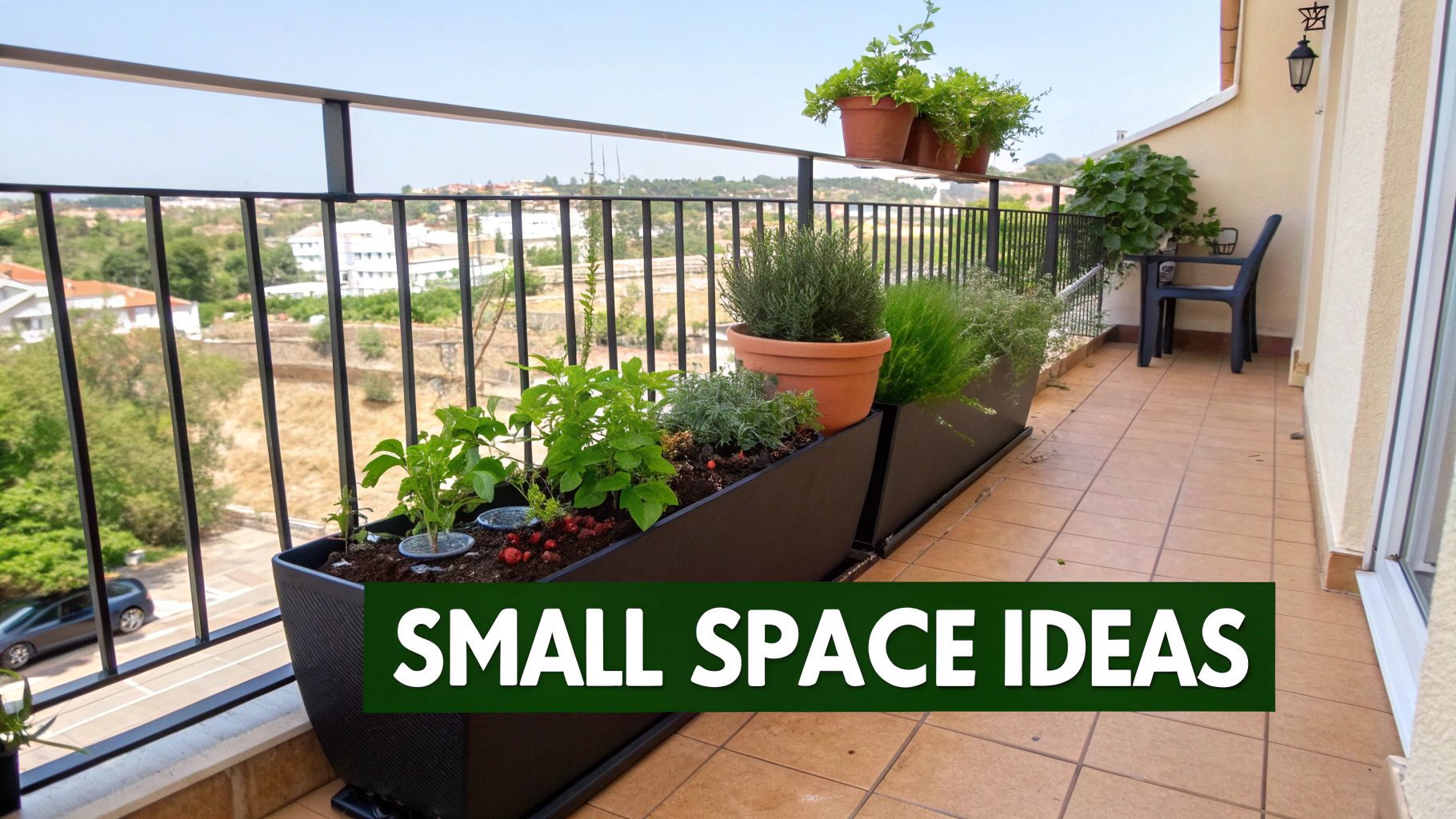
Here are seven of my favorite ideas that I’ve seen work wonders for turning small spaces into green oases.
1. Go Vertical
Vertical gardening has absolutely exploded in popularity, and for good reason. As more of us find ourselves in cities with limited space, growing up has become the go-to solution. It’s a trend that industry experts see continuing, as noted in recent analysis of what's popular in gardening for 2025.
You can start simple. A basic trellis leaned against a wall is perfect for climbing plants like peas, pole beans, or even some of the more compact cucumber varieties. Another great option is wall-mounted pocket organizers—often made from felt—which are ideal for creating a living wall of herbs or leafy greens.
2. Build an Herb Tower with Stackable Planters
Stackable planters are a true game-changer if you want to grow a variety of plants on a tiny footprint. These clever pots stack on top of one another, creating a multi-level garden that takes up hardly any floor space.
Imagine a tower overflowing with strawberries, where the berries hang down freely, keeping them clean and away from rot. They're also fantastic for a diverse herb garden. You can have basil, parsley, mint, and thyme all growing together in one compact spot right outside your kitchen door.
A common mistake I see is planting the same type of herb in every tier. For the best results, put your sun-lovers like basil and rosemary on the top levels where they’ll get the most light. Save the lower, shadier spots for more tolerant herbs like mint and parsley.
3. Use Your Railings and Fences
That balcony railing or backyard fence? It's prime, untapped real estate for your garden. Specially designed railing planters hook securely over the top, giving you an instant garden bed without sacrificing a single inch of your floor space.
These are perfect for a splash of color from flowers like petunias or marigolds. I also love using them for shallow-rooted crops like leaf lettuce, spinach, and radishes. It brings your salad garden up to a comfortable height, making harvesting a breeze.
4. Master the Art of Hanging Baskets
Hanging baskets are a classic for a reason—they add a beautiful, three-dimensional element to any small space. While most people think of trailing flowers like fuchsias and ivy, they're surprisingly practical for growing food, too.
Try planting a hanging basket with a trailing cherry tomato variety like ‘Tumbling Tom’. Herbs with a natural cascading habit, such as oregano and thyme, also do incredibly well. This approach not only saves space but also keeps your plants off the ground, which can help protect them from certain pests. For truly next-level ideas, you can even look into creative home renovations, such as living walls, which can turn a small wall into a stunning green feature.
5. Design a Windowsill Herb Garden
If the only space you have is indoors, a sunny windowsill is all you need. An indoor herb garden is easily one of the most rewarding first projects for a new gardener.
Just line up a few small pots with kitchen staples like basil, chives, and parsley. You'll have fresh flavor right at your fingertips every time you cook. The only real requirement is making sure the window gets at least four to six hours of sunlight each day to keep your herbs from getting leggy and weak. For more inspiration on growing up, our guide on small space big garden vertical gardening ideas for spring has plenty of tips.
6. Try the "Thrill, Fill, and Spill" Method
This is a classic design trick that helps you create gorgeous, well-balanced mixed containers that are both beautiful and productive. It’s a simple formula based on choosing three types of plants.
- Thrill: A tall, eye-catching plant for the center (think a pepper plant or an upright rosemary).
- Fill: Mounding plants that fill in the space around the "thriller" (like basil, marigolds, or leaf lettuce).
- Spill: Trailing plants that cascade gracefully over the pot's edge (like trailing nasturtiums or oregano).
This method lets you pack a lot of variety into a single large pot, maximizing both its look and its yield.
7. Get Creative with Gutter Gardens
For a seriously clever and budget-friendly vertical garden, look no further than old rain gutters. You can mount sections of gutter horizontally on a sunny wall or fence to create a series of long, shallow planters.
Just be sure to drill drainage holes along the bottom before you fill them with potting mix. This setup is fantastic for growing rows of different lettuce varieties, spinach, radishes, or even a line of strawberries. It’s a brilliant way to recycle something and grow food in a space that would otherwise be completely empty.
4 Common Questions About Starting a Small Garden
Diving into gardening for the first time is a blast, but it’s totally normal for a few questions to pop up. Think of this as a quick chat to clear up those last-minute doubts before you really dig in. I get asked these all the time, so let's get you some answers.
1. How Much Time Does a Small Garden Take?
This is the big one, right? The honest answer is that it varies, but it’s almost certainly less time than you’re imagining. For a little container garden with just a handful of pots, you’re realistically looking at 10-15 minutes a day, maybe even every other day.
That time is spent on really simple stuff:
- A quick soil check: Just poke your finger into the soil of each pot. Takes about 30 seconds per pot to see if it feels dry.
- Watering: If it's dry, giving it a good soak might take another minute or two for each container.
Once a week, you might block out an extra 20 minutes for the fun stuff—harvesting, snipping off any yellowing leaves, or checking for little pests. The trick is to make it a small, consistent habit instead of a massive weekend chore.
2. Can I Really Grow Enough Food to Make a Difference?
Oh, absolutely. Look, a balcony garden isn't going to replace your grocery runs, but it will make a surprisingly delicious dent in them. You'll be amazed at what a few happy plants can produce.
A single cherry tomato plant can pump out pints of sweet, sun-ripened fruit all season long. A couple of pots of "cut-and-come-again" lettuce will keep you in fresh salad greens for weeks. But the real difference isn't about the quantity. It's about the mind-blowing flavor and the pure satisfaction of eating something you grew with your own two hands.
Don't get hung up on measuring success in pounds. Measure it in the joy of snipping your own basil for pasta or popping a warm tomato right off the vine. You can't buy that feeling.
3. What Is the Easiest Thing to Grow from Seed?
If you want a quick win to build your confidence (and who doesn't?), you can't beat radishes or loose-leaf lettuce. Both sprout super fast, sometimes in just a few days, which is just the kind of instant gratification a new gardener needs.
Radishes can go from seed to salad in as little as three or four weeks—a fast and tasty victory. Lettuce is also really forgiving and grows quickly, letting you start harvesting leaves in about a month. Bush beans are another one; they're famously easy to get going.
4. Do I Need to Worry About Pollinators on a Balcony?
Good question! Yes, but probably not as much as you'd think. Bees and their friends are incredible navigators and have no problem finding tasty flowers, even a few stories up. To give them a helping hand, it’s a great idea to plant a few flowers they love.
Tuck in a few of these alongside your veggies:
- Marigolds: They're tough, cheerful, and great at attracting beneficial insects.
- Nasturtiums: The flowers are edible, and pollinators go crazy for them.
- Lavender: This fragrant herb is a total bee magnet and loves living in pots.
Mixing these in with plants like tomatoes or peppers helps ensure you get good fruit production. It’s a simple move that turns your balcony into its own tiny, thriving ecosystem.
Ready to get your hands dirty? At Homegrown Garden, we have everything you need to get started, from heirloom seeds that thrive in containers to beginner-friendly kits that make planting a breeze. Explore our collection and start your growing journey today.


