



An heirloom tomato varieties list is your ticket to a world of incredible flavors, fascinating colors, and rich history—a world that stretches far beyond the produce aisle at your local grocery store. These are the tomatoes our great-grandparents grew, varieties cherished for their taste and story, not for their ability to be shipped across the country. Think of the deep, smoky flavor of a Cherokee Purple or the perfect sweet-tart balance of a Brandywine; growing heirlooms connects you directly to our agricultural past.
What Defines an Heirloom Tomato
So, what makes a tomato an "heirloom"? It's pretty simple: an heirloom is a variety that's been passed down through several generations. The general rule of thumb is that the seed line has to be at least 50 years old, though many have been around for much, much longer.
The key difference between heirlooms and the modern hybrids you see everywhere is that heirlooms are open-pollinated. This means they're pollinated naturally by insects, the wind, or even by themselves. This is the secret to their legacy. When you save seeds from an heirloom tomato, the plants you grow next year will be "true to type," meaning they'll produce fruit with the exact same traits as the parent. It’s this genetic stability that has allowed families and communities to save their favorite varieties for decades. If you want to dive deeper, you can learn more about what heirloom seeds are and why they are so important.
The Value of Genetic Diversity
The sheer variety of heirloom tomatoes is staggering and a testament to their incredible genetic diversity. A single seed catalog might list over 200 distinct types, and you'll find expert growers cultivating collections of around 500 varieties in just one season. This massive gene pool is vital. It contains a huge range of traits—from drought tolerance to unique nutritional profiles—that could be absolutely critical for the future of agriculture.
3 Top Reasons Why Gardeners Choose Heirlooms
With all the modern, disease-resistant hybrids available, why do so many gardeners still go to the trouble of growing heirlooms? The reasons are as varied as the tomatoes themselves, but a few things always stand out.
- Exceptional Flavor: Ask any gardener, and they'll tell you the flavor of an heirloom tomato is simply unmatched. They have a complex balance of sweetness and acidity that's often been bred out of commercial varieties in favor of a longer shelf life.
- Unique Appearances: Forget round and red. Heirlooms come in a whole rainbow of colors—purple, yellow, green, even striped—and in every shape and size imaginable, from tiny currant tomatoes to beefsteaks that can tip the scales at over a pound.
- Connection to History: When you grow an heirloom, you're not just growing a plant. You're connecting to a long line of gardeners who have cultivated that exact variety, preserving a small piece of agricultural heritage right in your own backyard.
7 Best Tasting Heirloom Tomatoes for Amazing Flavor
If you're a gardener who's chasing that unforgettable, sun-ripened tomato flavor, you already know where to look: heirlooms. The taste you get from a homegrown heirloom is something modern, grocery-store tomatoes just can't replicate. Here, we'll walk through seven absolute stars of the garden, each one celebrated for a complex, rich, and truly memorable taste.
These are the kinds of tomatoes that elevate a simple sandwich to a gourmet experience or make a fresh salad the main event.
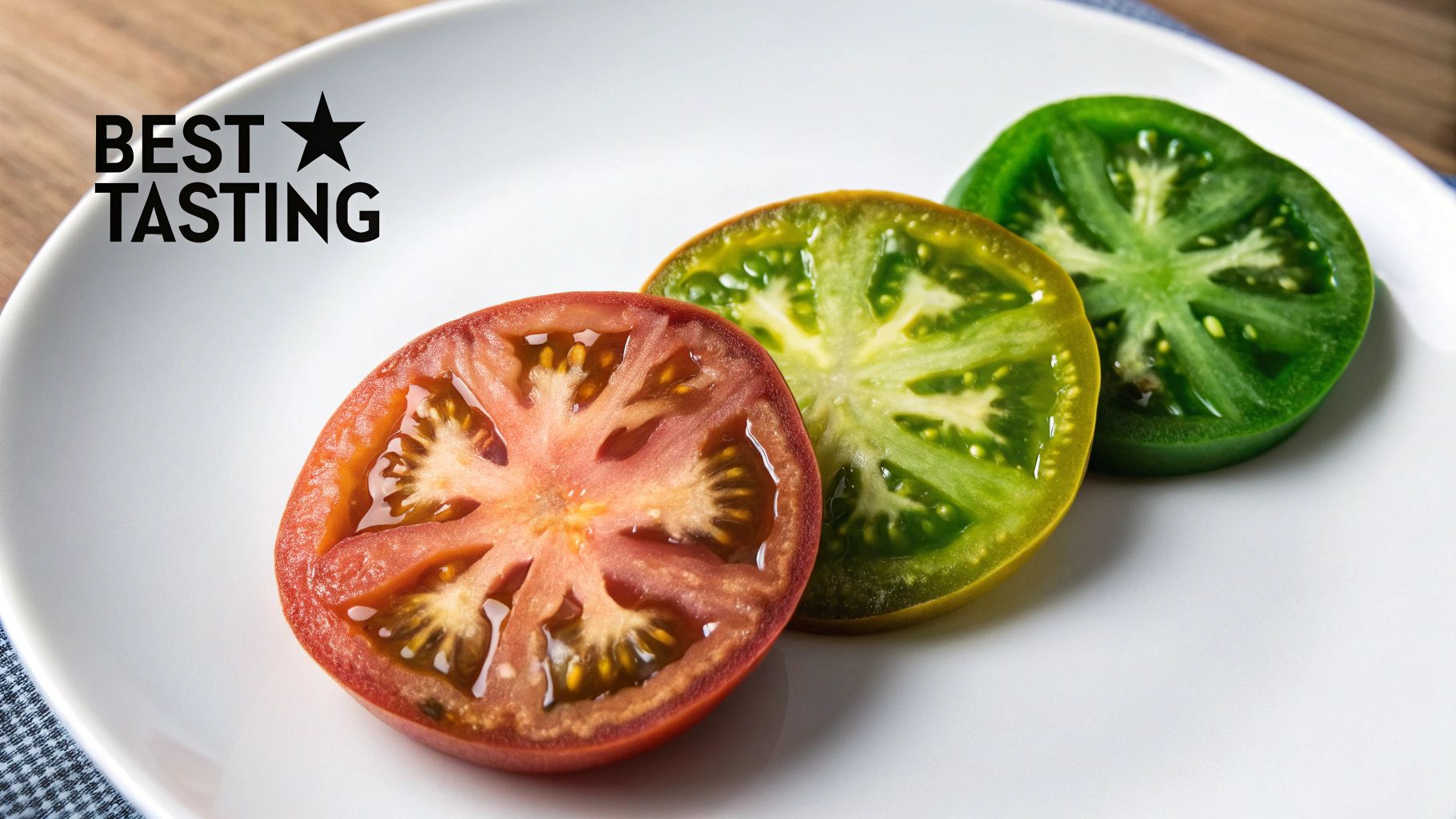
When we talk about taste, what we're really searching for is that perfect harmony of sweetness and acidity. It's the secret sauce that creates that satisfying, old-fashioned tang. A wide-ranging survey of home gardeners and farmers backed this up, revealing a huge preference for classic beefsteaks bursting with those big, complex flavors. The results consistently show that the most beloved varieties are the ones that masterfully balance sugars and acids—a defining trait of the very best heirlooms. You can dig into more of the data on top heirloom tomato preferences on tomatofest.com.
So, let's get to know seven varieties that deliver on that promise of incredible flavor, time and time again.
1. Brandywine
Talk to any seasoned gardener about flavor, and Brandywine will almost always come up. It's often held up as the gold standard, and for good reason. This is a big, pink beefsteak with an intensely rich, complex taste that is the definition of a "real" tomato.
Brandywine has that perfect balance of sweetness and acid, making it an amazing all-arounder in the kitchen.
- Appearance: Large, slightly ribbed, pinkish-red fruit that can easily top one pound.
- Best Uses: Slicing thick for sandwiches, pairing with mozzarella in a caprese salad, or my personal favorite—eating a slice fresh off the vine with just a sprinkle of salt.
- Plant Habit: This is an indeterminate variety with distinctive potato-leaf foliage. It's a vigorous grower, so you'll need very sturdy staking to support it.
2. Cherokee Purple
Dating back to before the 1890s, this heirloom is legendary for its dusky, purplish-rose color and an unbelievably rich, almost smoky-sweet flavor. Many tomato fanatics (myself included) will tell you Cherokee Purple is one of the best-tasting tomatoes on the planet, prized for its dense, juicy flesh.
Its popularity really took off in the 1990s, proving that a heritage tomato with incredible flavor can easily win over the mainstream.
3. Black Krim
Hailing from the Crimean peninsula, Black Krim is a fantastic medium-to-large beefsteak that turns a deep, brownish-red when grown in the heat and sun. Its flavor is just as intense as its color: slightly salty, smoky, and richly complex.
Black Krim is a standout choice for gardeners in warmer climates. The heat and sunlight actually deepen its unique dark color and concentrate that incredible, savory flavor profile.
4. Green Zebra
If you love a tomato with a bit of a kick, Green Zebra is a must-grow. These smaller, round tomatoes stay a beautiful emerald green, painted with vibrant, dark green stripes even when fully ripe. The flavor is a total surprise—it’s sharp, almost citrusy, and sweet all at once.
- Appearance: Small to medium round fruit, famous for its green-on-green stripes.
- Best Uses: It adds a fantastic pop of color and zesty flavor to salads, fresh salsas, and even sauces.
- Plant Habit: The indeterminate vines are absolute workhorses, producing prolifically all season long.
5. Mortgage Lifter
With a name and a story you can't forget, Mortgage Lifter is a classic pink beefsteak known for two things: its massive size and its mild, sweet flavor. The fruit is incredibly meaty with very few seeds, delivering that classic, low-acid tomato taste that’s just so satisfying.
It’s the perfect slicer for burgers and BLTs where you want a substantial, flavorful tomato that complements everything else without stealing the show.
6. Pineapple (Ananas Noire)
This is a showstopper in both looks and taste. Pineapple is a stunning bicolor beefsteak with a golden-yellow skin streaked with red. Cut one open, and you'll find a marbled masterpiece of yellow, orange, and red flesh. The flavor is just as exotic—fruity, sweet, and almost tropical, with very little acidity.
7. Amish Paste
While it's famous as a sauce tomato, don't overlook Amish Paste for fresh eating. It has a surprisingly rich and complex flavor that’s much sweeter and more interesting than a standard Roma. Its dense, meaty texture makes it wonderfully versatile.
This is the perfect variety if you want a single, high-performing plant for both slicing onto a sandwich and canning for winter.
7 Easiest Heirloom Tomatoes for Beginner Gardeners
Jumping into the world of heirloom tomatoes can feel like a big leap, but trust me, plenty of varieties are surprisingly forgiving and incredibly rewarding. If you're just starting out, the key to success is picking plants known for being productive, reliable, and tough against common problems. This list focuses on seven heirlooms that are perfect for building your confidence while delivering a harvest you'll be proud of.
These varieties have earned a reputation for their robust growth and ability to produce well without constant hand-holding. By starting with these dependable picks, you can learn the ropes of gardening and still get to taste the amazing, complex flavors that only heirlooms can provide.
1. Mortgage Lifter
The story behind this tomato is as big as the fruit it produces. Mortgage Lifter is a massive pink beefsteak famous for churning out huge yields of one-to-two-pound tomatoes. Even with that impressive size, the plants themselves are vigorous and relatively easy to manage.
Their flavor is mild, sweet, and meaty with very few seeds, which makes them absolutely perfect for slicing onto a sandwich.
- Days to Maturity: 80-85 days
- Growth Habit: Indeterminate
- Best For: Gardeners who want seriously impressive tomatoes for burgers and BLTs without all the fuss.
2. Stupice
For anyone gardening in a cooler climate or with a frustratingly short growing season, Stupice (pronounced stu-PEECH-ka) is a total game-changer. This variety from the former Czechoslovakia is incredibly early, often giving you its first ripe fruit in just 55-60 days.
The small, 2-3 inch red tomatoes have a rich, tangy flavor that really punches above their weight. While the plants are fairly compact, they're indeterminate, so you can expect them to keep producing little clusters of fruit all season long.
What really sets Stupice apart is its cold tolerance. It reliably sets fruit even when temperatures are on the cool side, a trait many other heirloom varieties just don't have.
3. Amish Paste
If you're dreaming of making your own rich, savory tomato sauce from scratch, Amish Paste is the one to grow. And while it's technically a paste tomato, its flavor is so sweet and complex that it’s fantastic for fresh eating, too—much more versatile than your typical Roma.
These plants are workhorses, giving you a huge crop of large, acorn-shaped fruits that are dense, meaty, and have very few seeds. That's the perfect combination for canning, saucing, and preserving.
4. Roma VF
A classic for good reason, the Roma is a determinate variety celebrated for its sheer reliability and productivity. That "VF" in the name is a huge bonus for beginners, as it signals resistance to Verticillium and Fusarium wilts, two common soil-borne diseases that can ruin a first-time gardener's season.
Its compact, bushy growth makes it a great choice for container gardening or squeezing into smaller garden beds. You’ll get a massive harvest of dense, plum-shaped tomatoes that tend to ripen all at once—perfect for a big sauce-making day. Growing this one is a fantastic way to learn the basics, and you can get more great tips from our detailed guide on how to grow heirloom tomatoes.
5. Glacier
Here's another fantastic pick for short-season gardens. Glacier is an ultra-early determinate variety that definitely lives up to its name. It can pump out ripe, 2-3 ounce red tomatoes in as little as 55 days from transplanting, often making it the very first tomato to ripen in the garden.
The flavor is a really nice balance of sweet and tangy. Since it's a determinate plant, it stays pretty small and is perfectly happy growing in a pot on the patio.
6. Cherokee Purple
Cherokee Purple is famous among tomato connoisseurs for its top-tier flavor, but what many don't realize is that it's also surprisingly tough and easy to grow. This makes it a great entry point into the wonderful world of "black" tomatoes. It consistently produces large, dusky rose-colored beefsteaks with an unforgettable rich, smoky, and sweet taste.
This indeterminate variety is a strong grower and usually quite productive, rewarding beginners with a truly gourmet harvest without needing an expert's touch.
7. Celebrity
Okay, so this one is technically a semi-determinate "heirloom-in-the-making" (developed in the 1980s), but Celebrity makes every beginner's list for one reason: it's incredibly dependable. It’s known for its high yields and powerful resistance to a whole host of common tomato diseases.
The plant produces uniform, medium-sized red fruits that resist cracking and have a great all-purpose flavor. For any gardener whose main goal is a guaranteed, successful harvest, Celebrity is one of the most reliable choices out there.
7 Most Unique Heirloom Tomatoes to Grow Next
For gardeners ready to explore beyond the classic red tomato, the world of heirlooms is a treasure trove of wild colors, bizarre shapes, and incredible patterns. If you want to grow something that makes people stop and stare, something that adds a touch of artistry to a summer salad, this list is for you. Forget what you think a tomato should look like; these seven varieties are celebrated for their sheer beauty and unforgettable character.
This is the part of our heirloom tomato guide designed to inspire you to plant something truly different.
1. Green Zebra
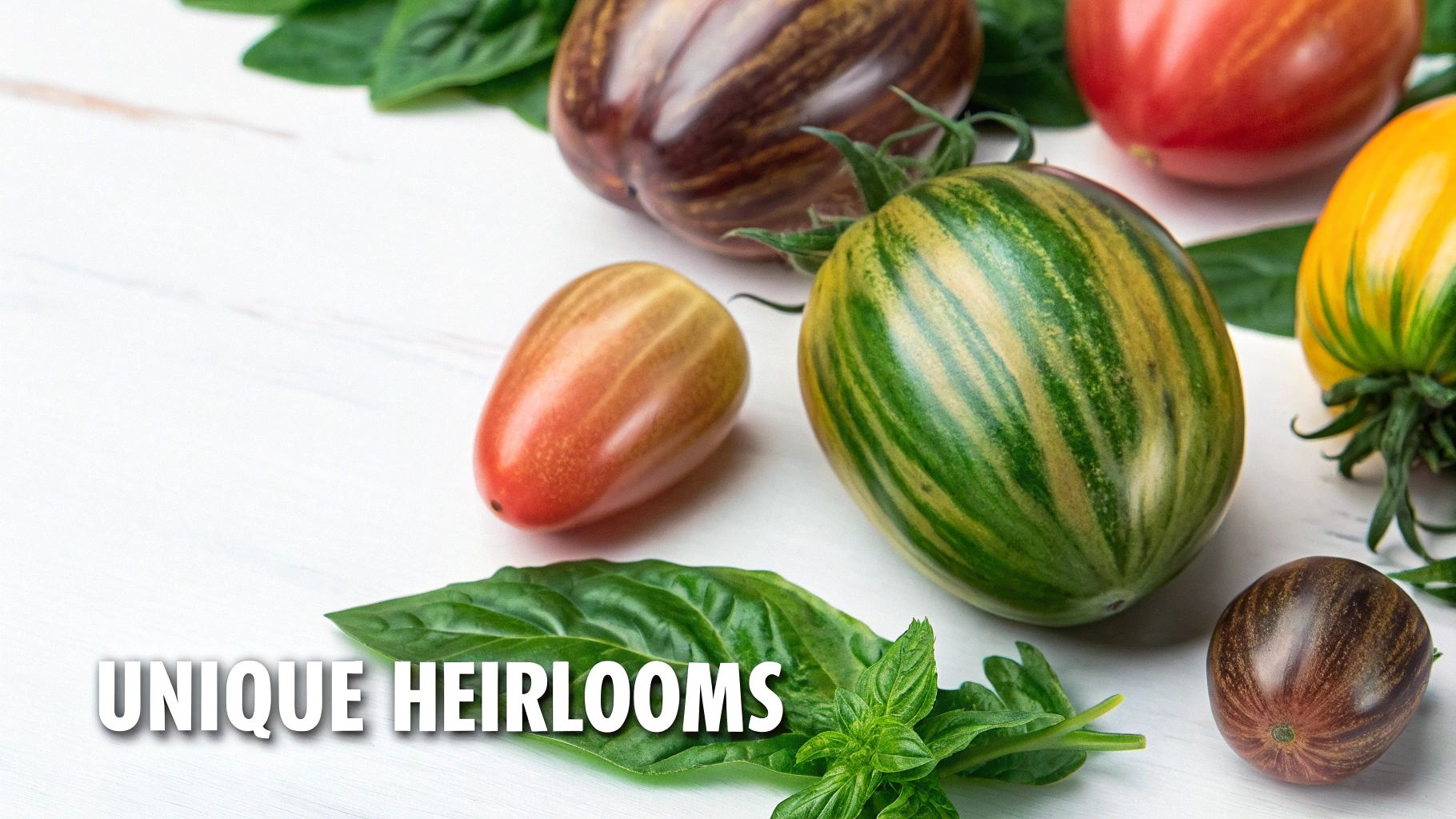
Green Zebra is a masterpiece. These smaller, round fruits ripen to a gorgeous chartreuse, overlaid with deep, vibrant green stripes. Its looks are a dead giveaway for its flavor—bright, zesty, and refreshingly tangy with a sweet kick on the finish.
This isn't a tomato that just blends in; it demands to be seen. That striking color contrast makes it a star in fresh salads, salsas, and bruschetta, where its visual pop is matched only by its zippy taste. The indeterminate vines are also prolific producers, so you'll have a steady supply of these little jewels all summer long.
2. Pineapple (Ananas Noire)
Get ready to be wowed by the Pineapple tomato, a massive bicolor beefsteak that looks like a sunset captured in a fruit. On the outside, you’ll see a stunning mix of golden-yellow skin with streaks of brilliant red. But the real show starts when you slice it open to reveal a marbled interior of yellow, orange, and deep red.
The flavor is every bit as exotic as its name suggests.
- Taste Profile: It's incredibly sweet and fruity, often with hints of tropical fruit and very little acid.
- Best Uses: Its huge size and beautiful coloring make it the perfect slicer for sandwiches or the star of a platter dressed simply with olive oil and sea salt.
- Growth Habit: This is a big, sprawling indeterminate plant that needs some serious staking to support its hefty fruits, which often weigh 1-2 pounds.
3. Banana Legs
If you're after a tomato that really breaks the mold, Banana Legs is a fantastic pick. This determinate variety pumps out tons of long, bright yellow paste tomatoes that look uncannily like small bananas, right down to their slightly pointed tips.
The fruits grow to about 4 inches long and have a mild, slightly tangy flavor with very few seeds. Because of their low moisture content and meaty flesh, they're a wonderful and colorful choice for making unique yellow sauces, salsas, or for roasting. The compact, bushy plants are also a great fit for smaller garden spaces or large containers.
One of the best things about Banana Legs is how ridiculously productive it is. A single, well-cared-for plant can produce an unbelievable number of these eye-catching yellow fruits, making it as generous as it is unusual.
4. Indigo Rose
Indigo Rose was one of the first truly "blue" tomatoes that became widely available to home gardeners, and it's still one of the most visually dramatic. These small, cherry-sized tomatoes develop a deep, glossy, purple-black skin wherever the sun hits them, thanks to a high concentration of anthocyanins—the same antioxidants found in blueberries.
The part of the tomato shaded from the sun stays green at first, then turns red as it ripens. The flavor is a nice balance of sweet and tart. For the best taste, hold off on picking until the blossom end turns from green to a reddish hue and the fruit has a little give when you squeeze it.
5. Striped German
This is a breathtaking bicolor. Striped German produces large, irregularly shaped beefsteak fruits with a mesmerizing pattern. The skin is a gorgeous blend of golden-yellow and ruby-red streaks, and the marbled interior is just as stunning when you slice it.
This heirloom is famous for its complex, fruity, and sweet flavor profile with almost no acidity. It’s an incredibly juicy and meaty tomato, perfect for slicing thick to show off its incredible colors on a sandwich or as the centerpiece of a fresh tomato salad.
6. White Tomesol
For a truly ethereal and elegant addition to your garden, White Tomesol is a standout. This heirloom gives you medium-sized, slightly flattened beefsteak tomatoes that ripen to a creamy, ivory-white color. It’s a rare and beautiful sight hanging on the vine.
Its flavor is just as unique as its appearance. It's exceptionally sweet and fruity, with complex notes of melon, guava, and even peach, and almost no acidic bite. This makes it a fantastic choice for fruit salads, eating fresh from the garden, or for creating a delicate, pale-colored sauce.
7. Black Beauty
Often called the darkest tomato in the world, Black Beauty is an absolute showstopper. Bred from the same lines as Indigo Rose, this beefsteak variety turns a stunning, deep black-purple where sunlight hits it. Inside, the flesh is a rich, dark red.
The flavor is just as deep and complex, with a rich, savory, and earthy taste that is truly exceptional. Slicing one open reveals a dramatic color contrast that will elevate any dish. It’s a must-grow for any gardener looking for the boldest flavors and most dramatic looks.
2 Key Steps to Choosing the Right Heirloom Variety
Picking the right plant for your specific garden is the single most important decision you'll make for a successful harvest. Not every heirloom tomato is cut out for every environment, and honestly, matching a variety to your local conditions can be the difference between a bumper crop and a frustrating season. It means looking past the pretty pictures and delicious flavor descriptions to consider the hard facts: your region's temperature, humidity, and the real length of your growing season.
A critical piece of the puzzle is printed right on the seed packet: "days to maturity." This number gives you the average time it takes from popping a seedling into the garden until you're picking that first ripe tomato. Think of it as your most essential planning tool, especially if you're gardening somewhere with a shorter season.
1. Understanding Days to Maturity
To make that number work for you, you first need to know your area's first and last frost dates. The time between these two dates is your growing season. For instance, if your last chance of a spring frost is around May 15th and your first fall frost typically hits by October 1st, you’re working with about 139 frost-free days.
A variety that needs 90 days to mature will certainly work in that window, but it's a tight squeeze. On the other hand, a quicker variety like Stupice or Glacier, which can ripen in as little as 60 days, gives you a much longer harvest period before the cold weather shuts things down.
-
Short-Season Climates (Less than 120 days): You'll want to focus on the early birds—varieties that ripen in 55-70 days. Russian and Siberian heirlooms like Stupice are fantastic choices here because they were literally bred to handle cooler temperatures.
-
Long-Season Climates (More than 150 days): If this is you, congratulations! You have the luxury of growing the big, slow-growing beefsteaks like Brandywine or Pineapple. They often take 85 days or more to ripen, but the incredible, complex flavor is well worth the wait.
2. Tips for Challenging Climates
Some regions just come with extra hurdles, but there's almost always an heirloom tomato that's up to the challenge.
Gardeners in hot, humid places—like the American South—know that disease pressure is a constant battle. Your best bet is to seek out heirlooms known for their heat tolerance and general toughness. Varieties like Mortgage Lifter or certain strains of Roma VF have proven they can handle the heat and often have some built-in disease resistance. Of course, variety selection is just one part of the equation; optimizing your soil's pH is just as crucial for giving any plant a healthy start.
If your garden is a bit shy on sunlight, don't despair. Stick with smaller-fruited or cherry tomatoes. A variety like Gold Nugget can produce a surprisingly good crop with as little as six hours of direct sun, whereas those giant beefsteaks really need a full day of intense light to develop their sugars and ripen properly.
21 Heirloom Tomato Varieties At-a-Glance
Let's be honest, faced with a long list of incredible heirloom tomatoes, choosing just a few can feel overwhelming. To make things easier, I've put together this quick reference chart. It gathers all 21 heirlooms we've discussed into one handy spot so you can compare them side-by-side.
Think of this as your home base for cross-referencing the details that matter most. A quick scan will help you pinpoint the varieties that are a perfect fit for both your garden's conditions and your kitchen's needs.
Before you dive in, remember that success comes down to matching the right plant to the right place. The three biggest factors are always your climate, the length of your growing season, and the quality of your soil.
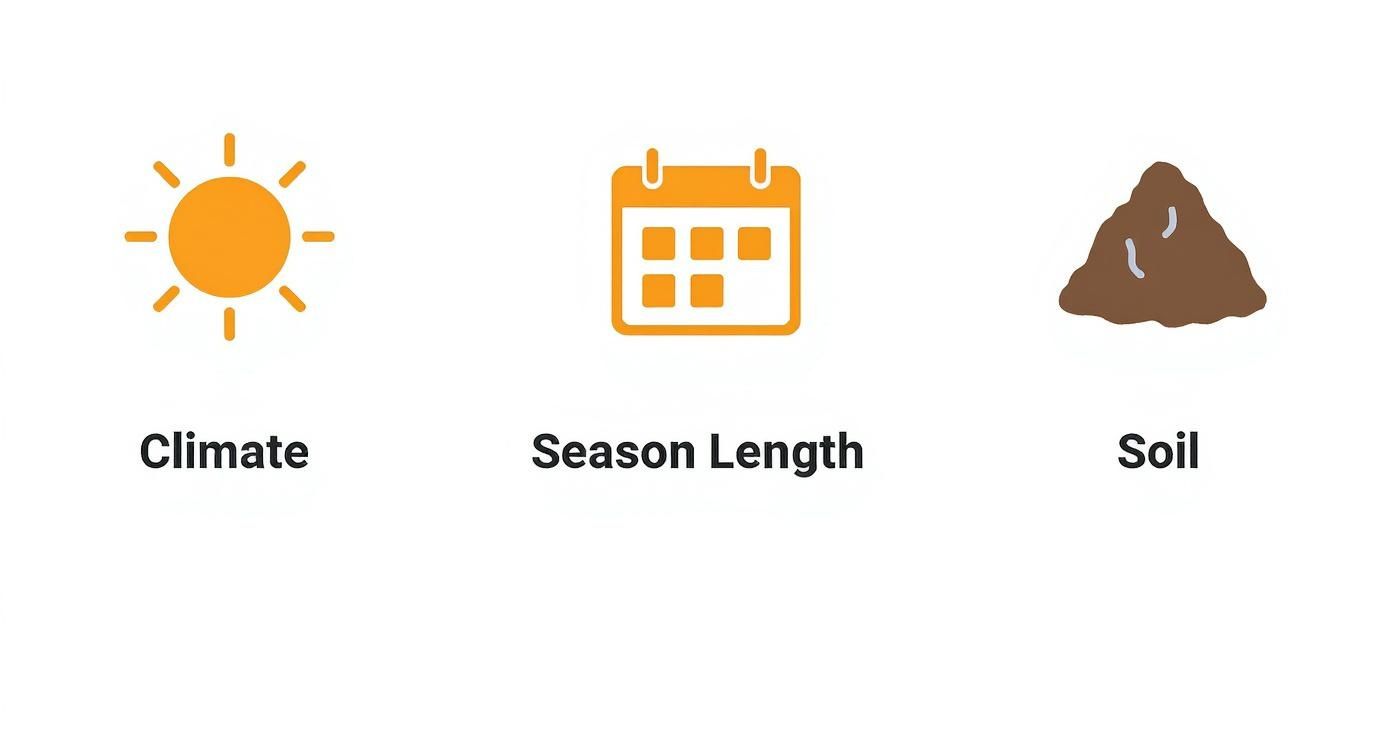
Keeping these three elements in mind is the secret sauce for a thriving garden and an incredible harvest. Now, let's find your perfect tomato.
Heirloom Tomato Varieties Comparison Chart
Ready to compare? This chart breaks down 21 of the most popular and beloved heirloom varieties. I’ve included everything you need to know—from flavor and growth habit to maturity time and best culinary uses—to help you find a perfect match for your garden this season.
| Variety Name | Category | Flavor Profile | Plant Type (Ind/Det) | Days to Maturity | Best Use |
|---|---|---|---|---|---|
| Brandywine | Best Tasting | Rich, complex, balanced | Ind | 80-90 | Slicing, Salads |
| Cherokee Purple | Best Tasting | Smoky, sweet, rich | Ind | 80-90 | Slicing, Fresh Eating |
| Black Krim | Best Tasting | Slightly salty, smoky | Ind | 70-80 | Slicing, Roasting |
| Green Zebra | Best Tasting | Zesty, tart, sweet | Ind | 75-80 | Salads, Salsas |
| Mortgage Lifter | Best Tasting | Mild, sweet, meaty | Ind | 80-85 | Slicing, Sandwiches |
| Pineapple | Best Tasting | Fruity, sweet, low-acid | Ind | 85-95 | Slicing, Platters |
| Amish Paste | Best Tasting | Rich, sweet, complex | Ind | 80-85 | Sauces, Fresh Eating |
| Stupice | Easiest | Tangy, rich | Ind | 55-65 | Salads, Early Harvest |
| Roma VF | Easiest | Mild, classic | Det | 75-80 | Sauces, Canning |
| Glacier | Easiest | Sweet, tangy | Det | 55-60 | Early Harvest, Pots |
| Celebrity | Easiest | Balanced, all-purpose | Semi-Det | 70-75 | Slicing, Canning |
| Banana Legs | Unique | Mild, slightly tangy | Det | 70-75 | Yellow Sauces, Roasting |
| Indigo Rose | Unique | Sweet, tart | Ind | 75-80 | Salads, Snacking |
| Striped German | Unique | Fruity, sweet | Ind | 75-85 | Slicing, Platters |
| White Tomesol | Unique | Very sweet, fruity | Ind | 80-90 | Fresh Eating, Salads |
| Black Beauty | Unique | Rich, savory, earthy | Ind | 80-90 | Slicing, Gourmet Dishes |
A quick tip from one gardener to another: pay close attention to the Plant Type column. Indeterminate (Ind) types are vining plants that produce fruit all season long and need some serious staking or caging. Determinate (Det) varieties are more like bushes; they set most of their fruit in a shorter window, which makes them a great choice for containers or canning projects.
4 Simple Steps to Save Heirloom Seeds for Next Season
One of the most rewarding parts of growing heirlooms is saving your own seeds. It’s a tradition that connects you directly to the gardeners of the past, letting you preserve the unique genetics of your favorite varieties. When you save seeds, you're not just preparing for next year; you're becoming a more self-sufficient gardener and a steward of agricultural history.
The whole process starts with picking the right fruit. You want to save seeds from your best plants—the ones that were the healthiest, strongest, and most productive all season. Choose a perfect, disease-free tomato that truly embodies what you love about that variety, whether it's the rich flavor, the beautiful shape, or its sheer size. Steer clear of any fruit that's underripe, mushy, or shows any sign of disease.
The 4 Simple Steps to Ferment and Save Seeds
Once you've picked your prize tomato, it's time to ferment the seeds. This sounds complicated, but it’s a natural and essential step. Fermentation mimics what happens when a tomato falls off the vine and rots, breaking down the gelatinous coating around each seed. This gel actually contains compounds that stop the seed from sprouting, so removing it is key. As a bonus, the process also kills off many seed-borne pathogens.
- Harvest the Seeds: Slice your tomato in half horizontally (across the middle). Gently squeeze the seeds and all the surrounding pulp into a clean glass jar.
- Add Water and Ferment: Pour in just enough water to cover the pulp. You don't need much. Cover the jar's opening with a piece of cheesecloth or a coffee filter and secure it with a rubber band to keep pests out while allowing air to circulate.
- Wait and Watch: Set the jar aside at room temperature for 2-4 days. You’ll know it’s working when a layer of mold forms on top and the mixture starts to bubble and smell a bit sour. Don't worry, that's a good sign! You'll notice the viable, healthy seeds will sink to the bottom of the jar.
- Clean and Dry: After a few days, carefully pour off the mold, pulp, and water from the top. Tip the remaining seeds into a fine-mesh strainer and rinse them thoroughly under cool water until they are completely clean. Spread the seeds out in a single layer on a non-stick surface, like a glass plate or a sheet of parchment paper, and let them air dry for several days. Give them a stir every so often to make sure they dry out evenly.
Storing Your Heirloom Seeds
Proper storage is the final piece of the puzzle. You need to be absolutely sure the seeds are bone dry before you put them away—a properly dried seed should snap cleanly in half, not bend. Once dry, place them in a well-labeled paper envelope or a small, airtight container. The value of saving these varieties is immense; just look at the San Marzano tomato, which saw its production jump to 100,000 metric tons a year after its heritage was protected. You can read more about the success of preserving heritage tomatoes.
Find a cool, dark, and dry spot for your stored seeds, like a closet or a drawer. When stored this way, your heirloom seeds will stay viable for years, ready to bring a piece of history back to your garden. For even more in-depth advice, check out our complete guide on how to save seeds from heirloom tomatoes.
4 Frequently Asked Questions About Heirloom Tomatoes
Diving into the world of heirloom tomatoes usually stirs up a few questions, especially if you're used to growing modern hybrids. Think of this as your go-to spot for answers to the most common puzzles gardeners face. We'll clear up the confusion so you can get the most out of growing these incredible, history-rich fruits.
We'll cover everything from why heirlooms sometimes feel a bit more finicky to the eternal debate over which one tastes the absolute best.
1. What Is the Difference Between Heirloom and Hybrid Tomatoes?
This is the big one, the question we hear most often. The difference all comes down to genetics and how the plants are pollinated.
-
Heirloom Tomatoes: These are the real deal—varieties grown from seeds passed down through generations, often for 50 years or more. They are open-pollinated, which means pollination happens naturally via wind, insects, or birds. The magic here is that seeds saved from an heirloom will produce plants that are "true-to-type," meaning they'll have the exact same qualities as the parent plant.
-
Hybrid Tomatoes: Think of these as a modern creation. Hybrids are made by intentionally cross-pollinating two different, carefully chosen parent varieties. The goal is to create a new plant that combines the best traits of both parents, like perfect uniformity or rock-solid disease resistance. The catch? Seeds saved from a hybrid fruit won't grow true; the next generation will be a genetic lottery.
2. Why Are My Heirloom Tomatoes Cracking?
Ah, cracking—the bane of many a tomato grower! It's a common headache, particularly with the more delicate, thin-skinned heirloom varieties. The culprit is almost always inconsistent watering.
Here's the scenario: the plant gets thirsty during a dry spell, and then suddenly, it gets a massive drink, either from your hose or a summer downpour. The fruit's interior swells with water faster than its skin can keep up, and pop—it splits. To avoid this, your goal should be steady, consistent moisture. A thick layer of mulch is your best friend here; it helps keep the soil evenly moist.
3. Are Heirloom Tomatoes Harder to Grow Than Hybrids?
They can be, but it’s not a given. The truth is that many heirlooms were preserved for generations because of their mind-blowing flavor or stunning looks, not because they could fend off every disease known to gardening. Modern hybrids, on the other hand, are often bred specifically for disease resistance, which can make them seem easier to grow.
The secret to success with heirlooms isn't luck; it's about making smart choices. Pick varieties that are known to do well in your local climate and practice good "garden hygiene" to keep diseases at bay. When you give them what they need, growing heirlooms is every bit as manageable as growing hybrids, and frankly, a whole lot more rewarding.
4. Which Heirloom Tomato Tastes the Best?
Now that's the million-dollar question! Of course, taste is personal, but after years of garden trials and talking with fellow tomato fanatics, a few contenders consistently rise to the top.
While you'll have to find your own personal favorite, most people agree that varieties like Brandywine, Cherokee Purple, and Black Krim are the gold standard. Brandywine is famous for its classic, rich, and perfectly balanced tomato flavor. Cherokee Purple and Black Krim offer something a bit different—a deep, complex, and slightly smoky sweetness that you just have to taste to believe.
Here at Homegrown Garden, we're passionate about connecting gardeners with the incredible flavor and stories behind heirloom tomatoes. We've carefully curated a collection of high-quality seeds to help you get started. Explore our heirloom tomato seeds and find the perfect varieties to make your garden truly special.


